 •
Rating:
•
Rating:
THE REVIEW
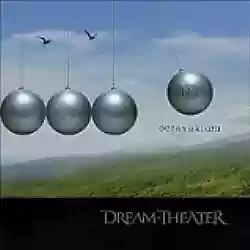
After the controversial metallic slashes of the much-debated “Train of thought,” the five New Yorkers choose to return to canonical sounds, creating a more versatile work that will certainly reassure those who despised the dark diversions of their previous effort.
The album in question, unlike other works, is not structured like a concept album, except for the recurrence of some musical motifs. This peculiarity, along with the choice to emphasize individual songs over the complexity of the album, associates it with a chapter like “Falling into Infinity”; the desire to trim some of the typical prolixities of the group offers a more direct imprint on the entire spectrum of tracks, without forgetting their prog roots. This approach will prove, as we shall see, to be a double-edged sword for the band, which in their most recent releases has given more space to labyrinthine instrumental musings rather than the song idea.
The opening is entrusted to the scorching “The root of all evil,” which from the very first notes marks the heritage from tracks like “The glass prison” or “This dying soul,” maintaining their skeletal framework intact, with the classic opening hinged on a dark crescendo riff that erupts into the anger of the vocals.
The atmosphere immediately softens with the gentle “The answer lies within,” reminiscent of “Through my words,” also supported by a few piano notes and Labrie’s warm voice, although beneath the melancholy surface the piece seems overly schematic and sustained by an idea the group has already exploited several times. The pace picks up again with the third track, “These walls,” reflecting the influence of contemporary bands, before turning light again with “I walk beside you,” a track that is indeed a tribute to U2, and at times reminiscent of a more commercial “Innocence faded,” resulting nevertheless in a pleasant interlude in an extremely varied album.
“Panic attack,” one of the best and certainly more aggressive moments of the record, reveals continuity with the previous work, with a spine-chilling opening and a rigid and powerful metric; the piece will reveal itself as the central theme of the work, revisiting this motif several times at the end.
“Never enough,” the subsequent track, proves rather ineffective, strongly indebted to Muse, especially in the vocals, showcasing the Dream Theater’s versatility but highlighting their persistent reference to the musical schemes of the bands influencing their sound. An episode lacking in significance.
If so far we have heard a decent but inconsistent album, the closing is certainly convincing with the two final highlights: with “Sacrified Sons,” the soft musicality hinted at in the previous ballads finds a more convincing expression in the central part of the track, which returns to the group’s classic themes, except for the conclusion, designed somewhat hastily. “Octavarium,” the majestic track giving the album its title, is the pillar of the entire work, a twenty-five-minute suite easily comparable to a classic like “Change of seasons”: after an opening reminiscent of Pink Floyd, the piano notes hinted at at the end of “The root of all evil” explode majestically into a long acoustic introduction of Genesis origin: the voice accompanies the entire unfolding of the track until the burst of the interminable central bridge, which takes on more aggressive tones and retraces the structures dear to Dream, made of long instrumental excursions, thus earning forgiveness from fans for betraying their origins with their latest works. This monumental instrumental hydra, balancing between the most classic Dream Theater and seventies progressive references, Yes and ELP above all, culminates in an epic conclusion that returns to the initial theme, predictably but effectively. Given these premises, this track could be qualified as a masterpiece, even though it seems to affirm Dream Theater's ever-alive predisposition to compose works smoothly in the wake of “Metropolis,” proving instead less impactful in more straightforward tracks, which favor explicit citations of bands like Metallica, Muse, and the already mentioned U2.
Indeed, successful tracks like “These walls” or “Sacrified sons” would hardly stand the comparison with others like “Surrounded” or “The silent man,” which in their simplicity benefit from a freshness of composition often penalized in the group’s latest work.
If “Train of thought” in its boldness proved coherent, this latest album is instead less linear although it demonstrates a commendable variety. It can therefore be considered a credible work, with some drops in tone and other moments that often turn into a festival of citation, but also with episodes of great style, like the already mentioned “Octavarium.”
Loading comments slowly
Summary by Bot
Dream Theater's Octavarium marks a return to their classic progressive rock roots with more accessible songs and subtle references to other bands. The album blends epic instrumental passages with straightforward tracks, showing versatility but also inconsistency. Highlights include the monumental title track and aggressive moments like 'Panic Attack'. Though less linear than previous releases, Octavarium offers a credible and varied listening experience.Tracklist Lyrics Videos
Dream Theater
American progressive metal band formed in 1985, known for virtuosic musicianship and landmark albums such as Images And Words and Metropolis Pt. 2.160 Reviews
Other reviews
By Stratocontact
"This album showcases a different configuration from the previous ones, with less intricate sounds aiming for greater melody."
"After 75 minutes of listening, Dream Theater has achieved their goal; the quality of the product has not changed, whether one likes them or not."
By Lordsandreik
Let’s be honest, the Dream are NO longer the ultra-tech metal-prog-band they wanted to appear to be.
Maybe Dream, after reaching a good level worldwide, want to relax and enjoy fame and money, but I don’t think music, in general, can benefit from this.
By AndJusticeForAll
A disappointment? Yes. From Dream Theater, one expects something entirely different.
"Panic Attack" is literally a masterpiece, the song that makes the album worth it.
By Vinpe75
DT’s prog is back, listen to believe.
Notably, each song ends with the intro of the next.
By Metropolis79
Octavarium is the epitome of this, especially for the precise use of the real orchestra behind the New York quintet.
DT 'demonstrates they don’t need to prove' to anyone their technical prowess.
