
 •
Rating:
•
Rating:
THE REVIEW
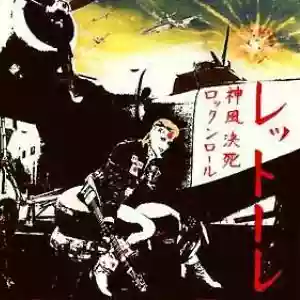
In 1982, Rettore, returning from a trip to London (it was the time of the Falklands War), raises the stakes and prepares the fourth album in four years: this time it's the turn of "Kamikaze rock 'n' roll suicide", a concept album that deals with kamikaze, suicide, and Japanese culture. Precisely because of the extreme avant-garde themes, the album, which was meant to immediately soar to the top of the charts, achieved less success than its predecessors and had to settle for the top ten. The album was nonetheless released in Japan, France, and Germany, where it achieved tremendous success.
Perhaps Italy wasn't used to hearing about suicide in music (albeit in an ironic way), or at least not in hit parade music, but what emerges right from the first listen is that the album is much more structured than the previous ones, both musically and lyrically.
The album also includes a small dictionary of the most important terms in Japanese philosophy (Kamikaze, Karakiri, Kaishaku, and Bushido).
"Kamikaze rock'n'roll suicide" is, however, first and foremost, the album of "Lamette", the summer single that Rettore introduces with a perfect kamikaze look; words like '‘Give me a blade to cut your veins, I hurt you less than a kidney transplant’' may not be exactly hit parade material, yet they are on everyone's lips, and the song is one of the most played on radio and television.
The most successful tracks, aside from Lamette, are the title track "Kamikaze rock 'n' roll suicide", "conceived in the belly of a samurai, its target never misses, yellow cat tell me how many lives you have. Kamikaze Rock'n'roll suicide is not hate or courage, perhaps it's just anger and the prey is already mine Kamikaze rock 'n' roll suicide!", "Karakiri" "For Buddha or for Bushido, either win or die, for all my soldiers either win or die. I wish to escape, but the peaches are in bloom, the hand trembles, Kaishaku waits for me, and this land already vomits prayers, I hear a cry behind me: Aheee! Karakiri!", "Sayonara" "I trust in fight and in war, the challenge and the alliance excite me, and in attack my head is empty, I daze myself with hatred and caution, and I have no memory of wisdom, I live on conquests and battles while my wife polishes medals, those who are content to fish for shells do not have my noise of scrap metal in their blood, in my abdomen, I have a powder keg, and now it's time for me to go SAYONARA! I have sown widows and torments, laments over lovers' beds, those who are content to fish for shells do not have my noise of scrap metal in their blood, in my abdomen, I have a powder keg, cannons already thunder ...SAYONARA!", "Oblio", an absolutely unusual piece for a pop album, and "Giulietta", who prepares for suicide after Romeo’s death, only piano and voice, the last song of the album, sealing a record that, perhaps because ahead of its time, was not understood as it should have been. And that's a huge shame.
Loading comments slowly
Summary by Bot
Donatella Rettore's 1982 album 'Kamikaze Rock’n’Roll Suicide' is a bold concept record exploring kamikaze, suicide, and Japanese philosophy. Although it was less successful in Italy compared to her previous works, it found considerable acclaim abroad. The album balances structured music with provocative lyrics and features the hit summer single 'Lamette'. Tracks like 'Kamakaze Rock’n’Roll Suicide' and 'Giulietta' demonstrate its emotional and artistic depth, making it a pioneering and underrated work.Tracklist Lyrics Videos
Donatella Rettore
Donatella Rettore is an Italian singer-songwriter known as Rettore, active since the 1970s. A pop/new wave icon, she mixed irony and provocation with radio-ready hooks, scoring hits like Splendido Splendente, Kobra, and Lamette, and releasing concept-driven albums across her career.08 Reviews
