
 •
Rating:
•
Rating:
THE REVIEW
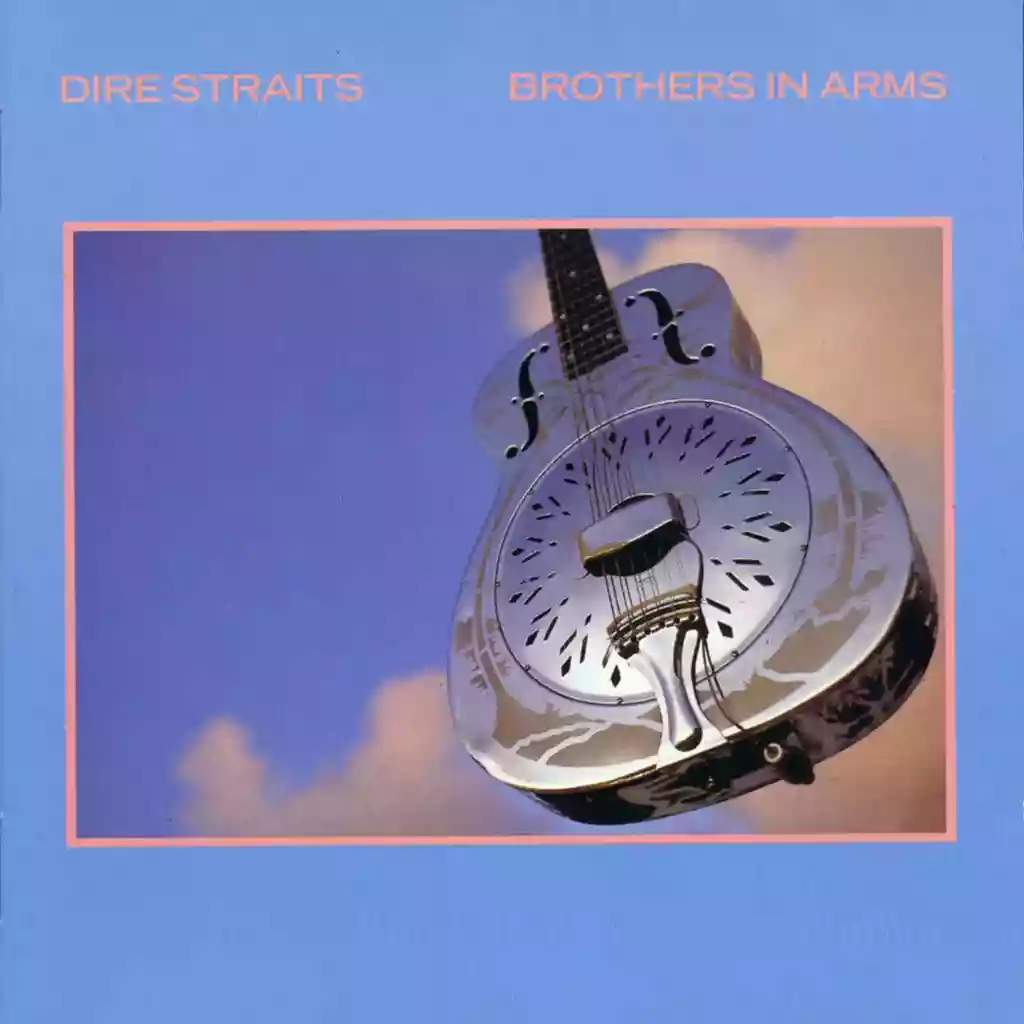
"Brothers In Arms" is the album that immediately comes to mind when you hear mention of the Dire Straits. You say "Dire Straits" and suddenly your mind clears space to conjure a lovely blue sky with a few scattered clouds here and there and a dobro guitar slightly offset to the right, defying gravity. If your mind is adept at quick connections, there appears a hefty bloke, all square-jawed, dressed as a laborer with a cigar in his mouth singing "I want my I want my I want my MTV"; the final effort is wondering how such a burly fellow can have a voice that vaguely resembles that of the guy who sang with the Police.
You say "Brothers In Arms" and out come ranking after ranking of the best-selling albums of all time. However, "Brothers In Arms" is not the best Dire Straits album. It's the album of consecration, released just after Mark Knopfler's creative clarity began its decline, an album constructed in the smallest detail to achieve this status complete with innovative music videos, endless world tours, and CD pressings, but it's not the best. It is a mine of singles, five out of nine, and the remaining four still received excellent treatment during concerts, becoming classics in their own right. Nine tracks, nine heroes tasked with the responsibility of consecrating the Dire Straits and writing their name in the annals of music history. Mark Knopfler gives a rethink to the experimental drive featured in the previous "Love Over Gold" and opts for a more pop and radio-friendly approach for his new work, without giving the impression of having done so deliberately.
The album is divided into three parts; the first consists of sunny tracks (in terms of melody) with lively arrangements, starting with the initial "So Far Away," a timid launch single where clever use of effects gifts the song its identity, overlooking a rather banal text. This is followed by one of the most publicized and well-known riffs in recent music history, made even more enjoyable by the electronic intro that rises to the point of seeming about to explode: the acidic notes of "Money For Nothing," the second assertive piece that goes ta-tada-ta-taaan tada tada tada tan, arrive as a liberating act, bringing peace to the frenzy of synthesizers and drums that seemed to shatter our eardrums. "Walk Of Life," subsequently, is the result of experiments begun three years earlier by Mark Knopfler and Guy Fletcher with "Industrial Disease," when they realized that a single could be made from a catchy organ jingle that people could dance to without even listening to the words. The second part, the center of the album, is more romantic and delicate, with "Your Latest Trick" left there to calm the waters, to soothe souls, reminiscent that Mark Knopfler is above all a composer of music rather than a guitar hero. The entire track is dominated by sax and soothing sounds that prepare the listener to delve deeper into a tender nighttime setting with the subsequent "Why Worry," a piece with a rarefied, shy, and smiling atmosphere that recalls those moments when one is about to wake from sleep remembering a dream. The third and final part, the true heart of the work, sees the positivity encountered so far give way to darker, more committed songs centered on the theme of war, specifically the conflicts in El Salvador and Nicaragua without forgetting the Falklands, which in those years inspired numerous artists to stand against militarism, and Mark Knopfler seems unwilling to be outdone by Roger Waters and company.
"Ride Across the River" shows a new version of the Dire Straits, with Knopfler's guitar cutting through a rhythmic carpet of brass and percussion like a blade while the voice remains on its calm, distant line, cold, and disillusioned. "Man's Too Strong," crisp, offers one of the very few instances of pick use by the Glasgow fingerstyler and makes the electronic and distorted feasts sampled just twenty minutes earlier with "Money For Nothing" seem a distant memory. The penultimate track, "One World," revives them in all their pomp for just over three minutes, thanks in large part to the precious help of trusty bassist John Illsey, who in this case takes on the form and appearance of the album's eighth hero, before the scene is stolen by the last and most valiant one, the poignant title track, which between one Gibson solo and another perhaps offers Knopfler's best vocal performance and beautifully closes the album that immediately comes to mind when you hear mention of the Dire Straits. But not the best. Mission accomplished.
Loading comments slowly
Summary by Bot
Brothers In Arms is widely recognized as the definitive Dire Straits album, packed with memorable singles and innovative production. The review highlights its division into three distinct musical parts, ranging from pop-friendly tracks to romantic and darker, war-themed songs. While celebrated for its success and influence, it is not considered the band’s best work. The album’s lasting legacy is a testament to Mark Knopfler’s mature songwriting and musical evolution at that time.Tracklist Lyrics Videos
Other reviews
By Django
This record allows us to listen without getting bored, exploiting moments of greater relaxation and sweetness to recharge the focus needed for more intense episodes such as Money for Nothing.
It is undoubtedly very well-crafted, as befits a band now at the peak of fame; impeccable arrangements, meticulously crafted rhythm sections.
By claudio carpentieri
"The title track - a misty anti-war tale sui generis - moves and indelibly marks the soul of the listener."
"'Money For Nothing' marks one of the stylistic changes that no fan will dream of renouncing, accepting it as a natural evolution of the band’s artistic journey."
