 •
Rating:
•
Rating:
THE REVIEW
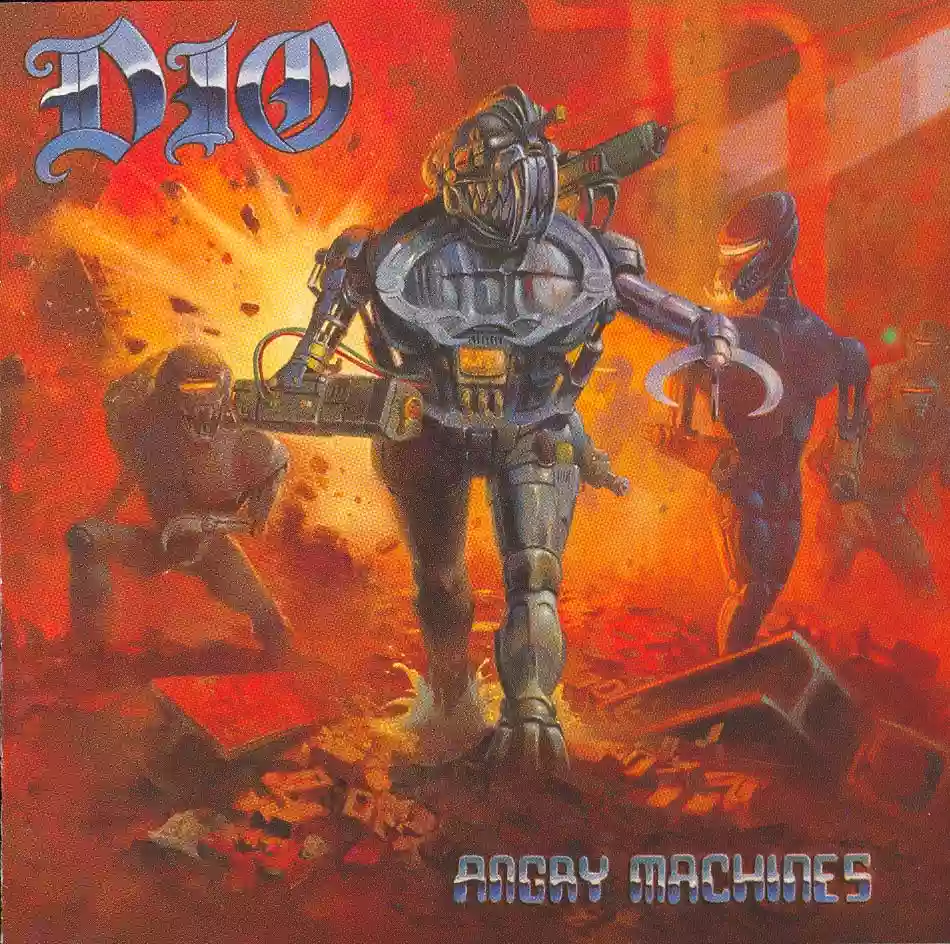
On the notes of this underestimated album grows the sound of unrest. A completely standalone episode in the over thirty-year career of the Italo-American singer, “Angry Machines” was literally ignored by fans. The band was even forced to cancel some dates of the tour in support of the album.
This is metal with sounds that I would describe as twisted and sometimes cacophonous: the noise verve of the guitarist at the time (Tracy Grijalva) initially seems to clash head-on with the lyrical and baroque approach of the singing. The lyrics no longer make any mention of fantasy themes, a trademark of the Dio in the seventies and eighties, the structure of the pieces is often built outside the verse-chorus canon, the classic doom approach of the songs seems grafted onto a branch of impure sound, the so-called easy-listening structures seem deliberately cut off with blows of dissonance. This is the more or less exact description of how this work seemed, just after its release in stores; what a good "defender" would want to hear from the scribe of the moment.
“Angry Machines” was released at a very bleak moment for the sales of metal and hard rock in general. The band was thus forced to roll up their sleeves and experiment, trying out new solutions. “Angry Machines” is a bomb of an album, at least to me: a saga of evil lasting three quarters of an hour and some. The curtain rises with “Institutional Man”, a track paced by hallucinatory lyrics. The sounds of Tracy G.'s six-string are a hymn to madness, in this piece as well as in “Stay Out Of My Mind”, embellished by the effect play of the keys. Listening to it literally gives chills, the soundtrack to a schizophrenic nightmare. In a more classic style “Don't Tell The Kids”, in which Vinnie Appice gives a rock drumming lesson to his contemporaries. In every track a different instrument seems to carry the thread of the piece. A bulldozer-effect bass leads the assault of the ferocious “Hunter Of The Heart”. Towering riffs act as a springboard for filthy vocalizations in “Golden Rules”, finally a mention also to the very strange “Double Monday” (which I admit to be my favorite...). This long and insane hallucination ends with the sad “This Is Your Life”, a ballad with just piano and voice, a melodic pearl hidden in the mud of Tracy G.'s noise. Never again will we hear a Ronnie Dio singing and composing with this approach.
Today he is too busy frying and refrying the usual big omelet all "dragons and wizards" so dear to the central European audience. What has to be done to get by...
Loading comments slowly
Summary by Bot
Angry Machines by Dio is an overlooked and experimental metal album released during a difficult phase for the genre. It blends twisted guitar work with baroque vocals and unconventional song structures, distancing itself from Dio's classic fantasy themes. Despite poor initial reception and tour cancellations, the album stands as a bold, hallucinatory journey into darker sounds. The review highlights tracks like Institutional Man, Stay Out Of My Mind, and the ballad This Is Your Life as key moments showcasing the album's unique character.Tracklist Lyrics Videos
Dio
Ronnie James Dio (born Ronald James Padavona) was an American heavy metal and hard rock singer and songwriter, known for fronting Rainbow and Black Sabbath before leading the band Dio, and for albums such as “Holy Diver.”24 Reviews
