
 •
Rating:
•
Rating:
THE REVIEW
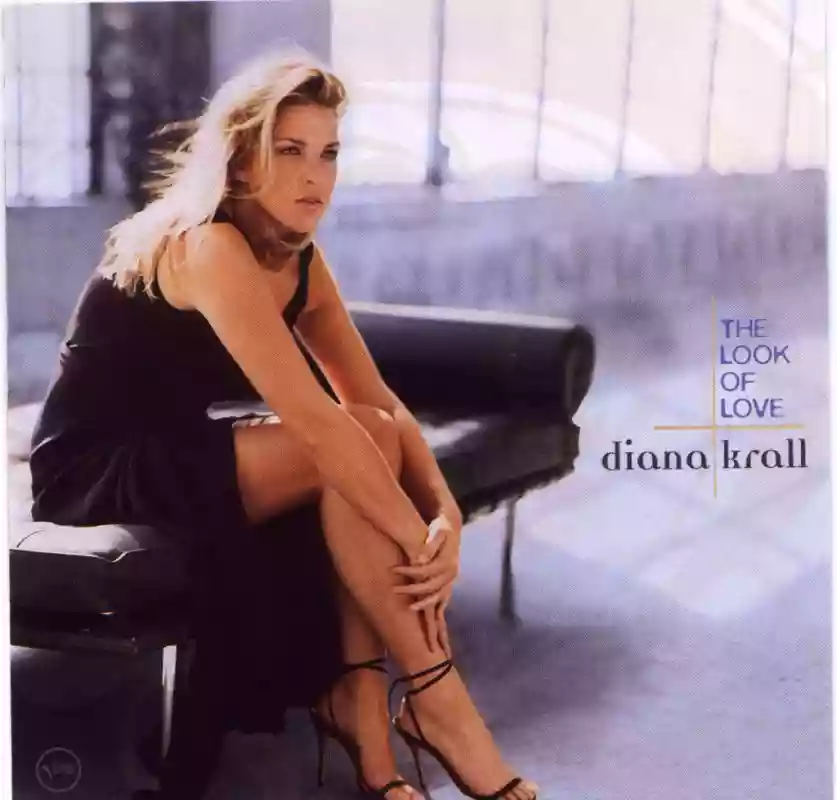
There's a lot of talk that the reviewer should be absolutely objective and impartial, that their judgment should be strict and unwavering, and so on. However, when an album like this comes across, with the first impression of the cover being amply confirmed in the inner aspects with numerous pleasant variations, one realizes that if something has become rigid in the meantime, it’s certainly not the judgment. As if that wasn't enough, from the first listen, one is compelled to ask the good Lord: "how come, "o you or whoever for you" (scholarly quote from Ligabue) to someone who already presents herself so, you also give a perfect voice, clear and balanced as a gift?".
The critical sense languishes, frustrated by these immediate reactions, but when it finally resurfaces, it immediately finds something to sink its sharp teeth into. Meanwhile, it's evident that Diana Krall has uncommon vocal talents, but in the way she uses them, she somewhat reminds me of someone using a cannon to kill mosquitoes. Meaning that from such a powerful, deep, and sensual voice, one would expect a tone a little less monotonous. Instead, if we exclude a few moments ("Cry Me A River") where the ice lolly seems on the verge of melting, the album slides by cradling us with the somewhat mechanical sound of a technically impeccable, but utterly impersonal voice. One wonders where the passion went, and as the exact counterpart to the statuesque blonde, we think of the "frog" Nina Simone with her croaky and tar-like voice that, however, provided continuous emotion. With the same formal perfection used in singing, this beautiful creature dispenses her chilly piano notes, without smudges (and that’s no small feat), but if I had to find some adjective for her touch, or even compare it to that of a real jazz pianist, I’d be truly at a loss.
It's worth specifying that, although generally classified as a jazz singer, our Diana actually belongs to the "nostalgic" branch of this music, one that refers to the great crooners of the past (Frank Sinatra first and foremost, but in her case, it would be better to say Barbra Streisand). We are at the border between jazz and light music, and in such a collection, even the old refrain "Besame Mucho" can end up, albeit in an elegant bossa nova version. The date of the album (2001) is fictitious: we are essentially stuck in the immediate post-war period, with the big musical orchestras of the '40s and '50s. Here, even a symphonic orchestra is used as a substitute, one of the more respectable ones, the London Symphony Orchestra, further waste of resources in an album dripping with blatant luxury.
What could an album of this kind ever contain? Obvious answer: "standards", classics of jazz and its immediate surroundings, from Gershwin to Bacharach passing through Carmichael. Classics masterfully arranged, both those maintained in the traditional "ballad" form, which the mighty orchestra seems to render slower and more solemn, and those converted into moderate, sometimes too moderate, bossa nova, to the point that Paulinho Da Costa's percussions struggle to perforate the orchestral armor and give that liveliness expected. The alternation is coldly schematic: odd track = bossa nova, even track = ballad. Among the better results is the Brazilian Gershwin of "'S Wonderful", which opens the album. One wonders if the author of "Rhapsody in Blue" could ever imagine being cooked in this sauce, but given his openness towards Latin rhythms ("Cuban Ouverture"), he probably would not have minded this version. More generally, it seems to me that the Brazilian attire suits most of these old hits very well: another valid example is "Dancing In The Dark", where Diana allows herself even a timid piano solo... sure, if I think of the same song played by Miles Davis and Cannonball Adderley, it's no contest. But this beautiful blonde is not to be compared to those giants, but rather to the various neo-crooners like Bublé who, taking advantage of the terrifying musical void of these years, are successfully reintroducing a sound of at least fifty years ago.
In this glossy world, our Diana can cut a fine figure, and not just for the more prominent qualities. Moreover, the interpretation of "Cry Me A River" demonstrates that the vocal arsenal of Diana Krall, if employed with the proper passion, can yield surprising results, which go far beyond the icy perfection of this nonetheless appreciable and elegant collection of music, which I would define as "parlor music", excellent more than anything else as background.
Loading comments slowly
Summary by Bot
This review praises Diana Krall's album The Look of Love for its technical perfection and elegant arrangements blending jazz standards with bossa nova. While her vocal talents and polished piano are undeniable, the delivery is seen as somewhat cold and lacking passion. The album borders jazz and light music, featuring orchestral backing from the London Symphony Orchestra. It suits fans of nostalgic crooners but may feel like background or parlor music to some.Tracklist Lyrics Videos
Diana Krall
Diana Krall is a Canadian jazz pianist and singer known for her smoky contralto, deft piano work, and refined interpretations of the Great American Songbook. She rose to international prominence in the late 1990s and has since become one of the best-selling jazz artists of her era.02 Reviews
