
 •
Rating:
•
Rating:
THE REVIEW
"Starting from the strangest and most diverse elements, and then always finding the 'pop structure' in which to enclose everything".
This, in the words of a Burtonian Stef Kamil Carlens, is Tom Barman's greatest talent.
A talent he has been displaying since the now distant 1994 (year of the stunning debut of "Worst Case Scenario"), and from which, after 1999 (year of the latest enchanting mosaic, "The Ideal Crash"), he had deviated in favor of other artistic endeavors.
Now dEUS return, and Tom Barman rightly claims that this is not his 'solo project,' yet the tyrannical leader changes the musicians around him once again - except for the loyal, fundamental Klaas Janzoons on violin. Out goes Ward (illness), out goes Mommens (uhm... disagreements, let's say), out goes De Borgher (who knows?), here come Mauro Pawlowski on guitar, Alan Gevaert on bass, and Stéphane Misseghers on drums.
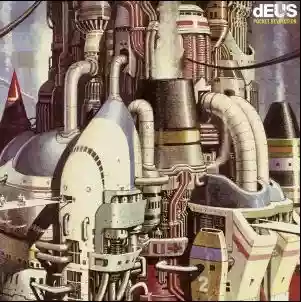
Six years later, the comeback album tells us that the talent for the 'pop struktuur' has not vanished. At all. Because dEUS remain unclassifiable yet extremely enjoyable.
However, "Pocket Revolution" is not the best work of the Belgian quintet, and if this was, in all honesty, expected, it remains to be seen what is lacking.
Granted that Bad Timing is a sensational start, with a constant crescendo of sonic scratches that pulls you into the album.
Granted that with the few but targeted electronic additions of 'friend Magnus' CJ Bolland (7 Days, 7 Weeks and Stop-Start Nature), the dEUS-sound continues to evolve.
Granted that the much-feared up-tempo tracks (If You Don’t Get What You Want, Nightshopping, and Cold Sun Of Circumstance) have a rare ingredient in today's rock'n'roll - class.
Granted that the subtle and poignant poetry of the romantic Barman is enriched with a mature nocturnal flavor (Include Me Out, The Real Sugar, Nothing Really Ends).
Granted that the title track, a spy story with initially unsettling then incredibly engaging breath, constitutes the 'usual' mystifying oddity.
Granted that the cale-like Sun Ra is of a beauty as confused as it is incisive, at the peaks of their production.
Granted that the aforementioned Stef lends a few grams of his voice - more than enough - in the two tracks just mentioned.
Granted all of this, and that the stain of the synthetic and banal What We Talk About does little to affect the overall quality of the album, what is missing?
Perhaps: a sparring partner, a supporting role worthy of it.
The skittish jazz-blues genius of Carlens at first, and the subdued noise unrest of Craig Ward later, had been capable of balancing, by contrasting, the visionary Tommasino. Pawlowski is a great rocker, mad in his own right, ensuring an even greater live impact than his predecessors; but on the record, he fails to scratch the histrionic ego of the 33-year-old Barman freshly resurrected (also because, it must be said, much of the album was conceived with the old line-up), so the album seems more focused on systematizing the leader's infinite cues than (de)centered on exquisite invention.
"I’m not a tyrant... I’m just the guy who has the vision", says Tom Barman.
He also says: "I’m not a creator, I’m just an assembler".
Anyway: long live Tom, dEUS, and all of Antwerp.
[For the ideas and contributions, the review should also be credited to trellheim and lukin, but they are shy...]
Loading comments slowly
Summary by Bot
dEUS's Pocket Revolution marks a strong 2005 comeback with inventive pop-structured rock and poetic lyrics by Tom Barman. Despite lineup changes and some weaker tracks, the album maintains the band's unique sound. The review praises the album's diversity and maturity but notes it lacks a strong counterbalance to Barman's leadership, which keeps it from being their best work.
dEUS
dEUS is a Belgian rock band from Antwerp, widely associated with alternative/art rock and known for shifting line-ups centered on singer-songwriter Tom Barman.18 Reviews
Other reviews
By AR (Anonima Recensori)
Pocket Revolution is basically a poor copy of Ideal Crash with qualitatively inferior songs.
I’m not someone who expects a band to always surprise me album after album, but neither am I someone who expects to hear, years later, exactly the same thing.
