
 •
Rating:
•
Rating:
THE REVIEW
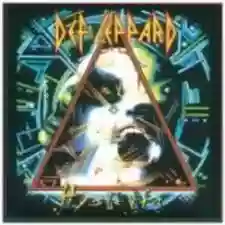
The story I want to tell today is that of Def Leppard—a tale of courage, clear-sighted madness, unwavering determination, and, above all, the value of friendship as the absolute protagonist. The embryo of the band began to form in 1977 in Sheffield, a story similar to many others: a group of students from the same school getting together. Their first name was Atomic Mass. After the initial reshuffling of the line-up, from 1978 the band adopted the name Def Leppard and its definitive line-up, featuring Joe Elliott on vocals, Steve Clark and Pete Willis on guitars, Rick Savage on bass, and Rick Allen on drums. In 1982, Phil Collen replaced Pete Willis during the recording of the album Pyromania, which turned out to be a monumental success—an authentic landslide that signified their true consecration, with 10 million records sold in the United States alone, a market that meant everything to Leppard. So what could possibly go wrong, you might ask? Well, incredibly, the band found themselves literally penniless, despite their huge success in both sales and live performances. Legend even has it that they accumulated monstrous debts with their record label, with Elliott reportedly borrowing money just to get by; the band stayed in cheap hotels and used equally inexpensive transport to save money. Moreover, the production costs of their records kept escalating, partly also due to their incredible obsession with perfectionism, which, for example, required them to record in four different studios in four different states. Despite the colossal success of Pyromania, there was still about £800,000 in debt to be paid to their record label. Even packed stadiums during their tours were not enough to repay their frightening debt. Basically, Hysteria—even before it hit the shelves of record stores—was already condemned to have to become a success of unprecedented proportions in order to pay off previous debts and the monstrous production cost of the album itself, which reached the astronomical sum of 5 million dollars at the time. Just to give you an idea, in the same year Guns N' Roses released 'Appetite for Destruction' with a production cost under $400,000. The situation As a final blow, disaster struck drummer Rick Allen, who on New Year's Eve 1984 was involved in a car accident that cost him his left arm. With the band on the edge of bankruptcy, instead of replacing Allen, they decided to attempt the impossible, to push further than anyone ever had before: to create and perfect a special drum kit that would allow Rick to learn to play with one arm, and to wait until Allen himself could fully master it. This further plunged the band's financial situation into deep crisis, forcing them, among other things, to suspend their live activities for about 20 months due to Allen's unavailability. When Hysteria finally saw the light of day, the situation was disastrous—they truly needed a miracle, an explosion in sales never seen before. And so, in August 1987, almost three years after Allen's accident, the album was finally released, complete with a written apology from the band in the booklet for the long wait; well, no patience was ever more rewarded, as if by magic the miracle happened: Hysteria consecrated itself with the stunning figure of more than 20 million copies sold. Listening to it, you get a true sense of the perfection in every single note, with massive but never out-of-place use of special effects, always in the right spot—an album to devour from the first to the last note in one breath, almost like a concept album. The individual tracks flow by with pleasure—it's really almost impossible to choose favorites. Probably, some of the earliest fans were disappointed by the much less metal sound compared to previous records, but really there is no comparison—Hysteria is without a doubt the highest point ever reached by Leppard; even their next album, Adrenalize, despite its great success, was in no way comparable to the superlative level of Hysteria itself, which I truly feel compelled to recommend to anyone who missed it, perhaps for reasons of age, since it did after all come out almost 40 years ago, even if it really seems to have been conceived only yesterday.
Loading comments slowly
Summary by Bot
This review praises Def Leppard's 'Hysteria' as a standout of 80s rock, lauding its production and chart-topping singles. The reviewer regards it as an album that redefined the era's stadium sound and remains influential. The sentiment is highly positive, appreciating its lasting impact.Tracklist Lyrics Videos
Def Leppard
Def Leppard are a British rock band from Sheffield, formed in 1977. They became global stars with Pyromania (1983) and Hysteria (1987). Drummer Rick Allen lost his left arm in a 1984 car accident but continued with a custom kit; guitarist Steve Clark died in 1991. Their polished, chorus‑driven hard rock bridged NWOBHM and pop‑metal.14 Reviews
Other reviews
By SmknToyz87
A pure concentrate of Energy (yes, with a capital E), a succession of potential chart hits from the eighties that follow one after the other.
One of the greatest living examples of a musician, tenacious and professional.
By skylarblue
The album was released in 1987 and marked a kind of turning point in terms of arrangements, feeling and, why not, approach to the hard rock that had been played by the British band until then.
After a period of rehabilitation and training for the drummer on a drum kit specially built for him by Simmons, they ventured into composing the album that is still considered their greatest success.
