
 •
Rating:
•
Rating:
THE REVIEW
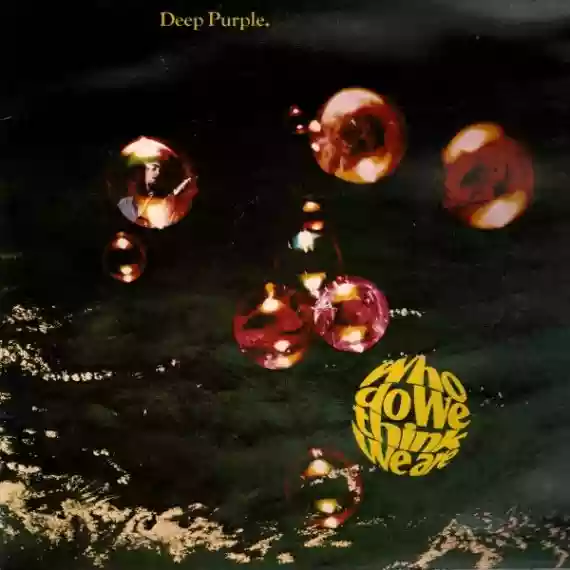
It is obvious that if one is to purchase the first Deep Purple album of their life (in my case, I was nine years old), this is not the album to prioritize, as the choice must necessarily fall within the 1970-1972 interval of Mark II (namely, the progression In Rock - Fireball - Machine Head - Made In Japan). A certain inclination to analyze many controversial and unfortunate albums and a reasoning on the undeniable capabilities of Deep Purple in 1973 - even after the success of Made In Japan and the inevitable pressures and expectations following it - have always made me look at this Who Do We Think We Are with indulgence and curiosity. It was slammed by critics at the time of its release and considered half trash even by many fans, which I believe it absolutely does not deserve.
The problem with so many neglected and poorly judged albums, beyond many objectively and undeniably unfortunate music releases, is that the artist or band has decided to modify, vary, diversify, or integrate their musical genre, and this move is not accepted: regardless of how successful and well-calibrated the result of the different artistic creation might be, consistently with the choice made (which itself may or may not be successful), it is neither tolerated nor understood by the audience, accustomed to previous stylistic choices and often unable to embrace changes that the artist nonetheless has every right to feel necessary. What I'm saying is that one should have the detachment and objectivity necessary to evaluate the artistic work within the context in which the artist wanted to create it, first judging the value of the work itself in relation to the creative intentions, and then filtering the work through their own musical tastes, which is always legitimate (obviously). If tomorrow AC/DC decided to make a Celtic music album, three-quarters of their fans would discard it just for the stylistic choice, without judging it within the new context in which the artists themselves decided to compose it... Instead, it's right for a work of art to be evaluated also for what it sought to achieve: it would be right to judge Angus & Co.'s hypothetical Celtic album (I don't think they will!) for the potential alignment of the vocals with the genre's requirements, the performance achieved, the value of the musical themes, the feeling conveyed, and if the result were positive, one could also respect the artist's choice, evidently necessitated (given the good outcome) by an inner artistic journey that the artist themselves cannot be denied. In this case, if we did not agree with AC/DC, what we would be judging is not really their album, but Celtic music, without doing justice to the band's effort; this is something a reviewer, in my opinion, should not do, instead having to account for the artist's maturity in realizing what they effectively and consciously wanted to create. After that, if one does not love Celtic music, they do not buy the album and even deplore the change in musical genre, but this does not mean they should think the band has become lousy or that it no longer knows how to play or compose.
This long and inappropriate introduction, which may serve to discuss among ourselves the absolute and relative value of musical work, leads me to try to evaluate Who Do We Think We Are within the context in which Deep Purple wanted to record it in 1972/1973: suddenly tired of being only solid and rocky, having had their fill of riffs carved in marble, they try to place on record something that also has a softer and more diversified approach. Gillan tries a blues number - Blackmore had wanted to do it for years - and I don't think Place In Line turned out badly; there are three or four songs without too many solos, but Super Trouper, Mary Long, Smooth Dancer, and Our Lady are objectively excellent tracks, and if a B-list band had produced them, it would have been considered a miracle. The famous Woman From Tokyo (recorded in Rome before the Japanese concerts of Made In Japan) and Rat Bat Blue, which could easily have been included in Fireball, are ultimately the undeniable jewels of the album. Naturally inclined to appreciate stylistic commissions and even daring artistic paths, I've always wondered what this album did wrong to be so snubbed, and I've never found truly valid reasons except for the fact that the stylistic choice of Deep Purple in 1973 was not determined by greater impulse or renewed energy but - on the contrary - by the backlash of the three or four extremely busy years, in-studio and on stage, being the toughest and the best of the pack. I really like the album, but it is true that it suddenly exudes a much more relaxed atmosphere, to the point of perceiving a drop in tension. The Purple are also divided by the opposite characters of Blackmore and Gillan and likely cannot maintain their peak momentum. However, in my opinion, there are no repercussions on the band's ability to compose excellent musical themes or play up to their reputation (listen to the keyboard solo in Rat Bat Blue): it is not an album that turned out poorly, they didn't intend to do one thing and ended up with another, it is not Too Old To Rock'n'Roll by Jethro Tull (that is an unsuccessful album, as The Battle Rages On by Purple themselves is, in my opinion, or Love Beach by ELP, or Inner Secrets by Santana).
At this point, one might not appreciate the mellowing of Deep Purple in 1973, and they have their reasons, but they are not entitled to think the band has stopped being able to compose and play: they are simply not in tune with the band's changed artistic direction. I have yet to decide who is entitled to judge the consistently matured and realized artistic choices, whether it necessarily translates into masterpieces objectively perceptible even with the lens of the previous musical genre, and there's room for discussion on this point: I say the measure of personal taste is absolutely valid, without, however, claiming to confer it with universal value, maybe we are the ones not understanding and not the artist having become senile.
Loading comments slowly
Summary by Bot
The review argues that Deep Purple's 1973 album 'Who Do We Think We Are' is unfairly underrated, largely due to its softer and more varied musical approach. Despite critics and some fans dismissing it, the reviewer emphasizes the band's intent to explore different styles without losing their compositional skill. Key tracks like 'Woman From Tokyo' and 'Rat Bat Blue' are highlighted as standout achievements. The album should be judged within its own artistic context rather than against previous works or fan expectations. Ultimately, the review calls for fairness in assessing artistic maturity and evolution.Tracklist Lyrics Videos
Deep Purple
English rock band formed in 1968, pioneers of hard rock. Best-known for classic lineups (notably Mark II) and landmark releases such as Machine Head and the live double Made in Japan.82 Reviews
Other reviews
By Mandrocker1
How can a band with such a prestigious name respond to masterpieces like "In Rock," "Machine Head," and "Made In Japan"?
"Super Trouper" is almost identical and leaves a bit of a bitter taste due to this blatant recycling.
