
 •
Rating:
•
Rating:
THE REVIEW
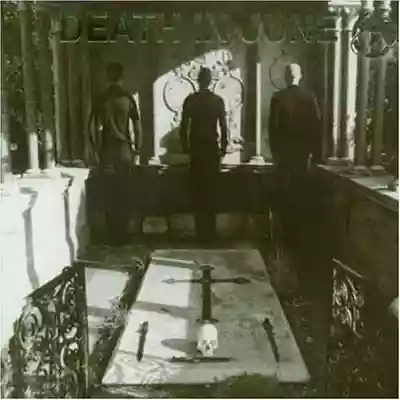
Permeated by a decadent and pessimistic breath, "Nada!" marks an important turning point in Death in June's career, preceded by early discographic chapters all characterized by a strong martial and percussive component combined with post-punk dark movements already overflowing with personality and inventiveness. With "Nada!", Douglas Pearce's band incorporates electronic sounds and neo-folk hints into the band's dark and shadowy sound fabrics.
The group reduced to two members (Douglas Pearce and Patrick Leagas) had recently been left without bassist and composer Tony Wakeford. It was 1985, and "Nada!" would begin a new chapter in Death In June's history. The band had adopted a warlike iconography inspired by German National Socialism, which had expanded and drew numerous criticisms, accusations, and even boycotts from people who did not grasp the neo-decadent spirit of the musicians—a sort of blurred postcard from the times of World War II, when Europe burned under the bombings; a martial-decadent aesthetic also inspired by cult films like "Il Portiere Di Notte" or "The Damned".
The epic and militant motions of the opening "The Honour Of Silence" engender exhilarating epiphanies and serious atmospheres, Douglas P.'s voice stands proudly over acoustic guitar arpeggios and triumphant trumpet inserts, all subdued by powerful percussion and war drums. "His eyes were winter (...) tears of sweat cry from your body, strength and cruelty in your gentle nature." "The Calling" is dominated by electronics and the thumping pulse of the drum machine, reached by gloomy synthetic melodies and Leagas's intense vocal interpretation: "wipe away your tears and dry your eyes, we live in fear and in drunken lies". This album represents not only an important musical turning point for Death In June but also their most typically "eighties" chapter, both in sound and for the synth-pop inflection of the more distinctly electronic tracks. "Nada!" also explores territories that Douglas P. would venture into alone in the future, "Leper Lord" being the proof. Despite being concentrated in just over a minute, it already fully displays the forthcoming neo-folk elements, supported by the acoustic guitar and Douglas's deep vocal timbre in the forefront, "leper lord, make the angels weep". The hypnotic and dark electronic scores of "Rain Of Despair" lead to tense and stinging scenarios, with Douglas's desperate lullaby sung in falsetto: "in your life nothing matters, all your plans collapse". In "Foretold," the synthetic rhythms expand and slow down, the slow and steady pace and the afflicted singing are immersed in sweeping and dark waves of meditative sound, almost static "the old man looks with tired eyes at the dull faces of twisted lives, lives of lies".
The future path that Death in June would undertake is even more powerfully highlighted in two dark jewels like "Behind The Rose (Fields Of The Rape)": "in foreign land, in unknown time, the hour of reaping came (...) this was life and these the horrors", and the esoteric "She Said Destroy": "in that shattered and bleeding darkness the snapping of the neck (...) she said destroy, in dark New York". Both tracks boast lyrical collaboration by David Tibet, the brilliant mind behind Current 93, who would collaborate with Douglas for over ten years from this album onwards. These two tracks, injected with twilight airs of neo-folk flavor, advance through dry rhythms, acoustic guitars, and the vocal bursts of a Douglas P. inspired and poetic. The return to electronic atmospheres of "Carousel" is inflamed by dizzying kaleidoscopes of sad and downbeat melodies, where Pat Leagas's anguished singing (who would leave the band shortly afterward) solidifies over the pulsing rhythms "she smiled at me with eyes of stone (...) like wingless insects, born to crawl". One of the scandals that earned Death In June accusations of neo-Nazism was undoubtedly "C'est Un Rêve", a seismic, para-industrial blast addressing the imprisonment of the former Gestapo chief Klaus Barbie "where is Klaus Barbie, he is in the heart, he is in the black heart, freedom is a dream". The track is sung in French and writhes between martial beats and torrential synthetic strikes until it fades into the background noise of old radios. The sudden materialization of a melody from a music box oozing melancholy and resignation marks the final notes of "Nada!" and the first notes of "Crush My Love", an intense gem suspended between light and dark, between earth and sky "a broken dream, suspended over life, I feel no pain, I feel nothing".
"Nada!": the song of the dawn, the decadence, the nothingness.
Loading comments slowly
Summary by Bot
Nada! marks a crucial turning point in Death In June’s career, incorporating electronic and neo-folk elements into their dark, martial sound. The album’s intense atmosphere, lyrical depth, and 1980s aesthetic showcase Douglas Pearce’s evolving artistry. Notable collaborations with David Tibet add poetic touches, while tracks explore themes of war, decadence, and darkness. Nada! remains a defining work blending shadowy soundscapes with emotional and intellectual intensity.Tracklist Lyrics Videos
Death in June
British music project led by Douglas Pearce (Douglas P.), formed in 1981, known for apocalyptic folk, martial/post-punk inflections, influential 1980s–1990s albums and contentious wartime imagery.36 Reviews
Other reviews
By mementomori
'Nada!' can truly be considered the real first album by Death in June, where their distinctive ethos is fully realized.
We are facing the absolute masterpiece of Death in June (at least regarding the first era), the year zero of apocalyptic folk, a true must for anyone wanting to approach the group and the entire genre for the first time.
