
 •
Rating:
•
Rating:
THE REVIEW
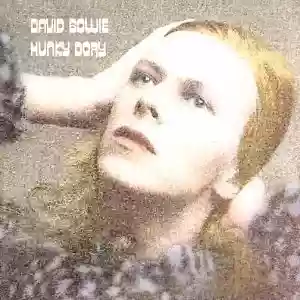
Hunky Dory: when lightness reaches the metaphysical.
Having set aside the enjoyable but low-impact pop of "Space Oddity" and overcome the commercially modest experience of "The Man Who Sold The World," an album too eager for chart-topping singles to achieve even the slightest market success, the young Thin White Duke sees "Hunky Dory" as the last opportunity to shape his genre, his style, and, equally importantly, his image once and for all. Although the times are not yet ripe for the electric rides on the verge of punk ("Star," "Hang On To Yourself," "Suffragette City," "The Jean Genie") that will characterize the famous subsequent albums "Ziggy Stardust" and "Aladdin Sane," critics (myself included) agree in recognizing the album in question as an embryonic form of that glam rock style that will be more finely elaborated in the years to come. Here, however, it is the delightful romantic cabaret-like atmospheres and that intriguing ancient quality that give the work a very special charm. If you love Bowie raising his voice accompanied by the vibrating strings of Mick Ronson's saturated guitar and the battered skins of Woodmansey's percussion, this album is not for you; but if you want to discover the more romantic and intimate side of a Bowie playing his last card to secure a spot in the Olympus of stars, rush to buy it.
The undisputed protagonist of (almost) all the pieces is the sweet piano accompaniment in which David is a master, interrupted only by the incisive guitar streaks of the trusty Ronson. The carefree facade of the opening track ("Changes") actually hides a bitter reflection on the need to renew the artist's image and style: the frequent metamorphoses that will mark the stages of the Thin White Duke's career (a character that will actually emerge only with "Station To Station") will always keep pace with the trends and "fashions" of the moment, offering an image of Bowie as a skillful chameleon capable of riding the fluctuating tastes and moods of the large public. "Oh You Pretty Things" alternates the soft pianistic suite of the verse with a markedly more rhythmic chorus laden with dark Nietzschean references. Passing the brief but intense piano interlude of "Eight Line Poem," four simple piano chords inaugurate the classic par excellence, "Life On Mars": an enchanting crescendo introduces the resounding chorus marked by the notes of a reassuring violin carpet. Absolute masterpiece. The aforementioned romantic-decadent flavor that pervades the entire work reaches its peak in the subsequent "Kooks": the album's most delirious text is spread over an extremely catchy, soft, and nursery rhyme-like melody, accompanied by Bolder's seductive bass line and the sharp dancing chords of Bowie's piano. An arpeggio of enchanting delicacy then introduces the secret pearl of the Bowie repertoire: "Quicksand." Never performed live, the track offers the album's finest vocal performance and boasts a powerful drum accompaniment by Woodmansey. The delightful vaguely jazzy interlude of "Fill Your Heart" (composed by the American Biff Rose) provides one of the album's most charming moments: the fresh and catchy melody and the minimalist arrangement instill a subtle melancholy in the listener. The three pieces that follow are fundamental both for the album's economy and for Bowie's overall repertoire: while "Andy Warhol" sounds like a carefree and desecrating mockery of the vain New York artist made irresistible by Ronson's dreamy acoustic arpeggio, "Song For Bob Dylan" embodies the (at the time) widespread feeling of a softening of Mr. Zimmerman's universally recognized guiding role. Dedicated to his friend Lou Reed, "Queen Bitch" seems included in the list for the sole purpose of satisfying the Spiders' never-extinguished hard vein: a tense distorted riff inaugurates a faithful imitation of the voice of the then little-known overseas rocker.
Having assimilated the lesson of the Velvet Underground, Bowie seems here to want to offer a preview of the forthcoming masterpiece "Transformer." The sinister "The Bewlay Brothers" shatters the illusion of an easy closure of the highest compositionally piece of the golden age of the Thin White Duke: in the years to follow, David will reach unsuspected heights, but will hardly be able to reproduce an art of such enchanting naivety, metaphysical lightness.
Loading comments slowly
Summary by Bot
Hunky Dory represents a pivotal point in David Bowie’s career, showcasing his shift towards a romantic and intimate style with striking piano melodies. This album foreshadows the glam rock brilliance of his later works while offering unique cabaret-like atmospheres. Key tracks like 'Life On Mars' and 'Quicksand' highlight Bowie’s mastery and artistic depth. The record is praised for its poetic lyricism and innovative blending of sound.Tracklist Lyrics Videos
David Bowie
English singer-songwriter and actor David Bowie (born David Robert Jones, 1947–2016) was a pioneering, genre‑shifting artist known for his personas, musical experimentation and a career spanning pop, rock and avant‑garde projects.109 Reviews
Other reviews
By animasalva
The artist clearly embraces the nascent glam rock... his contribution will be crucial in renewing the genre.
'Life On Mars?' is the most beautiful song ever written by Bowie.
By luludia
It’s that “Hunky dory” is “Hunky dory”, it’s a unique piece.
When something gets inside you, it also changes the entire context around that something.
