
 •
Rating:
•
Rating:
THE REVIEW
Proemio.
Fresh memory, the fleeting current is tamed:
my home thirty-two years before.
Red flags, the peasants' spears throng,
black hands raise high the tyrants' whip.
As they sacrifice themselves, many sacrifice, their will strengthens,
dares to command sun and moon: creates new days.
Happy vision: a thousand waves run through rice paddies and legume fields;
around the valley, heroes descend into the evening mist.
Mao Zedong [毛泽东],
June 1959.
.
§ 1.
Facing death head-on.
Seeing death, without looking away.
It's certainly not a beautiful sight: it strips away every lie, with a snap of fingers, it bares our ghosts.
.
§ 2.
Under the term “man of his time” you will undoubtedly find Kurt Erich Suckert, known as Curzio Malaparte.
A socialist?
A jerk?
A proto-fascist?
An anti-fascist in exile?
A dandy?
A great writer?
A Christian?
A turncoat?
A communist?
A theorist of the Coup d'État?
All this and none of this, my fellow countryman Malaparte was.
From him, I unequivocally learned that the consistency of a man is always something unfathomable.
There's no point in discussing it.
.
§ 3.
Even today, it shows no sign of snowing.
It would be nice to isolate oneself a bit from the world.
The sun, somehow, burns.
The plants, however, only feel like dying, dozing off.
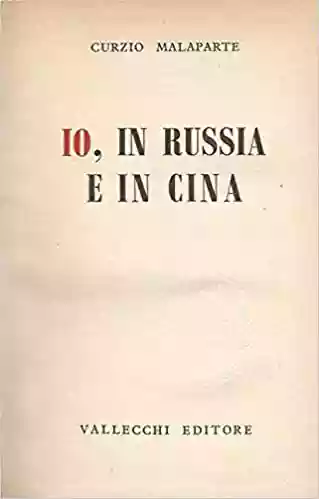
This summer of winter I tidy up the bookshelves: I have in my hands, somehow, this late book by Malaparte.
.
Conclusion.
He fell ill in China.
He fell in love with the sparkling whiteness of the youth of the Cultural Revolution.
Of man as an individual.
Of man as a man.
Precisely in China, when still in his city—today a second China—had never seen Chinese people.
In China, he recognized, he said, the face of Christ, precisely in the Chinese youth destroying every sacred icon.
What an inextricable knot.
There's no point in talking about it.
.
Loading comments slowly
Summary by Bot
The review reflects on Curzio Malaparte’s multifaceted persona and his eye-opening experiences in Russia and China. It highlights his confrontation with death and ideological contradictions, while touching on his admiration for the Cultural Revolution. The review appreciates the book’s depth but maintains a contemplative and measured tone.
Curzio Malaparte
Curzio Malaparte (born Kurt Erich Suckert, 1898–1957) was an Italian novelist, essayist, journalist, and war correspondent, best known for Kaputt and La pelle. His writing blends reportage and fiction to dissect war, politics, and Italian identity.04 Reviews
