
 •
Rating:
•
Rating:
THE REVIEW
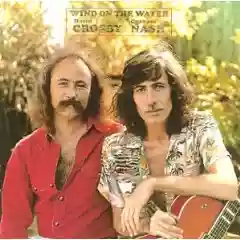
The second album by the Nash-Crosby duo is dark, resolute, with decidedly less soothing tones. There’s no longer a generational manifesto to produce because the twenties ended long ago; there’s no longer any reason to be the enchantments of the Summer Of Love, to be cool with guitars by the campfire, and indeed David’s hair is already starting to fall out (on the plus side, his waistline doesn’t seem to be expanding).
Their return together is more intricate, less dreamy, the textures have thickened, Nash's marches are no longer so cheerful and romantic, but at best semi-serious. Crosby's psychedelia is still there, but often it's just a variant for some confidential-themed music, over which Nash often frolics, garnishing the whole with piano.
The intriguing "Mama Lion," the lysergic "Bittersweet" born from a piano loop, Nash-flavored rock of "Take The Money And Run," the dark and deceptively calm "Naked In The Rain," the jazz-rock veiled in psychedelia, full of accelerations and decelerations, of "Low Down Payment": there are no beaches, no waves, no surfboards, bonfires, parties, orgies. Perhaps there are no more dreams and ideals either. There’s introspection, there are tense nerves, bitter smiles, there’s awareness, there’s the pain of loss (Crosby's mother), there’s the adolescent dream of a better world that you realize is going unfulfilled.
There’s the country ballad of "Cowboy Of Dreams," led by the piano instead of the guitars, there’s "Homeward Through The Haze," a soulful and confidential ballad that proves an excellent ground to plant Crosby's peyote seeds. There's perhaps the angriest Nash ever in the finale of "Field Worker," not that it scares us, but he had never sounded so heavy, he who has always been graceful and light.
Finally, there's the lysergic folk that seems to have become a medieval chant. Then the track veers toward a prototype of dream pop only to finally return to the trusted paths of the Crosbyian song, aided in its strangeness by inserts of Nash’s usual gushing piano: this is the final "To The Last Whale," a medley between "Critical Mass" and the title track, the absolute apex of an album that has little to do with easy listening. Not a masterpiece, but a genuine and well-targeted album, exuding bitterness and disappointment, dismay and misfortune. Crosby and Nash, like true hippie brothers, do nothing to hide themselves, instead they help us understand.
The west was won, ragazzi, the west was won.
Loading comments slowly
Summary by Bot
Crosby & Nash's 'Wind On The Water' marks a shift toward darker, more intricate compositions compared to their earlier, dreamier work. The album blends folk, psychedelia, and jazz-rock elements, conveying themes of loss, introspection, and fading ideals. Not an easy listening record, it captures a bittersweet, mature perspective. The duo expresses their evolving artistry with emotional depth and complexity, creating a genuine and reflective album.Tracklist Lyrics Videos
Crosby & Nash
Crosby & Nash is the harmony-rich folk-rock duo of David Crosby (The Byrds; Crosby, Stills, Nash & Young) and Graham Nash (The Hollies; Crosby, Stills & Nash). Their key releases include Graham Nash David Crosby (1972), Wind on the Water (1975), Whistling Down the Wire (1976), and the later Crosby & Nash (2004), alongside multiple live recordings.03 Reviews
