
 •
Versione 1
Rating:
•
Versione 1
Rating:
THE REVIEW
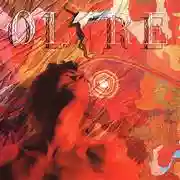
As already happened to Renato Zero in 1980 (the album in question "Tregua"), it's fair to say that too much is too much. And ambition often kills inventiveness. Here Baglioni really goes beyond, way beyond: a sort of endless concept album divided into 4 parts (air, water, fire, earth) that tells the story of Cucaio (which was the nickname Baglioni himself, as a child, used for his own name). It was originally conceived as a tale (and the 1990 edition, available only to those who pre-ordered the album, included the original story in booklet form) and ends up being a musically fascinating but dispersive album (and ultimately heavy-handed) like few others. Moreover, aside from a few moments, there is little emotion: colder than an ice pop, it moves forward almost by inertia, always intent on astonishing rather than truly hitting the mark.
The album had a gestation that calling troubled is an understatement. Baglioni began writing it, in Ansedonia, together with some collaborators at the end of 1987 and worked on it through the following year. He recorded it all over the place, especially in London where, in the next-door studio, Peter Gabriel was recording the soundtrack for "The Last Temptation of Christ", a masterpiece by Martin Scorsese. Since Peter Gabriel was, at the time, the king of world music, Baglioni fancied himself the Italian Gabriel and turned "Oltre" into an all-round world music record (as if "Creuza de mä", 1984, true world music, had never existed). He thus contaminated his music with sounds and musical cultures far removed from Italy and wrote some of the most complex (and obscure) lyrics in Italian music (very difficult to understand when listening to the album since, for some mysterious reason, it is recorded at an extremely low volume, go figure...). Ethnic music, incomprehensible lyrics (or nearly), a complex story to follow and the omelette is made—but at the time, few noticed. The album was advertised in 1989 to be released at the end of the year (it was supposed to be called "Un mondo più uomo sotto un cielo mago", but the first idea, as Baglioni confessed to "Topolino", should have been "A presto"), but on September 8, 1988, at the Stadio Comunale in Turin, during the Human Rights Now! tour, the organizers had the "brilliant" idea of having Bruce Springsteen, Sting, Peter Gabriel, Youssou N'Dour, Tracy Chapman, and Claudio Baglioni all perform on the same stage. Baglioni was met with boos and jeers (and thrown bottles and tomatoes). Shaken, Baglioni sought refuge in the definitive drafting of his new work, namely "Oltre", trying to go beyond his by-then tired status as a singer of love songs. But the invitation to everyone to pre-order the album for release in 1989 turned out to be a boomerang, as many pre-ordered but the release was postponed (much to the frustration of those who had already paid). It would come out in October 1990, and a few days beforehand Baglioni had a car accident in Rome on the Camilluccia. The waiting was feverish (Baglioni's previous album, "La vita è adesso", dated back to 1985, five years earlier): sales were good, very good, but fans were perplexed, while the critics, albeit in alternating fashion, praised him, stressing his newly found artistic maturity and his courage to avoid well-worn paths. Gino Castaldo, in "Repubblica", wrote: "We will have to start taking Mr. Claudio Baglioni seriously, a songwriter by profession. [...] And let's say right away that we're looking at the highest level of record production. [...] The grandiloquence is obvious, but in the end, it is a typical trait of Baglioni, who has often embarked on excessive undertakings and who must be viewed in the context of this strange story of a songwriter, absolutely unique, all founded on an unquenchable desire for intellectual redemption that he has nurtured since the times when he was the greatest author of songs for lovesick teenagers." On "Taratatà", a music program on Mamma Rai with Enrico Silvestrin as master of ceremonies, in 1999 during an interview in which Lucio Dalla was also present (who called one of the songs on this album, "Domani mai", one of the best of the entire Italian music scene), Baglioni said that after the release of the album he had to retreat to the countryside outside Rome and listen again to what the devil his mind had produced. Baglioni would continue with the world music concept in the years to come, in albums, in my opinion, more focused ("Io sono qui", 1995; "Viaggiatore sulla coda del tempo", 1999) and, above all, more concise.
"Oltre" features plenty of luxury collaborations. Pino Daniele ("Io e il mare"); Richard Galliano ("Io lui e la cana femmina"); Mia Martini ("Stelle di stelle"); Paco de Lucia ("Domani mai", "Mah, non so se potevo suonare ancora meglio," said the Spanish musician, clearly satisfied with his, indeed excellent, contribution); Youssou N'Dour ("Le mani e l'anima"); Oreste Lionello ("Dov'è Dov'é"); Didier Lockwood ("Qui Dio non c'è"). 20 tracks of which, when it comes down to it, at most 4 really stick in the mind, the rest is so convoluted that it's hard to digest—not just on the first listen, not even by the fifth. "Dagli il via"; "Naso di falco"; "Noi no" and the ultra-overused "Mille giorni di te e di me" (which Baglioni wrote 8 years earlier but, at the time, couldn't find the right musical "blanket" for) are the most famous episodes of the entire album, the other tracks slip away without leaving much trace, except perhaps for "Io dal mare" and "La piana dei cavalli bradi" (which Baglioni was inspired to write during a stay in Umbria). So much complexity and ambition did not benefit the project, which at the time seemed innovative, daring and courageous; over time, such adjectives have given way to others like heaviness, arrogance (sometimes truly unbearable), a sense of superiority (as if Baglioni, now satisfied with his own myth, wanted to indirectly compare himself with the great songwriters of previous, more "engaged" decades, unlike himself, who by definition had been, during the years of political struggle, Italy’s most disengaged artist). But time's up.
It reached no.1 in the charts and would become the third bestselling album in Italy after Lucio Dalla’s "Cambio" and Eros Ramazzotti’s "In ogni senso": in a musical landscape in constant evolution (soon the songwriters would enter a definitive crisis and even the Italian charts would be dominated by techno music), Baglioni’s courage certainly deserves recognition. As for the result—well, you get the idea.
Loading comments slowly
Summary by Bot
This review addresses Claudio Baglioni's double album 'Oltre', offering a critical perspective. The reviewer finds the album ambitious but ultimately fails to deliver. Listeners may be left wanting more substance and cohesion. The work's length may not be justified by its musical quality. Baglioni's bold vision doesn't translate to an engaging listening experience.
Claudio Baglioni
Italian singer-songwriter and performer from Rome, active since the late 1960s. Known for melodic concept albums and stadium-scale tours, with major hits across the 1970s–1980s. Co-hosted the TV show Anima mia (1997).30 Reviews
Other reviews
By domenique
"The album merges unique melodies that are extremely varied with lyrics that create a dense web of words."
"Mille giorni di te e di me is the ultimate synthesis between poetry and song, a love that challenges eternity."
