
 •
Versione 1
Rating:
•
Versione 1
Rating:
THE REVIEW
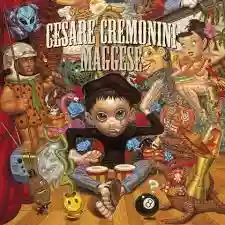
MAGGESE 7/10
In January 2012, those funny “cazzoni” from Rolling Stone compiled a ranking of the 100 best Italian albums of all time. They asked everyone, and “Maggese” landed itself a respectable 78th place. Alright, fair enough. Or not? So, according to the well-known magazine, this Cremonini album (not bad, quite the opposite...) would be better, among others, than “La gatta Cenerentola”, “Il tuffatore”, “17 re”, “Le radici e le ali”, “Darwin!” and, believe it or not, “Quelli che...”, which was banished to 97th place. Now, you can see we’re in full-blown delirium. However, I stand up for Cremonini—in fact, Zesare (as we say in Bologna)—because I like him, he’s a good (very good) musician, he’s always behaved, and he knows his job (which, these days, is no small thing). I’ve already reviewed his latest effort, “Alaska Baby”, which, truth be told, disappointed me quite a bit. I do think this is one of his best works—though not the best (“Possibili scenari”, 2017, is in a league of its own).
“Maggese” was released in June 2005 (the 10th, to be precise) and was fairly anticipated, given the artist’s fame and the label that, rather carelessly, many insiders had slapped on him: the new “wonderkid” of Italian pop. Apart from the Lunapop experience, as a solo artist he’d only released one album: “Bagus”, 2002, which was terrible. Really bad. And still, someone who comes out with an album called “Maggese” (“fallow field”) is instantly likeable: who even remembered anymore what a fallow field was? They taught us about it in school during history lessons: the vassals, the valvassors, the valvassins, and all that era. Our guy, who’s always had a soft spot for the Beatles, goes off to London to record at “Abbey Road Studios” (where else?), and whether it was the atmosphere or something else, he seems like a very different artist than in the days of “Bagus”. Only three years have passed, he’s 25, but it feels like a lifetime: if the previous album was full of adolescent attitudes and swagger (including a look still very much Lunapop), this “Maggese” is the result of a grown man (new haircut included), self-confident, finally free from audience constraints (the teenage girls still love him, but it’s better to appeal to a more adult audience too). Not everything works—at least half the tracks are questionable—but he hits the mark in many instances.
The title track (with a nod to “Penny Lane”) is a whirlwind of sounds and instruments (guitars, bass, brass, winds, you name it) that instantly sparks joy. Forgive the personal anecdote: I was 20 (almost 21) when this single came out, and to me Cremonini was the guy from “Vespa”, “Via Zanardi, 33”, “Il giorno migliore” and padremadre. When I first heard “Maggese” I struggled to recognize the artist, despite his very distinctive voice, precisely because even then it felt like a huge leap in quality. That jump forward can also be found in tracks like “Ancora un po'” or in the harmonic complexity of “Amami (Quando è il momento)”. And there’s something subtle and unsettling in the reflective “Momento silenzioso” (“...Sento che non manca molto alla mia morte”—definitely not a comforting phrase). And it’s surprising to discover the tribute to De Gregori with the delicate ballad “Sardegna”, which I believe is the most beautiful thing Cremonini has ever done. So are we really sure it’s the same Zesare?
Then again, some things here and there do wobble, perhaps because the young man wants to do too much and push too far: “Stavo pensando che Dio” is ambitious but unresolved; “Le tue parole fanno male” unfortunately sounds like it (badly) belongs on the previous album. And then there’s “Marmellata#25”, the one about Baggio who no longer plays, Senna who no longer races and “da quando mi hai lasciato pure tu/non è più domenica/e non si dimentica”. It was the first single taken from the album, and it’s a good example (so to speak) of what people (and in this case, the artists too) really think of the audience’s intelligence. Which is to say: they don’t believe it exists. Why serve up to the “popolino” a song that, even if nice and well-crafted, is just the usual blend of sweetness, sugar-coating and plenty of love (well... not all that much)? Why not choose, just every once in a while, a track with less radio appeal, but one a bit more complex and less “banalotta”? The title track, much more successful, was chosen as the second single and released in October, when the album was already four months old and many copies had been sold. That’s easy, come on.
Loading comments slowly
Summary by Bot
This review offers a balanced look at Cesare Cremonini’s 'Maggese'. It discusses both the appealing aspects and shortcomings of the album. The music’s pop-rock roots are a focus, alongside Cremonini’s songwriting. Given a middle-of-the-road rating, the album seems suitable for some listeners more than others. Overall, it’s an informative read for anyone curious about Cremonini’s solo work.Tracklist Lyrics Videos
Cesare Cremonini
Cesare Cremonini is an Italian singer-songwriter and pianist from Bologna, first known as the frontman of Lunapop before launching a successful solo career. His solo work blends piano-led pop, Brit/Beatles influences, and orchestrated arrangements; parts of Maggese were recorded at Abbey Road. Albums like Possibili Scenari and Maggese are frequently highlighted by critics.18 Reviews
Other reviews
By Giada & Diana
Each song has a particularly beautiful and meaningful part, and it manages to evoke many emotions.
We hope that Cesare and Ballo win the festivalbar because they really deserve it.
By claudio pessotto
The album is not at all ingratiating, it doesn’t wink at any other artist, and indeed, it uses music, all musical genres, as a director uses any historical era to make his films.
For someone like me who hasn’t bought an Italian album in 30 years, it was a pleasant surprise.
By zaireeka
This power-pop album, I’m convinced, was made by Cremonini thinking, even unconsciously, of that record.
No one is willing to forgive you if you force them to change their mind about you, to shake people’s mental inertia.
By Lawrence
"Maggese is still an album well-varied... well made... well played and arranged excellently."
A personal tip: Cremonini proves to be very good in the LIVE area... with his concert, for those still skeptical about him, you may change your mind.
