
 •
Rating:
•
Rating:
THE REVIEW
Published back in the now distant 1987, "Into The Pandemonium" represents the compositional zenith of the band led by T.G. "Warrior" Fischer and Martin Eric Ain, featuring a sound less raw and brutal compared to their previous works, yet maintaining those sinister and original atmospheres that have inspired a multitude of death, black, gothic metal, et al. bands (just ask Paradise Lost of "Gothic" or Obituary of "Cause of Death," as well as Tiamat of "Clouds" or Samael of "Ceremony of the Opposites" to name but a few).
The challenge toward innovation and originality begins immediately with the opener "Mexican Radio", which is actually a metal version of the flagship song by Wall of Voodoo, a new wave/electro dark band from the early '80s. Daring and bold. It continues with "Mesmerized", a mid-tempo song of disarming simplicity, characterized by a dissonant arpeggio over painful and suffering riffing, as is the singing of Thomas Gabriel, far from the typical frostian death grunt. Soprano Claudia Maria Mokri intervenes, freezing the atmosphere of the entire track.
The rhythm changes with the next track, "Inner Sanctum", claustrophobic and tense, as per the best tradition, death/thrash with a mid-tempo segment, growl vocals, and "in style" solo. Following the original edition of the album, it's now time for a small gem of gothic metal ante litteram, "Tristesses de la Lune" (in later reissues, it will be titled "Sorrow of the Moon" to distinguish it from the orchestral interpretation, wonderful and dreamy, with Mokri on vocals, which will "steal" its French title), sung once again lasciviously and plaintively, intensely, for a song with intense and absolutely original riffing.
Then the abyss that drags us into one of the frostian classics: "Babylon Fell", powerful, tortuous in its decelerations, the classic "Uhh" of T.G. Warrior, then opening majestically and perversely in the central riff with spectral background work by the aforementioned Claudia Maria and a schizoid solo, though highly effective. "Caress into Oblivion" opens unsettling with a bass line overlaid by the "Namas," a call to Muslim prayer sung by muezzins, a citation from the film "The Exorcist," then unfolds, hypnotically and powerfully into classically thrash accelerations, accompanied by the now characteristic alternation between growl and plaintive vocals. An echo of Berber percussion accompanies and enhances this song, giving it a fascinating Middle Eastern appeal.
As we said before, this is a bold and innovative album, and proof of that is "One in their Pride", a track with an industrial beat mixed with distorted guitars, sinister violins, vocal samples that seem to be taken from a NASA moon landing, all set in a surreal atmosphere in an extreme metal record. Insane and stunning. Then it’s time for a real headbanging neck-breaking song: "I Won't Dance" (a title borrowed from a song by Frank Sinatra, whom T.G. Warrior has never hidden being a fan of) is a medium-fast death piece, extremely compelling in its tough and dry riffing, yet equally original in its packaging, with distorted guitars harmonizing with the main riff and choruses of clean yet pained voices. Tremendous even in its absurd and sick solo.
And then the grand finale with the theatrical pieces "Rex Irae" and "Oriental Masquerade", where unparalleled compositional peaks are reached (ask Therion what they think). The first is nothing less than an opera, complete with a grandiloquent orchestral arrangement and soprano voice upfront, all structured in three acts plus finale, masterfully mixed with electric guitars and sometimes tectonic rhythm section, like in the central part that practically becomes a death/thrash piece with double bass. Monstrous operatic interpretation by T.G. Warrior. The funereal "Oriental Masquerade", with its slow, syncopated pace (reminiscent of the magnificent "Innocence and Wrath"), is nothing less than the stylistic continuation of the previous song and worthily concludes a truly historic and seminal album, absolutely anomalous for the global metal landscape of the time of its release and that still feels original and innovative.
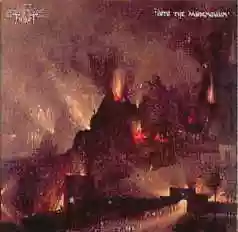
In conclusion, a few words about the artwork: once again, Celtic Frost prove to be cultured artists through and through by putting on the cover a detail from the "Garden of Earthly Delight" by the Flemish painter Hieronymus Bosch, quite an apt choice given the musical and lyrical content.Loading comments slowly
Summary by Bot
Into The Pandemonium by Celtic Frost is a landmark 1987 album showcasing bold innovation and genre fusion in metal. It features diverse styles from thrash to gothic and opera, delivering a unique, atmospheric experience. The album influenced many extreme metal bands and remains seminal in metal history. Its artistic cover complements the music's dark and complex themes.
Celtic Frost
Celtic Frost were a Swiss extreme metal band led by Thomas Gabriel “Tom G. Warrior” Fischer, with bassist Martin Eric Ain as a key collaborator. Reviews emphasize their role in early extreme metal and first-wave black metal, plus a reputation for bold experimentation—peaking for many with 1987’s Into the Pandemonium—followed by a widely criticized glam-leaning detour on Cold Lake and a later reunion that produced Monotheist.13 Reviews
Other reviews
By Big D
Imagining the sound of this album for someone who has never listened to it is like trying to explain the difference between red and blue to someone who has been blind from birth.
'Into The Pandemonium' stands to music as Warhol’s madness stands to art.
By Rocky Marciano
"The most avant-garde metal album that will ever be made."
"No album has ever lived up to its name as this 'Into The Pandemonium', into the pandemonium!"
