 •
Rating:
•
Rating:
THE REVIEW
"Mona Bone Jakon", a title that sounds like a magic formula, particularly appreciated by the Venetians, for whom the first word already has at least a propitiatory, if not a truly magical value. But beyond the wordplay, there's really something unnatural in the leap in quality that the young Steven Georgiou, then Cat Stevens and currently Yusuf Islam (Allah is great, as we know), made starting from this album.
It's 1970, and the Hellenic-English or Anglo-Greek singer-songwriter, whichever you prefer, has a good number of songs behind him that can be described as no more than "nice", generally sacrificed by banal pop arrangements, and too often drowned under cloying layers of violins that stifle their liveliness. Here, instead, even if we're not yet at the excellence levels of "Tea For The Tillerman", the unmistakable style of Cat Stevens is already, as if by magic, well-defined: a kind of "English country" made of tender acoustic ballads, embellished by skillful interweaving between acoustic guitars and the piano, into which occasionally sneaks the flute of a then unknown Peter Gabriel (Genesis was still composing "Trespass"). Worthy examples of captivating slows are the elegiac "Maybe You're Right", with its beautiful tight dialogue between piano and guitar, and the dreamlike "Trouble", which seems a profound evolution of the candid but somewhat insubstantial ballads of the minstrel Donovan. Moderately agitated is "I Think I See The Light", with its peremptory piano notes, which impose a decisive rhythm, albeit with a sparing use of percussion, which instead acoustically accompany the elementary yet somewhat gloomy chords of the very brief "Mona Bone Jakon". Other pleasant episodes include "I Wish I Wish", with a determined flair that already anticipates the future "Wild World", but with a less inspired theme, and the ironic "Pop Star", where Cat Stevens seems to make fun of what he had been until then, and instead rejoices in having finally landed on the music that is most congenial to him. The interlude "Time" and the subsequent "Fill My Eyes", connected to each other without any interruption, are an oasis of calm created by the impeccable classical guitars of Cat Stevens and the trusty Alun Davies. Only in the finale "Lilywhite" do the invasive violins of the initial days make a comeback, but in a way that isn’t heavy enough to affect the listening: the sound remains all things considered rather akin to the rest of the album. So far, so good, but not great. I deliberately left for last the two masterpieces that raise the album’s level from good to excellent (using debaserian figures, a nice 4.5 which I cannot give). "Lady D'Arbanville" opens as best it could, with Mediterranean arpeggios reminiscent of the metallic "bouzouki" typical of Cat Stevens’ second homeland, but soon unleashes a kind of sinister Latin rhythm, almost a dark samba, punctuated by a soft bass and typically discreet percussion. Altogether, it seems tailor-made to perfectly accompany an ironically macabre text. "Katmandu" has a special charm of its own, between the arcane and the exotic, achieved with remarkable economy of means.
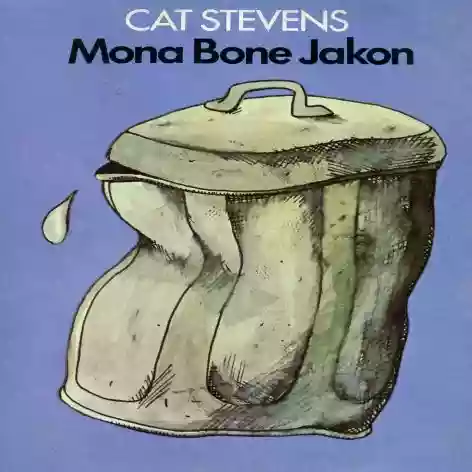
Practically a few inspired interventions by Peter Gabriel's flute inserted between the verses of this evocative ballad are enough, and here we are elevated to high altitude, with wild and unspoiled stretches before our eyes that invite meditation even if you don't intend to. No special effects, just a lot of imagination, and the beauty is that it works. On the whole, this is certainly not the best Cat Stevens, but it is nevertheless already him in every respect, which is no small feat. It's not a case of being deceived by the bin on the cover, which is definitely empty. The trash is elsewhere.
Loading comments slowly
Summary by Bot
Mona Bone Jakon marks a significant artistic leap for Cat Stevens in 1970, defining his unique English country folk style. The album balances tender acoustic ballads with subtle instrumental flourishes, highlighted by Peter Gabriel's flute. Standout tracks like 'Lady D'Arbanville' and 'Katmandu' show Stevens' growing confidence and evocative songwriting. While not his best work, the album is a compelling display of his evolving artistry.
Cat Stevens
Cat Stevens (born Steven Demetre Georgiou) is a British singer-songwriter whose early-70s acoustic albums—blending folk-rock with Mediterranean color—made him an international figure. After a late‑70s conversion to Islam, he adopted the name Yusuf Islam, later resuming recording and touring as Yusuf/Cat Stevens.07 Reviews
