
 •
Rating:
•
Rating:
THE REVIEW
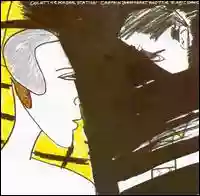
After the uncertain episodes of “Blue Jeans and Moonbeams” and “Unconditionally Guaranteed”, the Captain had already returned in better shape than ever with “Shiny Beast” in 1979; with this “Doc at the Radar Station” (probably his best album since “Trout Mask Replica”), Beefheart reaffirms himself as one of the most ingenious and eclectic musicians ever.
From the very first notes of “Hot Head”, the track that opens the record, it is clear that the underlying recipe is always the same: delta blues, free jazz, rhythm & blues, rock 'n' roll, and a touch of healthy madness, of which he was always a great dispenser. The novelty compared to the past lies in the arrangements, which are no longer entrusted solely to distorted guitars and frenzied drums, but also to synthesizers and brass that here and there peek through from one song to another, much like in the previous album.
Initially a great friend of Frank Zappa, Beefheart later distanced himself from this reference as well, to pursue his personal vision of a strongly decontextualized and deconstructed blues; a project that perhaps reaches one of its most extreme peaks here.
Musical self-references, as usual, are not lacking, nor are the references to the surrealist prose developed in some of his experiments from the '60s.
Memorable tracks certainly include “Sheriff of Hong Kong”, “Run Paint Run Run”, “Sue Egypt”, all permeated by exasperated cacophony.
A genius album, therefore, at times unsettling, certainly impeccably executed; it's just a pity it's the penultimate recording of the musician. After “Ice Cream for Crow” (1982), Captain Beefheart would retire definitively from the music world to dedicate himself exclusively to painting, in a house-bunker isolated from the rest of the world. However, his musical legacy can be found in the music of significant names like Talking Heads, Pere Ubu, Public Image Ltd., Devo.
Loading comments slowly
Summary by Bot
This review praises Captain Beefheart's album Doc at the Radar Station as a masterpiece that marks a peak in his innovative career. It highlights the blend of delta blues, free jazz, and rock with experimental arrangements including synthesizers and brass. The album is noted for its eccentricity and musical complexity, reaffirming Beefheart's status as a genius. Memorable tracks and his influence on later artists are also emphasized.Tracklist Lyrics Videos
Captain Beefheart & His Magic Band
Captain Beefheart & His Magic Band was the musical vehicle of Don Van Vliet (aka Captain Beefheart), an American singer and multi-instrumentalist also known as a painter. The group is best known for radical, blues-rooted experimentation, with Trout Mask Replica (1969) frequently cited as a landmark. Van Vliet later retired from recording and devoted himself to painting.17 Reviews
