
 •
Rating:
•
Rating:
THE REVIEW
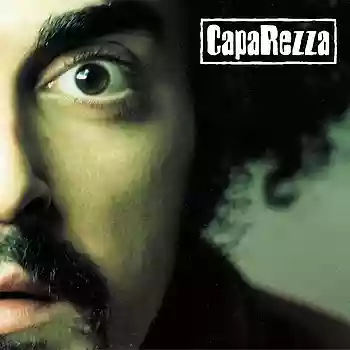
I dedicate this review to all those who in previous ones have continuously been a pain in my @ss because I "always review the same albums," often very poorly, and never review an album of a different genre? Well, here we go....today I decided to talk about an album by Caparezza, an artist I've always liked for his great honesty in writing and arranging lyrics, unlike those who always talk about the same subjects monotonously and without much engagement; because Capa, in his own small way, is a GENIUS.
His lyrics, which to many seem meaningless, mock society, success, money, and more in an original way that's entirely outside the norm. After a good debut, the Apulian rapper Caparezza returns to the studio and creates an album that's superior in every way to the previous: an improvement in the song bases (while in the first some were very monotonous), lyrics as always spectacular, and especially in terms of sales, it's one of his best-selling albums (along with the more recent "Il Sogno Eretico"). Every song is a real gem and hides metaphors that can only be perfectly grasped after continuous and careful listening along with their meaning. Moreover, I want to underline another fundamental thing: the first album (!? - that's the name) can somehow be labeled as a "rap" album, while already this second work, and I think the following three as well, can be considered an "Alternative Rap" album, with influences from other genres, from rock to jazz and so on, but surely someone will disagree with this....patience. "Il Secondo Secondo Me," never was an intro better (with the cult phrase "The Second Album is always the hardest in an artist's career") where Caparezza addresses topics from all nationalities, from the English to the Arabs, up to political facts ("When he was there, trains departed on time..."); and here the artist especially proves to be very skilled particularly in wordplay and tongue twisters.
"Nessuna Razza" can be understood in two ways: a song against racism and labels, with a good base but a minor chorus. "La Legge Dell'Ortica" talks about the classic songs that sell records and the groupie phenomena; "Stango E Sbronzo" is a song with a Tango rhythm (precisely from the title), with lyrics that seem banal at first glance but when reread you start to think: the topic is reality seen through the eyes of a drunk. "Limiti" is one of the musically most complex tracks of the album, although unfortunately it has (almost) faded into oblivion, unjustly: it talks about pants brands, old fashion, and Paolo Limiti, the first TV host of "Il Rischiatutto" for those who might not know (although I seriously doubt it interests anyone): the song's ending is the best part in my opinion, an explosion of guitars, very similar to "La Mia Parte Intollerante" from the "Habemus Capa" album (the next one) that completely transforms the atmosphere into a rock piece. "Vengo Dalla Luna" is a piece full of meanings, one of his most famous and loved songs by the audience, with lyrics talking about extraterrestrials also intended as immigrants. "Dagli All'Untore," although not a cult, is still a good song about those who were blamed in the 1700s for bringing the plague into homes. "Fuori Dal Tunnel," a song mistakenly evaluated for its chorus, so much so that it became a disco hit (the same happened with "Vieni A Ballare In Puglia"): in reality, it clashes with success, fame, the way of having fun fighting boredom and ever-changing fashions. "Giùda Me" is a lively song with beautiful wordplay and a fast pace where Caparezza manages to keep up by rapidly firing phrases at will: among the many topics addressed, the South is mainly mentioned. "Nel Paese Dei Balordi" is a reinterpretation of the Pinocchio fairy tale catapulted into today's society, and many of the characters mentioned are part of it: for example, Geppetto is an alcoholic, Fata Turchina works at a club where she dances lap dance, and Lucignolo is his cocaine addict friend. Despite not being anything exceptional, it's still a song with a very nice rhythm and an almost eerie chorus.
"L'Età Dei Figurati" talks about TV shows and their quotes: very nice the ending and the transition between the verse and the chorus. "Follie Preferenziali" is one of the most "serious" songs in terms of lyrics: it talks about the madness of war and men in battle, and the almost shouted chorus is worthy of a 10 out of 10. "Dualismi" is a fun song with a pounding rock chorus where Caparezza fights against himself (note the most famous phrase that's repeated continuously, especially in the first verse, which is "Who are you, damned who are you?"). The album ends with "Jodellavitanonhocapitouncazzo," one of the funniest songs from every point of view: delightful the yodel chorus and the lyrics, absolutely the most nonsensical and with the least meaning, but nevertheless immediately captivating at first listen for its absurd rhymes: ("I'm the champion of the sewer but I have a cranial cap that burns like lava rock"....nonsensical but genius!). The song ends with the phrase "Mom, how many records will they sell if I shut down!" ending with the death of the character created by Caparezza who will come back to life in the next "Habemus Capa."
I have nothing more to say, and I feel I've already said quite enough. I leave it to you to listen to one of his best works by one of the best artists we have today in our country. Enjoy!
Loading comments slowly
Summary by Bot
This review praises Caparezza's album Verità Supposte as a significant artistic upgrade from his debut, highlighting its rich lyrics, diverse musical styles, and social commentary. The album blends rap with rock and jazz influences, showcasing Caparezza's talent for wordplay and metaphor. Each track offers layered meanings that reward attentive listening. The reviewer considers it one of the best works by an outstanding contemporary Italian artist.Tracklist Lyrics Videos
CapaRezza
Caparezza (Michele Salvemini) is an Italian rapper and songwriter from Molfetta, known for dense wordplay, satire, and concept albums that blend hip hop with rock. Formerly active as Mikimix, he gained wide acclaim with Verità supposte and continued with Habemus Capa, Le dimensioni del mio caos, Il sogno eretico, Museica, Prisoner 709, and Exuvia.33 Reviews
Other reviews
By DEMIAN
"Verità Supposte is an exceptional album because, while maintaining a deliberate originality and a certain detachment from the rest of the Italian mainstream... it still maintains a certain attention to catchiness."
"Trying to find the beginning of one and the end of the other is a bit like watching the sea and not noticing where the water ends and the horizon begins..."
By MosMaiorum84
CapaRezza proves himself a master of words and irony.
‘Verità supposte’ is a milestone in Italian rap's evolution.
