
 •
Rating:
•
Rating:
THE REVIEW
This is my first review on this site (so, a warm greeting to all fellow reviewers). The reasons that led me to discuss this album are mainly two: the first is the emotional bond I have with this underrated prog-band (especially towards its charismatic founder-guitarist-main composer Andrew Latimer); the second is the fact that, in another review present here on De Baser, the album was bluntly panned from all perspectives, and described as the result of an arid creative vein (in fact, my esteem for the group's leader is due precisely to the fact that, at a compositional level, he has rarely failed, at least in my humble opinion, consistently following his musical credo and free inspiration.)
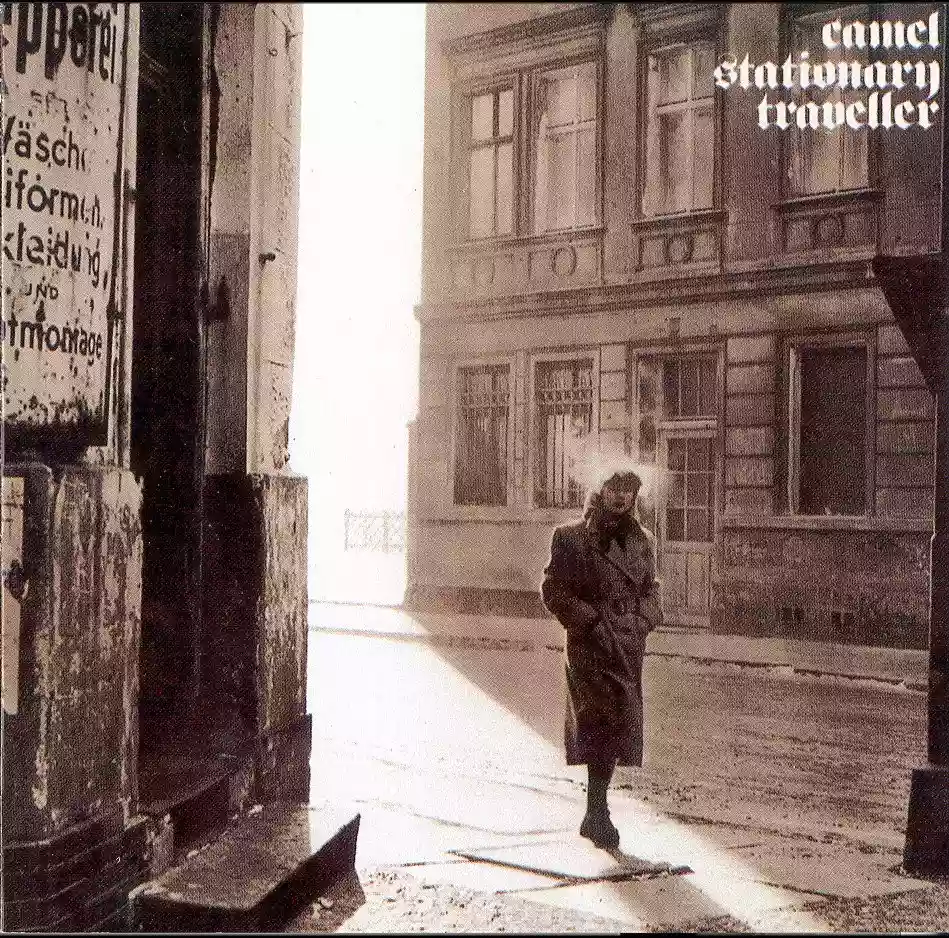
The album in question was released in 1984, in a challenging decade for "progressive music," and following a wholly unsatisfactory work titled "The Single Factor," which turned out to be a collection of medium to low-quality tracks, created by the guitarist-leader with many session men (notably, former Genesis Anthony Phillips), due to the defections of drummer and founder Andy Ward and bassist Colin Bass. To avoid another misstep, the only founding member, Andrew Latimer, decided to rebuild a real band by recruiting: Colin Bass (for the second and last time, as the good English bassist will be present in all subsequent albums), the adventurous Dutch keyboardist Ton Scherpenzeel, and drummer Paul Burgess; and to embark on the path of the concept album, previously abandoned with the excellent "Nude." The theme, the thread of the product, is the Berlin Wall, with everything revolving around it.
Inspired instrumental-progressive moments are accompanied by more direct and immediate pop-rock songs, the lyrics of which are written by Susan Hoover (companion of the band's leader and guitarist). Additionally, the guitar assumes the role of the protagonist more frequently than in the "historical and 100% progressive" albums (in which the guitar-organ duel was a constant of the original "Canterbury" band). Avoiding the meticulous track by track, which some might find boring and scarcely original, I feel it necessary to mention the moving "Title Track" (deeply loved by the undersigned), which, in terms of compositional structure, resembles the splendid "Ice" (in fact, both have an acoustic intro and an electric outro; the intermission changes, which in "Ice" was a synth solo, in this case, is a pan flute arpeggio that introduces the leader's guitar musings).
Another three small instrumental gems are "After Words," a melancholic and intimate piece composed by T. Scherpenzeel, the dark "Pressure Points," characterized by the intertwining of dark keyboards with aggressive and metallic electric guitar, and the dreamy "Missing," where the six-string dominates again. There's also room for romance with the ballads "Fingertips" and "Long Goodbyes," which offers an excellent electric guitar solo. Finally, there's an impetuous appearance of the Hammond organ, an instrument that marked the rock of the '70s, at the end of "Cloak and Dagger Man," with which the Dutch keyboardist seems to manage well, almost as well as the unforgettable and lamented Peter Bardens, a founding member of the band. The rest is well-crafted and performed AOR music, but not very original, which doesn't remain in the memory of either the listener who stumbles upon this album out of curiosity or the band's historical fans.
In conclusion, an album marked by highs and lows, and therefore it doesn’t have the timeless charm of works like "Mirage," "The Snow Goose," and "Moonmadness" (the trio that consecrated and brought Guildford's quartet to the limelight in the "progressive" world), but nonetheless inspired, well-thought-out, fairly consistent with the musical standards followed in the past by Latimer & co., in which the band's instrumental talent is showcased, always with measure and elegance. The flaw that true "progsters" do not forgive is the excessive use of electronic sounds and synths, more incisive but less clear and genuine than keyboards and some forgettable pop-rock songs, compositionally speaking.
A 3.5 that, by turning a blind eye, becomes a 4.
Loading comments slowly
Summary by Bot
Camel's 1984 album 'Stationary Traveller' reflects the band's creative resurgence amid lineup changes. It mixes inspired progressive instrumentals with more direct pop-rock songs, centered on the Berlin Wall theme. While not as timeless as Camel's classic works, it showcases the band's musicianship and Andrew Latimer's compositional integrity. The heavier use of synths and some pop elements may divide prog purists, but the album remains a solid, emotionally engaging concept piece.Tracklist Lyrics Videos
Camel
English progressive rock band formed in 1971, led by guitarist Andrew Latimer. Associated with the Canterbury scene and known for melodic, guitar-forward instrumental work and concept albums.30 Reviews
Other reviews
By LordCorkscrew
Latimer’s tedious solos dominated the instrumental ballads.
The frayed concept of Berlin divided by the wall was not enough to hold together a collection of tracks packaged for the radio.
