
 •
Rating:
•
Rating:
THE REVIEW
[So: the author of the album reviewed here has expressed and continues to express political positions and has committed (and incites others to commit) actions that DeBaser finds repugnant. In the end, however, we're talking about music: so we're publishing the review anyway. /DeBaser]
Burzum (aka Count Grishnack, aka Varg Vikernes, I surely got them wrong) is a... well yes... let's just say you won't find him next to you during Sunday mass, unless he's holding a can of gasoline. Additionally, he will hardly show you any sympathy if you're not blond, with blue eyes, tall, and fair-skinned (I am like that, so we're great friends).
But Burzum is in prison (guess why? well, I don't want to spoil the surprise...) and so, after making some truly excellent CDs of pure black metal, including Aske (the cover is emblematic), he can now only use a synthesizer (by the way, the pre-jail CDs were almost all done by him alone, with a drum machine instead of a flesh-and-blood drummer), and therefore he makes his albums from the cell, where he will have to stay (I think) until 2014 (but where he will want to return immediately given that outside Mayhem will be waiting for him, the Mayhem from which Burzum killed a member, Euronymus).
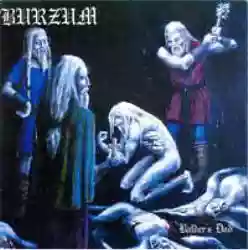
So we have Hildskjalf and this Daudi Baldrs, with really splendid artwork and digipack packaging.
While Hildskjalf is darker, this is more medieval-like, even though the sounds, exactly the same midi as your computer, which are only violins, strings, pianos, and timpani, give everything a truly unique gloominess.
Too bad that once you've listened to it once, you won't listen to it again. The average is one riff per song repeated endlessly with some variations, and moreover, the whole thing seems to be done by a two-year-old girl with a Fisher-Price keyboard, this is not Burzum. Burzum has been over for a long time, just like this is not metal but atmospheric black (whatever that means, but it is surely atmospheric music).
Soporific, avoid it like the plague.
Loading comments slowly
Summary by Bot
Burzum's Dauði Baldrs is a synth-driven album created during Varg Vikernes' imprisonment. While it offers a medieval, gloomy atmosphere, the music is repetitive and lacks the intensity of his earlier black metal works. The album's unique sound fails to engage beyond the first listen, leaving the reviewer unimpressed.Tracklist Lyrics Videos
Burzum
Burzum is the music project founded by Varg Vikernes in 1991. It is widely cited as a pioneering and influential act in early Norwegian black metal; later releases explored ambient and Nordic‑inspired sounds.41 Reviews
Other reviews
By Rockardo
shit!
to hell with black and all the bastard fucking assholes who listen to it! go to hell!
By Dragonstar
Daudi Baldrs should thus be taken in its homogeneity and entirety, as a sort of tragicomic sonorous De Profundis.
The suffocating melodies seem to incorporate the melancholy, desolation, and solitude experienced by the author during his imprisonment.
