
 •
Rating:
•
Rating:
THE REVIEW
The Redemption
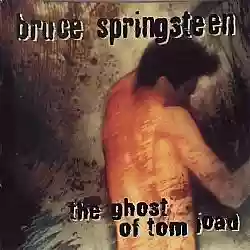
Just like in that late summer of '82 for the "Nebraska" work, in October of '95, Bruce's new album arrived quietly.
The excitement slowly built as I held the vinyl that I had come across somewhat fortuitously. What immediately caught my attention was the absence of John Landau (the long-time co-producer) in the album's creation. Instinctively, I thought it marked Bruce's complete control over his music, which I had perceived as being somewhat compromised by Landau (for example, the missed unplugged session on MTV).
No single track was released before the album, which led me to believe that "The Ghost of Tom Joad" was something Bruce wanted to release quietly, letting it stand on its own without any particular promotion and with little interest in the market. He once said he wished every new album of his would suddenly appear on every store counter.
With the previous two albums ("Human Touch" and "Lucky Town"), released in '92, he had to/wanted to demonstrate that his artistic journey continued with substance even without his E Street Band. With "The Ghost of Tom Joad", the demonstration/redemption was solely for himself and those who believed over time in his natural artistic honesty; it was a return to the road, coming down from the hill, without rushing towards anything, a clear walk with the eyes of a man living among others and capturing the bitter reality of life.
Even later, that steady and disenchanted stride in the "Street of Philadelphia" video created a connection with the contemporary present.
In the sounds and lyrics of "The Ghost of Tom Joad", the links to the previous "walkers" on the road are very strong: Woody Guthrie and Bob Dylan. "Nebraska" was similar in a different measure. Even more different in measure and concept is the recent "We Shall Overcome - The Seeger Sessions", but it remains continual in the pursuit of certain American musical traditions.
However, the mere fact that the "American" culture has no precise origin, thanks to European immigration, gives a broader perspective to our discourse.
Therefore, we cannot overlook Guthrie and Dylan, as inspirations for this great and beautiful album. I remember the pleasure of finding, in most of the tracks, Danny Federici's keyboards, which at that time were somewhat forgotten, fulfilling and characterizing the atmosphere where it wasn't Bruce himself, with an ever-present backdrop. The delicate arpeggios, the violin, the pedal steel guitar, the harmonica, and Bruce's voice, as beautiful and warm as ever, do the rest. If I had also found Miami Steve's acoustic guitars, I wouldn't have asked for anything more.
In some interviews, Bruce had said he hoped to release an acoustic album followed by a theater tour, and history tells us what happened next. Thank you, Bruce.
Loading comments slowly
Summary by Bot
Bruce Springsteen's 'The Ghost of Tom Joad' arrived quietly, showcasing his full artistic control without long-time co-producer John Landau. Rooted in American folk traditions and inspired by Woody Guthrie and Bob Dylan, the album reflects a sober, honest portrayal of contemporary life. The use of delicate instrumentation and Springsteen's warm voice adds depth to this acoustic work. Ultimately, it marks a personal redemption and a return to artistic authenticity.Tracklist Lyrics Videos
Bruce Springsteen
Bruce Springsteen (born 1949 in Freehold, New Jersey) is an American singer-songwriter and bandleader best known for his work with the E Street Band. His career spans from the 1960s/1970s to the present, with landmark albums such as Born to Run, Darkness on the Edge of Town, Nebraska and Born in the U.S.A.90 Reviews
Other reviews
By Grasshopper
"The ghost of Tom Joad still hasn’t found peace, lingering around today’s camps alongside highways."
"Wherever somebody’s fighting for a place to stand or a decent job or a helping hand, wherever somebody’s struggling... look for me mom, I’ll be there."
By theacrobat
A weaponless avenging angel, the spirit of Tom Joad mournfully watches over the wanderers crowding the highways, without home, without work, without peace and without hope.
A story no one likes to hear, because there is no happy ending.
