
 •
Rating:
•
Rating:
THE REVIEW
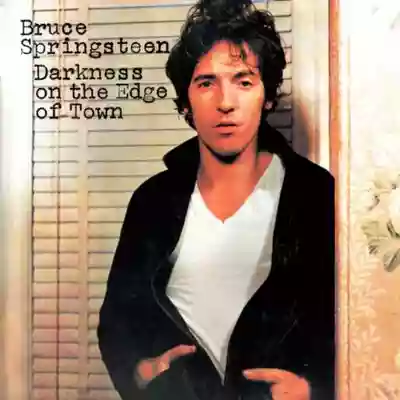
I sometimes find myself smiling when I think back on certain albums, so deeply tied to their historical context that they seem outdated just months after their release. Perhaps not unlistenable (well, for some, they truly are), but essentially ridiculous, yes. One of these is certainly “Darkness On The Edge Of Town,” the fourth album in Springsteen's career. I say that this album is tedious, simple, pandering, and unimaginative, which, in addition, for some strange market law, had enormous and undeserved success.
I don't want to attract the ire of the entire music world (it will happen anyway, I know), but reading certain raving reviews makes me doubt myself, then I listen to some passages again (more is humanly impossible) and there's the confirmation, and even my most hidden doubts vanish: the album in question is a real mess. The essence of the album is summarized in tracks revolving around a very trivial chord, at most two. Drummers who, after the second overly square riff, are fed up (surely they themselves) with their boom – ta – boom – crash! I imagine Max Weinberg, cursing, every fourth bar, the artist who managed to write such rubbish and had the nerve to propose it to him, a top session musician. And he'll be there recording, within his plexiglass walls, pretending to have fun and cursing the moment he accepted the gig, but: “How do I support the family?” (cultured reference).
Then there's that aggressive attitude, I mean Springsteen’s, that of the seasoned rocker who can afford to crank out riffs, which if we closely examine, turn out to be dull and pedestrian and reminiscent of other riffs heard thousands of times. Okay, I will be reprimanded for speaking about soul, feeling, lyrics beautiful as poems, with committed and social implications, musical impact, the sweat of a rocker, but I wonder how many, here in Italy, understand those texts, can appreciate purely American textual nuances. Similarly, I wonder what feeling might arise from kindergarten-level music. In short, big raw rock, this big raw rock that scatters examples in every corner, is mindlessly insignificant stuff.
Let’s talk a bit about the contents, starting with the insipid ballad that gives the title to the album. The same from beginning to end, not a thrill, not a shiver, even the lyrics can be summed up in four banal words. It doesn't get better with the rolling rock of “Badlands,” only partially saved by the commendable work of Bittan, but it definitely dies with that ridiculous and childish refrain. Already dead from the first notes is also “The Promised Land,” thanks to that damned harmonica I'd shove up his nose. Some speak to me of drama, of intensity, of tracks exalting the splendor of songs like “Racing In The Street,” also only partially elevated by Roy Bittan's touch, it is utterly unclear to me what could be deemed splendid in a chant-like, boring, and derivative track lifting from Jackson Browne's earlier work.
I grant the "Boss" one essential thing: having created a monumental commercial and sales machine. He invented it and the audience fell for it completely, this I'll never explain to myself. At the end of the discussions, I know that I can't give an extremely low score to a work like this, which has had such pronounced mass recognition, but what needs to be done, and especially accepted, is a scaling down: if an album is overrated, we must accept it, and everyone should do so.
Loading comments slowly
Summary by Bot
The review harshly criticizes Bruce Springsteen's Darkness On The Edge Of Town as tedious, simple, and pandering despite its massive commercial success. The author finds the riffs dull, the drumming repetitive, and the lyrics inaccessible or banal. While respecting its widespread acclaim, the review calls for accepting the album's overrated status. The critique targets both musical and lyrical aspects with skepticism toward the album's legendary reputation.Tracklist Lyrics Videos
Bruce Springsteen
Bruce Springsteen (born 1949 in Freehold, New Jersey) is an American singer-songwriter and bandleader best known for his work with the E Street Band. His career spans from the 1960s/1970s to the present, with landmark albums such as Born to Run, Darkness on the Edge of Town, Nebraska and Born in the U.S.A.90 Reviews
Other reviews
By thunder87
"In my opinion, this is the best rock album ever produced. A timeless masterpiece underrated as a whole."
"The strangled and agonizing cry of 'Adam Raised a Cain,' 'Something in The Night,' and 'Streets of Fire' do the rest."
By mosesgama
This is the most beautiful album in history, at least for me.
The Boss sings as if the words were piercing his heart, the E Street Band plays as one, and the songs are perfect.
By Blackdog
The journey to adulthood corresponds to an inevitable and painful loss of innocence spawned by merciless 'Badlands'.
The angry guitar riff make clear a certain autobiographical discomfort and the disillusionment present in the entire album.
By AJM
The Boss has long been scraping the bottom of the barrel. His good fortune is that the bottom never arrives.
The Promise embodies the entire sense of the album and throws that bridge completely: 'I followed that dream just like those guys do up on the screen...and when the promise was broken I cashed in a few of my dreams.'
