
 •
Rating:
•
Rating:
THE REVIEW
"Maybe I should confess a little secret. In the future, no one loves you. This period is seen as full of lazy, selfish, civically ignorant sheep. Perhaps you should worry less about me and more about this." (John Titor)
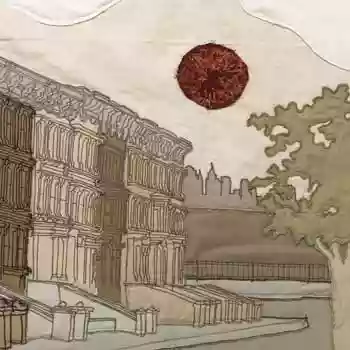
I think it was November 2005, although I wouldn't bet on it now, a friend burned me a Bright Eyes CD. I don't even remember if I listened to it well or not. Anyway, it was forgotten for a long time. One evening I was returning from a billiards match - Alessandro and I against Francesca and Giulia. They beat us spectacularly, and between us, I've never liked losing in these male versus female challenges; losing on these occasions always gives me a certain sense of frustration. Anyway, that too was forgotten. We were returning, and Alessandro put on a compilation that starts with a guy talking.... Happy birthday Darling we love you very, very, very much... -Who is it, Alessà?- I asked him as an acoustic guitar and a rhythm started that couldn't help but engulf me. He answered that it was Bright Eyes. Honestly, I don't know why I thought that it was rubbish; I don't know why. Probably because of all those adjectives that the music press kept giving him “Rock Boy Genius” and so on.
I went home. I was quite drunk. I searched through my CDs and found this “I’m wide awake it’s morning” CD, I couldn't remember the name of the friend who had burned the CD for me. She had been forgotten. I put on the CD, and it started with that song I listened to a few hours and a few beers earlier. I saw the titles “At the bottom of everything”, I listened to it 10 times in a row, then before going to sleep, I set the player to a very low volume, and during the night, I listened to it quietly. That night I had a beautiful dream. That too was forgotten.
"You can change your worldline for better or worse, just like I can."
Many things can be said about Bright Eyes, I suppose. I don't know his discography very well; my reviews or music-themed narratives don't need to know everything and its opposite about their topic. What I do know for sure is that “I’m wide awake, it’s morning” is one of those albums that accompany me at any time of day in any situation, whether circumstantial or emotional. Bright Eyes could probably be defined as the equivalent of Bob Dylan for our generation. Behind his work, there is a great recovery of the American musical tradition and at the same time a continuous drive for innovation. Just think that when “I’m wide awake, it’s morning,” a mostly acoustic or electrified album, was released, the electronic and electro-pop-oriented “Digital ash in a Digital urn” was released simultaneously. “I’m wide awake, it’s morning” unfolds in 10 episodes, and in these 10 episodes, there is a spectrum of human situations and an extraordinary spirit of observation. The album opens precisely with “At the Bottom of Everything,” a delightful folk script where the metaphor of a plane crash hides the metaphor of American society's disaster. According to Bright Eyes, a society where anarchists sleep but don't dream, where magicians’ crystal balls show the past, and where it's more important to memorize numbers than to have a soul. And where the only true satisfaction is finally discovering you're nobody. Do you remember the top 5 opening tracks of an album in “High Fidelity”? Well, certainly “At the bottom of everything” would make it into mine.
The subsequent tracks are a melodic concentrate of solace; this is the great virtue of Bright Eyes, managing to console you in your moments of discouragement, and songs like “We are nowhere, and it’s now”, “Lua”, and “Train under water” unquestionably fit. Then comes the sweetly enchanting “First day of my life”, where love, like in the best cases of poetry, continuously transforms between the ordinary and the extraordinary, and where the only thing that matters is feeling that emotion (And you said, “This is the first day of my life.” “I'm glad I didn't die before I met you But now I don't care, I could go anywhere with you and I'd probably be happy”). It's clear that the album eternally oscillates in the field that ranges from folk to pop music, but it’s equally clear that it does so in a gentle and convivial manner. Great credit must be given to Bright Eyes for managing to find the bridge that connects the author to the listener. After “First day of my life,” the album seamlessly moves towards the journey of “Another travellin' song”, a new epic idea of the on-the-road experience. We no longer know if we are surprised by the joys of traveling or melancholic about these encounters that will lead to nowhere. And after “Landlocked Blues” featuring Emmylou Harris and “Poison Oak”, the final part comes, probably the most successful moment of the album. With “Road to Joy”, it feels like entering the devastated America of suburban families, the tormented souls that the already mentioned Bob Dylan cared so much about narrating but that in recent years, only Bright Eyes has managed to tell, and with this track, Beethoven and Nirvana are incredibly mixed (let me venture another blasphemous comparison: Bright Eyes the new Cobain?).
Ultimately, Bright Eyes takes us into a perspective of revolt and profound study of society and the American musical tradition where discontent is no longer shouted to the world but whispered in the confines of bedrooms, and then, as our hero says, even if we should be wrong “Failures always sound it better”
Loading comments slowly
Summary by Bot
This review highlights Bright Eyes' album 'I'm Wide Awake, It's Morning' as a deeply emotional and socially insightful work. The reviewer shares a personal journey of discovery, emphasizing the album's blend of folk and pop influences. Standout tracks like 'At the Bottom of Everything' and 'First Day of My Life' showcase the album's lyrical and melodic depth. The album is praised for its intimate connection between artist and listener and its unique perspective on American societal issues.Tracklist Lyrics Videos
Bright Eyes
Bright Eyes is an American indie rock project led by singer-songwriter Conor Oberst, widely associated with the Saddle Creek scene and known for lyric-heavy, emotionally intense songwriting that spans lo-fi folk, fuller orchestration, and occasional electronic experimentation.14 Reviews
Other reviews
By NickGhostDrake
"And yet then you listen to 'Lua' and what can you do - love is blind."
"What can come out if a little arrogant brat who grew up in the countryside of Nashville moves to New York... and projects himself entirely into the creation of the perfect chamber pop."
By holdencaulfield
Conor Oberst is 24 years old (I hate this guy). Talented, sure. And incredibly arrogant.
Behind the sparse and fragile sounds of the first CD, behind the Babel-like cathedral of electronic clamor of the second, is hidden a production as meticulously crafted as that of the latest Britney Spears.
