
 •
Rating:
•
Rating:
THE REVIEW
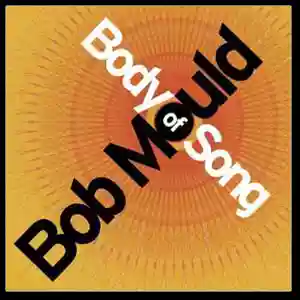
Bob Mould was the co-writer, co-singer, and co-leader of the phenomenal Husker Du, a post-punk band from the '80s in Minneapolis. Today, Bob Mould is a reddish gentleman who is definitely whitening, as visible from his beard since his hair has thinned to the point of desertification; he is a DJ in his new city, Washington... A man who has made peace with himself, accepting his identity and banishing (definitively?) his personal demons. But above all, an immense and exemplary craftsman of rock, as well as a daring sound engineer. In this work, dated 2005, he is also a "surveyor" of the "Body Of Song".
There's no doubt: the opening "Circles" is definitively the great cadenced rock song that will tear at your guts, with that inimitable tortured voice, even more abrasive than the guitars themselves. "(Shine Your) Light Love Hope" is a vocal rock-dance experiment. His voice's particular inclination to sound metallic, robotic, almost "naturally filtered," probably due to something he ingested as a child (perhaps a strainer), along with its great modulatability, makes him capable of very extended notes and fast vocalizations. All of this is further exacerbated by using some of the vocal manipulation techniques that dominated the previous album "Modulate" from 2002 (an album, one might say, à la Eiffel 65). The lyrics are just a quatrain of verses repeated endlessly over a nice rhythm that becomes bouncing at the end.
"Paralized" moves on sharp guitars that never rise in volume, leaving space for a violent drum and his great voice; the keyboard note sequence at the end of each chorus is splendid. "I Am Vision I Am Sound" is an excellent track based on the fullness and emptiness of a single riff. It takes time to start, because Bob likes to build up the rhythm before moving. Very dense between the first and second verse, saturated. Then it becomes sparse in the second verse, only to refill and re-flesh itself out... A damn game of powerful guitars in top form. Those rising choruses, and his subsequent high notes: a chaos... And here we are at "Underneath Days", with an incessantly deep bass line and razor-sharp guitars like the knife sharpener has come. Still, this pungent and metallic voice, if it sings close to you, you might get tetanus. He gives himself numerous echoes in this and almost the whole album, and sings and sings along everywhere, perhaps even where we don't notice it. The impression is that all the music was poorly produced and elaborated, as opposed to the voice, the only instrument to be tormented. This impression immediately vanishes in the following "Always Tomorrow" where guitars, keyboards, and wind effects are very "distorted" while the voice goes sincere, allowing only an echo. When he sings his winter ballads, he decides to make sure his voice sounds confidential and sincere, without processing/distorting it so as not to process/distort the feelings he describes.
A piano with a rainy note, the Mould in a low tone from the previous track. A bass that "encourages" Bob to confide. Plushy guitars to hug rather than fierce dogs to hurl into the ether. Cello solo flowing like tears not too salty, that will accompany calmly, until the heartrending end, Bob, and a guitar that, instead, won't be able to hold back. "Best Thing" is much closer to the loud songs of Husker Du. However, the self-destructive vein (and the impurity of the sound) is missing from this track, to be fully traceable to that "Body Of Song" there. But Bob wants to build (also because after "Zen Arcade" even the grains of sand broke apart), and there's nothing wrong with that. The compositional ease of this man creates "High Fidelity" which becomes a "Christmas" apotheosis of bells and organs over arpeggiating and patient electric guitars. What taste Bob has! "Missing You" is another punk love song, with slightly more cheerful tones than "Best Thing". Watch out: when I say sentimental punk, I certainly don't mean the Ataris! "Gauze Of Friendship" is a meditative not very inspired episode, but noteworthy is the wisdom with which Bob employs all his voice and interpretative ability. Astute also in setting up a guitar-studded and electrified finale, to extend the breath of the piece. The last note of that solo alone is worth the entire piece.
The air becomes heavier in "Beating Heart The Prize", with an almost grunge bass (someone somewhere wrote that Kobain invented nothing, and he isn't the only one to think so). Beautiful work of echoing guitars that launch notes and noises as a LED intermittently flashes its red light. But it's the melody, simple with elongated notes, that surprises in how it moves you and how it leaves you with that sense of tension, of being at the center of a magnetic storm. The song and the album end with a guitar run so muffled it seems played by someone living in the apartment next to the recording studio. Then you listen to the track again and realize there's always been an agitated underground river.
Get this album if you love Husker Du. And if you don't love Husker Du, get this album anyway. And cherish it, as I am doing: one day or another we might paradoxically forget what a rock album is.
Loading comments slowly
Summary by Bot
This review celebrates Bob Mould's 2005 album Body Of Song as a powerful and expertly crafted rock record. It highlights Mould's unique vocal style, strong guitar work, and emotional lyricism. The album builds on his past with Husker Du, balancing raw energy and refined sound engineering. Several tracks are dissected in detail, praising their distinct qualities and depth. The review encourages fans and newcomers alike to appreciate the album's significance in rock music.Tracklist Lyrics Videos
Bob Mould
Bob Mould is an American singer-songwriter and guitarist, known as a co-leader of the 1980s Minneapolis band Hüsker Dü and for a long-running solo career that blends punk-driven rock with melody-forward songwriting.11 Reviews
