 •
Rating:
•
Rating:
THE REVIEW
"Modern Times" is Dylan's new work. And there's reason to rejoice. The great old man with the off-key and ghostly voice adds, with grace and ease, another memorable gem to his rich musical collection. "Modern Times" is an album that exalts the spirit of the American working class and contains an impressive (and extraordinary) sequence of musical and cinematic references that alone would earn it top marks. From John Lennon's "Working Class Hero" to Charlie Chaplin's "Modern Times," it's a fascinating journey through the depths of a painfully working-class and historically classist society.
"Modern Times" doesn't need to be perfect (the sound is raw and a bit roughly hewn), all it needs is Dylan's voice, a guitar, and a piano. Just those few elements, those few gestures, are enough to recreate, in seconds, the myth of "Masters of War" and "Just Like a Woman." Even just two whispered words, a late rock memory and a final declaration of love that leaves you stunned and amazed ("Rollin' and Tumblin'" is the only romantic track on the album).
"Modern Times" aligns more with "Infidels" (1983), a fine Dylan work that puzzled and shocked fans (but Dylan loves to confuse with his inventions and provocations) rather than with "Oh, Mercy" (1989), perhaps an unrepeatable masterpiece. There's no precision and not even meticulous attention to detail, there's only purposeness of intention: to speak to the heart of the people, without intricate or cumbersome musical artifices. In "Workingman's Blues # 2" he speaks directly to the workers: "... The proletariat's purchasing power has sunk / money is becoming weaker and more insubstantial / the places I loved are now just a pale memory." Precisely: to strike right at the heart of the problem.
In a recent interview with Rolling Stone, Dylan ferociously accused the new technologies and said, "technology has destroyed music, I don't know anyone who in the last twenty years has recorded a decent sounding album." Dear Bob, "Modern Times" doesn't really have such a perfect sound, but I forgive you, and everyone should forgive you, because even today you are one of the few songwriters who strives to record music genuinely, without too many synthesizers or vocal modifiers. Can you imagine Dylan singing with a perfectly clear and in-tune voice? Maybe it wouldn't be so musically fascinating, or maybe, more simply, it would never have existed.
A taste of death, as often happens lately, in this "Modern Times": the end of a career or the end of a life? The anguished Dylan of the early millennium is perhaps a bit too pessimistic and apocalyptic, but he still maintains a lucid and merciless view of the world and society: "Ain't Talkin" tells us something extremely dramatic (the end of life, the twilight of the world), and the answer in the wind, the one that everyone vainly sought in 1963, now is almost a mirage, or rather, a premonition. Of darkness and definitive melancholy.
Everything can be forgiven of Dylan (after all, he is History, let someone try to mimic his Monument) and even the initial "Thunder on the Mountain" if sung and played by someone else would have resulted in a poor and excessively insecure piece (the music, the voice, the sound wobbles) but in the end, you paradoxically realize, that it is one of the liveliest and most carefree tracks of the entire album (and this speaks volumes about how Dylan must feel spiritually!).
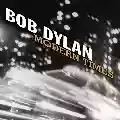
But modern times actually, besides being pessimistic, are also fast and elusive, amidst new technologies (often obsolete) advancing and a desire to run here and there frenetically without a reason and without a purpose. And the cover, in this sense, perfectly expresses the discomfort and speed of these modern times of ours. So, even an imperfect album like this, but after all peaceful and calmly seductive (no sudden changes in musical speed) can be a godsend: maybe the much-maligned modern times can occasionally give us something peaceful and relaxing? Then, of course, in the history of music "Modern Times" will never appear, while "Highway 61 Revisited" will always be there at the top, but what does it matter, since by now, even those of the New York Dolls, have stated: "One day we will be pleased to remember even this." And why not?
"Modern Times", like all of Dylan's most recent albums, will garner as many detractors as admirers (I stand with the admirers, if you permit), while a notable detractor, Riccardo Bertoncelli, reminds us that this album is "fragile and confused," but he, too, is forced to admit that Dylan, in some musical passages, seems to have absorbed the Italian pianistic musical lesson: "Beyond the Horizon" seems like a track composed by Paolo Conte's older (excuse me, younger) brother. And it's no coincidence that Dylan often and willingly returns (especially in summer) to play in Italy.
Say what you will, Dylan remains unique and inimitable. At least until proven otherwise.
Loading comments slowly
Summary by Bot
Modern Times showcases Dylan's distinctive raw voice and storytelling, focusing on the struggles of the American working class. The album features rich cultural references and eschews polished production for emotional depth. Despite its imperfections, it conveys a timeless message with grace. The work continues Dylan's tradition of addressing social issues with poetic force and remains an important entry in his discography.Tracklist Lyrics Videos
Bob Dylan
American singer-songwriter Robert Allen Zimmerman, known as Bob Dylan, is a major figure in 20th-century popular music, noted for pioneering songwriting and continual reinvention across folk, rock, country and blues.127 Reviews
Other reviews
By Dune Buggy
We will always be there to love Dylan because he is Dylan, and that’s enough for us.
His voice is like a mud formed in the tradition, it slipped through the decades, has smeared a bit of everything, and we like to know that it still stains.
By jackpizzello
Undoubtedly a good album, very homogeneous that alternates more rock moments... with more relaxed and refined ones.
Dylan’s voice, always a bit nasal and croaky, but this time warmer, hoarse, and understandable.
By j&r
'The heart of the album consists of three songs of great talent and depth... worthy of the character in question.'
'The best song of the album: Nettie Moore. A beautiful piece that soars thanks to one of the most beautiful melodic openings of the Dylanian repertoire.'
By ibelluca91
To appreciate this new album by the minstrel, one needs to take some time, accompany it with a good glass of wine, and let it mature in our hearts.
Tracks like 'Workingman Blues#2' or 'Nettie Moore' dig a deep furrow in our hearts and with their simplicity manage to warm it.
By Hungry
‘Ain’t talkin’… with a bleak tango rhythm accompanying the bitter reflections of a man who feels he has not reached the existential happiness he would have liked to achieve.
‘Thunder on the mountain’ is a surprising piece, only a genius can rewrite a modern Johnny B. Goode, without plagiarizing it.
