 •
Rating:
•
Rating:
THE REVIEW
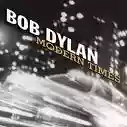
2006, in our Vulgar Era, dominated by groups mimicking the mythical sixties and seventies and by unbearable singers, a star that has brightened the musical firmament for 44 years awakens from a 5-year slumber... and the results will live up to expectations...
Bob Dylan, one of the greatest legends of the second half of the '900, at 66 decides to challenge himself again... anyone who thinks that after a career full of successes and recognitions, he has decided to rest on his laurels, will have to think again after listening to this album. To appreciate this new album by the minstrel, one needs to take some time, accompany it with a good glass of wine, and let it mature in our hearts. Imagine the aristocratic salons of the '50s, nobles and ladies dancing, and you will have the atmosphere of "Modern Times." From the days when Bob wandered through the Cafés of Greenwich Village and played in various clubs, including the famous Gaslight of Van Ronk, many springs have passed, but also many autumns and long winters... yet it seems that since 1997, spring has returned to illuminate the minstrel's path.
The album begins with "Thunder On The Mountain", a blues that could have been released in 1950, perhaps from an album by the late Muddy Waters. The song is well constructed around a predominantly blues guitar riff. The rhythm is compelling, although the listener may remain indifferent to the more roots-oriented tracks like the aforementioned and various "Rollin and Tumblin" (great vocal interpretation in the most driven track of the album, on the edge between blues and hard rock), or "Someday Baby", or "The Levee's Gonna Break", a great blues built on a simple and essential melodic base... At regular intervals, among the more blues-oriented songs, ballads of unaltered sweetness and depth emerge from the now hoarse vocal timbre of Ours, but instead made even deeper by his voice, torn and ravaged by the years and vices. Bob first transports us to a festive and joyful atmosphere, but then brings us back to the harsh reality of life, strewn with misfortunes and fears, with his mournful ballads. However, hope, which must guide man's life, resurfaces at various points and allows us to dream... The atmosphere in the ballads is dark, but not claustrophobic. The light is visible, even if it is intermittent and discontinuous... like our lives, after all.
Tracks like "Workingman Blues#2" or "Nettie Moore" dig a deep furrow in our hearts and with their simplicity manage to warm it. These two tracks can be counted among Bob's classics and would not look out of place, believe me, even next to "Just Like A Woman". The last track, "Ain't Talkin", serves as a farewell to this album and delivers Bob Dylan and his rhythmic poetry to eternity. I leave the rest of the songs for you to discover... hoping that the hour spent together with Bob may also illuminate your path...
As Bob's aunt said in "Chronicles vol.1"... "Happiness isn’t on the road to anything.... happiness is the road".... but she hadn't reckoned with a nephew who opened the doors of Paradise for many...
Loading comments slowly
Summary by Bot
Bob Dylan's 2006 album 'Modern Times' marks a remarkable return after a five-year hiatus, blending blues and folk with timeless lyricism. The album balances upbeat rhythms with deep ballads, evoking vintage atmospheres and emotional complexity. Critics praise the mature, raw voice and classic songwriting that keeps Dylan relevant and compelling. 'Modern Times' affirms Dylan's status as a legendary artist who continually reinvents himself.Tracklist Lyrics Videos
Bob Dylan
American singer-songwriter Robert Allen Zimmerman, known as Bob Dylan, is a major figure in 20th-century popular music, noted for pioneering songwriting and continual reinvention across folk, rock, country and blues.127 Reviews
Other reviews
By Dune Buggy
We will always be there to love Dylan because he is Dylan, and that’s enough for us.
His voice is like a mud formed in the tradition, it slipped through the decades, has smeared a bit of everything, and we like to know that it still stains.
By jackpizzello
Undoubtedly a good album, very homogeneous that alternates more rock moments... with more relaxed and refined ones.
Dylan’s voice, always a bit nasal and croaky, but this time warmer, hoarse, and understandable.
By Viva Lì
"Modern Times is an album that exalts the spirit of the American working class and contains an impressive sequence of musical and cinematic references."
"Even today you are one of the few songwriters who strives to record music genuinely, without too many synthesizers or vocal modifiers."
By j&r
'The heart of the album consists of three songs of great talent and depth... worthy of the character in question.'
'The best song of the album: Nettie Moore. A beautiful piece that soars thanks to one of the most beautiful melodic openings of the Dylanian repertoire.'
By Hungry
‘Ain’t talkin’… with a bleak tango rhythm accompanying the bitter reflections of a man who feels he has not reached the existential happiness he would have liked to achieve.
‘Thunder on the mountain’ is a surprising piece, only a genius can rewrite a modern Johnny B. Goode, without plagiarizing it.
