
 •
Rating:
•
Rating: THE REVIEW
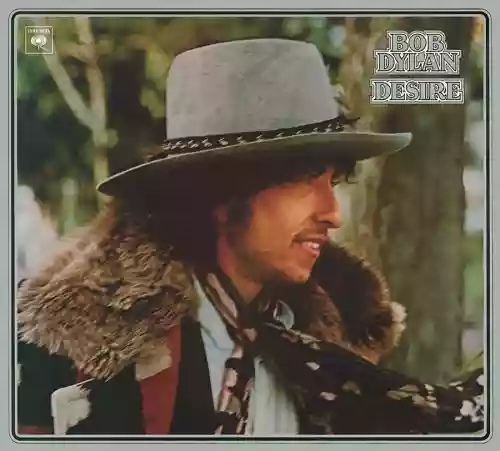
On the cover, there's a pale face covered in hair and furs, a wide acid white-colored hat, a gaze that seems to fly far away. It’s not a Martian, nor is it Sitting Bull: it's Bob Dylan in a rare and surprising photograph from the mid-seventies. It’s the emblem of a different artist, renewed: no longer a protester, but merely and simply a pure rocker, a happy genius always suspended between Heaven and Hell. "Desire" is the album of the definitive authorial consecration. Rock and folk skillfully intertwine almost as if forming a sort of indecipherable Dylanian mystery: is the protest song stronger, or is it the singing protest? Dylan, now mature, showcases a malice and reverential cynicism rarely seen before. Gone is the anger of the 20-year-old who sang "The Times They Are A Changin"; now there is the melancholy and awareness of the (almost) 40-year-old, the desire to change, and the fear of making mistakes. Yet, it is still the brilliant Dylan, at times even shocking, the last great pearl before the definitive musical oblivion.
The music is often shrill: lots of violins (as has been the case for a while now), great guitar solos, and a vast desire to amaze (perhaps too much so). The main track is naturally "Hurricane", an erratic story made in the USA where a poor black boxer is unjustly imprisoned right at the moment when he is triumphantly about to be crowned world champion. It's a very long, engaging ballad (almost nine minutes), yet not tiring. Dylan perhaps somewhat pretentiously copies the rhythmic use of beats and refrains, taking inspiration from "Like a Rolling Stone": the same direct and sharp introduction, a rapid refrain sung multiple times, and a long finale of guitar and drum sounds (the long guitar and drum solos are still, to this day, Mr. Zimmermann's trademark). "Hurricane" is astonishing: brilliant like a Mozart symphony, simple like a nursery rhyme. No rhetoric, no metaphors: only the power of words, and anger, can reach people’s hearts. And the rock, this time, is not that of "Highway 61 Revisited", but rather closer to that of "Born To Run", the legendary album by Bruce Springsteen released in 1975 (in the series: when the master copies the pupil). But this time, the copying has borne fruits of excellent quality and a mutual respect that will last with time, with years, and with art. Even if Dylan is a cut above Bruce. "Desire" contains, in addition to "Hurricane", other beautiful compositions. Touching and sweet is "Sara", a deeply (and thus lovingly) troubled song dedicated to his wife, or rather, to the memory of a wife. Dylan flicks through pages of a perhaps lost memory and an innocence perhaps never touched: a very tense ballad, the guitar almost magically lights up and the violins fly free and gracefully over notes and sensations that touch the heart and tear the spirit. "Sara" is finally Bob Dylan's mature song, it’s finally that modest and reserved portrait Bob has been trying to compose for at least a decade. It’s the force of life and the apathy of death that make "Sara" an almost ethereal track: not even "Iris", another track on the album, will reach such elevated peaks and summits.
Perhaps, that pale face with fur and cocky smile, seeming to mock us a little on the cover, has fatefully grown up. And perhaps the growth has led to a new earthly consistency and a new material consistency. In "Iris" Dylan unexpectedly plays the piano (and does it very well), in "Mozambique" Caribbean and South American rhythms seem akin to the mercurial ones of Battisti in "Anima latina", while "Romance in Durango" will be revisited, two years later, by Fabrizio De André with the title "Avventura a Durango". Noteworthy is also the jazzy "Black Diamond Bay" where the drums mix and meld sounds and illusions. A piece of high class, with Bob’s voice exquisitely flavoring an articulated and dramatically complex song. It’s a pity about the ending, "Joey": more than ten minutes without either thrilling or astonishing. The lyrics are cute, but the music is frankly light-years away from the brilliant and corrosive "Hurricane".
After "Desire", Dylan will dive headfirst into the dizzying eighties: lots of concerts, a vast desire to change and mix his own songs (sometimes rendering them unrecognizable in the process), and a creative happiness bordering on the decent. But after all, Bob is this and more.
Loading comments slowly
Summary by Bot
The review praises Bob Dylan's album Desire as a significant artistic milestone marked by a mature balance of rock and folk. Highlighting standout tracks like Hurricane and Sara, it outlines Dylan’s evolution from protest singer to a complex storyteller. The album is described as musically rich, blending powerful lyrics with diverse instrumentation. Despite minor criticisms, Desire is viewed as one of Dylan’s last great artistic achievements before a less inspired period.Tracklist Lyrics Videos
Bob Dylan
American singer-songwriter Robert Allen Zimmerman, known as Bob Dylan, is a major figure in 20th-century popular music, noted for pioneering songwriting and continual reinvention across folk, rock, country and blues.127 Reviews
Other reviews
By Grasshopper
The violin of Jewish traditional accompaniment, the "fiddle," makes even the longest ballads absolutely intense and poignant.
"Hurricane" is a fantastic example of Dylanian neorealism, telling the real story of Rubin Carter with fierce indignation.
By j&r
Bob Dylan’s voice, never again so magnetic, deep, and true.
"Desire" is effectively the most radical embodiment of human depression.
By hellraiser
The album opens with a song that even the walls know, the great 'Hurricane,' dedicated to African-American boxer Rubin Carter.
It is said that Dylan let his wife listen to 'Sara' during the album recordings, managing to reconnect with her for a certain period.
