
 •
Rating:
•
Rating: THE REVIEW
The early '70s were not easy years for the minstrel from Duluth. After being a celebrity in the glorious '60s, acclaimed by critics and fans (oh well, almost always, even though after the electric turn started with the Newport festival of 1964, folk purists wanted to lynch him), Dylan thought about momentarily leaving the scene, dedicating himself to his family and retreating to his estate near Woodstock, thus distancing himself from the pressure of the media, the fans, and the drugs that were undermining his health.
The official excuse was a supposed motorcycle accident, but Dylan could no longer handle that world which had nevertheless enriched him and given him fame. In the early years of the new decade, he released a couple of albums with decent content but still very sold ("New Morning" and "Planet Waves," which, however, contained the gem "Forever Young") and then released in 1975 his best record of the '70s, the famous "Blood on the Tracks," an album heavily influenced by the pain caused by the separation after 8 years from his wife Sara Lowdes, with whom he had 5 children.
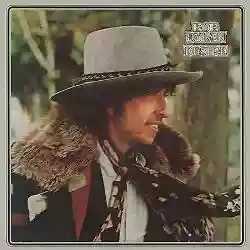
In 1976 "Desire" was released, a very interesting work, which has among its great admirers also Robert Plant, who in the '90s published some covers in his album "Dreamland". The album opens with a song that even the walls know, the great "Hurricane," dedicated to African-American boxer Rubin Carter known as "Hurricane," who in 1966 was unjustly accused of murder and later freed towards the end of the '70s. Dylan describes in detail in this song the story of this man, in a ride of over 8 minutes accompanied on the violins by street artist Scarlet Rivera and by a powerful band that gives the track a driving rhythm with a tex-mex flavor. Other important tracks in this record are the gypsy "One more Cup of Coffee" and "Oh Sister," folk ballads with Mexican atmospheres, accompanied by the choruses of singer-songwriter EmmyLou Harris, also famous for having collaborated on a beautiful album by Gram Parson. At the tail end of the album, the song "Sara," a sweet and melancholic ballad where the author reminisces with regret the years spent with his wife and children. It is said that Dylan let his wife listen to it during the album recordings, managing to reconnect with her for a certain period.
An excellent record, perhaps a bit hidden by the fame of "Blood on the Tracks," but a must-have for those passionate about folk rock and Dylan.
Loading comments slowly
Summary by Bot
Bob Dylan's 1976 album Desire is a compelling folk rock record enriched by vivid storytelling and diverse musical influences. The album features the iconic 'Hurricane,' a detailed narrative about boxer Rubin Carter, alongside heartfelt ballads like 'Sara.' Backed by talented collaborators like Scarlet Rivera and Emmylou Harris, Desire offers a rich blend of Tex-Mex and gypsy folk sounds. Though often overshadowed by Blood on the Tracks, it remains a vital work in Dylan's 70s discography and a must-have for folk rock enthusiasts.Tracklist Lyrics Videos
Bob Dylan
American singer-songwriter Robert Allen Zimmerman, known as Bob Dylan, is a major figure in 20th-century popular music, noted for pioneering songwriting and continual reinvention across folk, rock, country and blues.127 Reviews
Other reviews
By Grasshopper
The violin of Jewish traditional accompaniment, the "fiddle," makes even the longest ballads absolutely intense and poignant.
"Hurricane" is a fantastic example of Dylanian neorealism, telling the real story of Rubin Carter with fierce indignation.
By Viva Lì
"Desire is the album of the definitive authorial consecration."
"Hurricane is astonishing: brilliant like a Mozart symphony, simple like a nursery rhyme."
By j&r
Bob Dylan’s voice, never again so magnetic, deep, and true.
"Desire" is effectively the most radical embodiment of human depression.
