
 •
Rating:
•
Rating:
THE REVIEW
"Highway 61 Revisited" was already legendary, and the name Bob Dylan was a sure thing. No longer just a sermonizing songwriter, but also a writer of rock, folk, jazz, and blues songs. In essence, a Distinguished Musician.
"Like a rolling stone" had already shattered a record that had stood for forty years: having a song last more than five minutes ("Satisfaction" by the Stones was under 4 minutes), but he drew the ire of numerous fans who saw him distancing from Joan Baez and the protest song. Undoubtedly, in hindsight, rock Dylan is certainly less affected and monotonous than the excellent sermonizing Dylan.
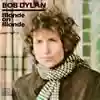
In 1966, Dylan released "Blonde on Blonde," and again broke another record. "Blonde on Blonde" is the first double LP in music history, practically, at the time, it seemed an almost monumental work. And in fact, it is a monumental work. Jazz, folk, blues, soul, rock, pop: Dylan performs the miracle of combining multiple musical genres into a single genre, perhaps indefinable, or perhaps so ingenious as to remain innovative today, forty years later.
Double LP recorded in a somewhat quirky way (a bit like what will happen with the Beatles and "Abbey Road"): Dylan practices the tracks along with Al Kooper - sound master and author of all the excellent sessions recorded entirely in Nashville - while band musicians pass the time chatting among themselves or playing cards. Dylan practices the songs two or three times a day and then records them. Awkward condition, no doubt, yet, the art and talent of Dylan seem to suffer no hindrance.
Young and a bit reckless, Dylan quickly records a series of tracks that will almost immediately go down in history: from the almost folk "Just like a woman" to the unsteady sway of "Rainy day women nos 12 & 15," leading to the beautiful "One of us must know," excellently sung by Dylan but played even more excellently, by Robbie Robertson's six-string guitar and a heavenly accompanying organ, before spilling over into a 'drugged' refrain.
Of course, the record is not all there is. There are at least another six or seven tracks worth mentioning: "Vision of Johanna," "Temporary like Achilles," "4th time around," the delightful "I want you" (vibrant, cheerful, sparkling) culminating in the lengthy "Sad eyed lady of the lowlands," 11 minutes that speak of love, like no one had managed to do before. Among mystical visions, vibrant joys, Lewis Carroll’s mirrors, desolation, love, dust, rain, sun: everything is in "Blonde on Blonde," all of Dylan's art, half of early Sixties American musical history, there are references (obligatory and clear) to the Byrds and Joan Baez, there are all imaginable instruments, there is a rock that seems to turn into something astral, there is a way that would be an understatement to define as genius, of conceiving music adapting it at will.
But above all, there is a desire for redemption: the year before cutting "Blonde on Blonde" (so, 1965) Dylan was absurdly booed at the Newport Folk Festival guilty of having started playing purely electric and rock pieces (the audience expected something like "The times they are a changin’"), and, in protest, anything was thrown at the stage where Dylan was playing. Forced to withdraw from the stage, he would understand that all the respect to which his fans had rightly accustomed him was lost.
And it is from here, from this awareness, that redemption is born: the redemption of doing only and exactly what he wanted, regardless of everything and everyone. "Blonde on Blonde" is an absolute cult classic in music history, a fundamental album to understand the evolution of the singer-songwriter genre made in the USA, and, more generally, a historic album that, in an eventual paradoxical music ranking, can only appear in the top ten positions. Before or after the equally epochal "Highway 61 Revisited"? That, I'll leave for you to decide.
Loading comments slowly
Summary by Bot
Blonde On Blonde stands as a groundbreaking double LP that redefined music by fusing rock, folk, blues, jazz, and soul. Recorded under unusual conditions, Dylan's artistic genius shines through timeless tracks like 'Just Like a Woman' and 'Sad Eyed Lady of the Lowlands.' This album marks a turning point in Dylan’s career and American music, embodying a powerful statement of artistic freedom and innovation.Tracklist Lyrics Videos
Bob Dylan
American singer-songwriter Robert Allen Zimmerman, known as Bob Dylan, is a major figure in 20th-century popular music, noted for pioneering songwriting and continual reinvention across folk, rock, country and blues.127 Reviews
Other reviews
By NicholasRodneyDrake
In 'Blonde on Blonde,' blues, country, rock, and folk are astonishingly blended: bizarre, absurd, visionary, passionate, poetic, and romantic lyrics blend with a new sound... richer and more complex than anything Dylan had done before.
Many at the time considered his 'electric turn' a 'betrayal,' a 'retreat' from the battlefield, but Dylan just wanted to do something new, something different.
By j&r
'Blonde on Blonde' is the first true work of art of rock.
'Sad-Eyed Lady of the Lowland'... one of the highest peaks of rock music.
By insolito
If Christ were alive today, he would play the harmonica, the perfect image of a hobo; he would have a crumbled, rough, even messy voice if you like. But it would be as seductive as few.
'Blonde on Blonde,' the destination Highway 61 leads to.
By dashell
"With 'Blonde on Blonde' Dylan becomes a fire thief and ignites the arid prairies of poetry."
"An essential album to understand who we are and where we come from."
By luludia
The well of that grating and iron voice…a voice that’s beautiful because it’s ugly and ugly because it’s beautiful.
Blonde on Blonde isn’t necessarily the most beautiful, but it’s the one closing the circle, and it’s the most visionary.
