
 •
Rating:
•
Rating:
THE REVIEW
When it comes to fathers of rock, Bo Diddley's name is always somewhat in the background. Elvis was The Pelvis, Chuck Berry the first of the guitar heroes, Buddy Holly the sensitive and romantic nerd, while Little Richard was the first to play with ambiguity and transgression. It's no coincidence that Diddley himself once said: "I'm the one who opened a lot of doors, but I was left holding the knob in my hand."
Diddley perhaps pays for never having had epoch-making chart successes, apart from the memorable single "Bo Diddley/I’m the man" from 1955 (after all, he was label mates with the overwhelming and hugely popular Berry). But, despite perhaps not having anything immediately recognizable to the masses like the names I've mentioned, his classics have had an extraordinary and perhaps much deeper influence on the history of rock. Just think of the reinterpretation of "Who Do You Love" and "Mona" by Quicksilver in the psychedelic masterpiece "Happy Trails," or his influence on the likes of Pretty Things, Kinks, Animals, Yardbirds, and Sonics. Not to mention the fact that the Stones and Hendrix were among his greatest admirers: it cannot be a coincidence, given that the Mississippi native had codified the electric Chicago blues alongside Waters, Dixon, and Wolf.
What were the distinctive features of Diddley's work? First of all, the fabulous syncopated beat, the authentic heart of rock and roll with tribal inserts that referenced African roots and were enhanced by Jerome Green's maracas. "Who Do You Love" is in this sense an unsurpassed piece, a summary of his style between blues and emerging rock and roll. And then all the guitar effects: Bo used a rectangular guitar built by Gretsch, called the "Twang Machine," and from it, he unleashed a series of distortions, tremolos, and effects that enriched his blues riffs (immortal the one in "I’m a man") making him an inspiration to the great Jimi (the self-proclaimed sole priests of the Seattle guitarist will agree...). His guitar style was stunning, boastful, fuzzy, and expanded the power of the instrument towards unknown destinations. And finally, his voice, direct and wild, which lights up pieces like "Bo Diddley”, “Pretty Thing”, “Road Runner”, “Before You Accuse Me", and the bitter prophetic "You can’t judge a book by its cover".
Gentlemen, these are the immortal classics in the repertoire of the one and only authentic "Originator."
Loading comments slowly
Summary by Bot
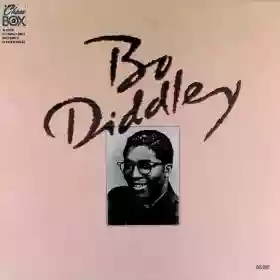
Bo Diddley remains a foundational figure in rock music, often overshadowed despite his deep influence. The Chess Box compilation highlights his signature syncopated beats, innovative guitar sound, and timeless classics like 'Who Do You Love.' Celebrated by legends such as Hendrix and the Rolling Stones, Diddley's work forged a powerful link between blues and rock. This collection is a tribute to his status as the true 'Originator.'Tracklist Lyrics
03 You Don't Love Me (02:53)
04 Diddley Daddy (02:28)
06 Bring It to Jerome (alternate take) (02:41)
10 Who Do You Love? (02:29)
12 Hey Bo Diddley (02:12)
13 Mona (I Need You Baby) (02:22)
14 Say Boss Man (02:33)
16 Say Man (03:13)
17 Hush Your Mouth (alternate take) (03:06)
18 The Clock Strikes Twelve (03:00)
19 Dearest Darling (alternate take) (03:17)
21 Don't Let Go (Hold On to What You Got) (02:46)
23 Mumblin' Guitar (02:49)
24 The Story of Bo Diddley (02:51)
Bo Diddley
American guitarist, singer and songwriter whose Bo Diddley beat bridged Chicago blues and early rock and roll. Known for a swaggering vocal style, tremolo-heavy guitar, and the rectangular Gretsch “Twang Machine,” he influenced generations from the British Invasion to punk.03 Reviews
