
 •
Rating:
•
Rating:
THE REVIEW
The first album by BÖC, self-titled and recorded in '71 and released in '72, consists of a novel mix of '50s rock'n'roll, garage blues, psychedelia, and hard rock.
The album opens with Transmaniacon MC, a rock piece dominated by Donald Roeser's guitar and Eric Bloom's vocals, with particularly agitated tones. The subsequent I’m a Lamb but I’m not the Sheep, a mid-tempo not particularly striking, is performed in a rather subdued manner and will be better revisited by BÖC themselves, with the title The Red & the Black, in the later Tyranny & Mutation. Noteworthy, however, is Albert Bouchard's drumming. The ballad (Then come) the last Days of May, composed and sung by Donald Roeser, stands out for the bluesy phrasing of the electric guitar and the psychedelic inflections of the arrangement. Stairway to the Stars, with sarcastic references to the show biz world, is a boogie highlighted by guitars and Bloom's vocals. (Before the Kiss) a Redcap is the most atypical track on the album, characterized by a bluesy introductory part and a distinctly jazz-like central break, well-supported by the bass and drums mix of brothers Joe and Albert Bouchard, ending as it began. The most significant and original tracks of the album are probably Screams and She’s Beautiful as a Foot: the former is a slow one characterized by Bloom's filtered voice and excellent keyboard counterpoints in a Doors-like style by Allen Lanier; the latter is a piece with a catatonic mood in both vocals and musical accompaniment, surprisingly foreshadowing the traits of Sonic Youth and much of the grunge or related scene (Nirvana, Smashing Pumpkins), expressly indebted to BÖC. Cities on Flame with Rock’n’Roll is the track most influenced by the hard rock of the era (Black Sabbath) at least in the monolithic riff that supports the entire song. It is one of BÖC's signature tracks, repeatedly performed live in the following years, perhaps yielding more appreciable results than those achieved in the studio. The album continues with Workshop of Telescopes, where Bloom's almost theatrical singing is evident, ending with Reedemed, a track supported by acoustic guitars and characterized by relaxed tones not found in any of the previous tracks.
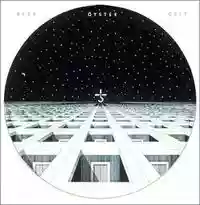
The album is recommended to 70s rock enthusiasts and those who wish to delve into the musical background of many punk, rock, and no wave bands that emerged in the New York area starting in the late 70s. Its score is high for its seminal character, although BÖC managed to surpass themselves in later works, which are more incisive both compositionally and executively. The artwork is suggestive, particularly the album cover.
Loading comments slowly
Summary by Bot
Blue Öyster Cult's self-titled debut album from 1972 is a pioneering mix of '70s rock, garage blues, psychedelia, and hard rock. Standout tracks like 'Transmaniacon MC' and 'Cities on Flame with Rock'n'Roll' showcase the band's signature sound. The album foreshadows later genres like grunge and influenced many New York punk and no wave bands. While not their strongest work compositionally, it remains a highly recommended listen for fans of classic rock and 70s music history.
Blue Öyster Cult
Blue Öyster Cult is an American rock band formed in New York in 1967, known for dark, theatrical hard rock blending sci-fi, horror, and occult-tinged storytelling. The group’s classic era spans the early-to-mid 1970s and includes influential albums and staples like “(Don’t Fear) The Reaper.”22 Reviews
Other reviews
By fateswarning
"The cover... gave a sense of unease and attraction difficult to describe."
"Bullets are not enough to kill music, good music, the one made with blood, spit, soul, heart, lived day by day, pain for pain, joy for joy, and perceived as a religious faith."
By FlavioMetal
The music was hard, the lyrics cryptic, and the attitude was that of intellectual bikers who, with songs never heard before, could literally drive you crazy.
At that time, it was the flag of the new American Heavy Metal.
