 •
Rating:
•
Rating:
THE REVIEW
Black Sabbath: those who were the first to explore the most extreme side of Rock, crossing the boundary of Hard Rock of the Seventies to reach what would later be called Metal. The band that, more than anyone else, influenced the bands of subsequent generations. They were fundamental in the birth of practically all style variations from classic Metal (Doom and Gothic in particular). In a word: legend.
Between 1970 and 1975, Black Sabbath released six albums that revolutionized Rock, giving their music a form that is at times oppressive, epic, sinister; a whirlwind of emotions and unsettling sensations that were almost entirely foreign to Rock at the time.
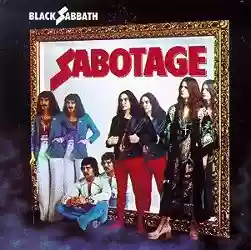
From this golden period (unfortunately never equaled again) comes this 1975 “Sabotage”, an album that regrettably also marks the band's slow but inexorable decline (albeit with some great highs with Ronnie James Dio on vocals), a decline certainly due to a lack of ideas but heavily influenced by the constant pressures of the label (Columbia) and Management (Ozzy’s wife, Sharon). “Sabotage” opens with “Hole In the Sky,” a track simple in structure that features a very catchy Hard Rock-flavored riff, but with the usual metallic imprint of the legendary guitarist Tony Iommi. “Don’t Start (Too Late)” is an instrumental track where two acoustic guitars chase each other between fascinating melodies. “Symptom Of the Universe” is accompanied by a riff as heavy as a boulder, with frequent guitar and drum breaks dueling with each other while the bass intervenes at just the right moment; all of it creating an extremely high pathos. The track ends with a much-relaxing acoustic part adorned with excellent solos.
The following “Megalomania” has a very rarefied atmosphere: reverberating vocals, a darker-than-usual guitar, a sly bass, and an acoustic guitar that excellently accompanies it all. This continues until Iommi unleashes one of his hard yet gripping riffs; the rhythm increases and leads to a pyrotechnic solo and a vocal performance by Ozzy Osbourne worth framing. “The Thrill Of It All” starts with a great instrumental piece, goes through a nice riff well supported by the drums, and ends with a good, though quite surprising, finale. “Supertzar” is the most experimental track on the entire album: an epic and massive riff, and an impressive wall of male and then female choruses that follow the melody, creating a divine and unique atmosphere. The following track, “Am I Going Insane (Radio),” leaves the listener quite puzzled: the track is a perfect radio single, although the overall atmosphere is quite acidic, featuring all the necessary tweaks. Later, Ozzy Osbourne explained that this track was created solely due to the stress accumulated at the time, a period when the Music Business began to seriously oppress the group (not surprisingly, the crisis began after this album!).
The album closes with “The Writ,” a track that opens with desperate screams amidst cheeky laughter and continues with the alternation between an excellent bass piece and an almost impalpable keyboard, with the rest of the band entering the scene and Ozzy reigning with his shrill and majestic voice. The track ends with an alternation of dreamy parts and harder ones, which manage to maintain the same atmosphere. An essential album, albeit slightly inferior compared to the other five milestones of the band but, considering the historical period, something truly astonishing.
Loading comments slowly
Summary by Bot
Black Sabbath's 1975 album Sabotage marks a pivotal point in metal history, showcasing powerful riffs and dark atmospheres despite the band's looming decline. The review highlights standout tracks like 'Hole In the Sky' and 'Supertzar' and acknowledges the external pressures influencing the band. While slightly below their earlier masterpieces, Sabotage remains an essential listen for fans of classic metal. The album's complex emotions and experimental moments capture the band’s unique legacy during a turbulent era.Tracklist Lyrics Videos
Black Sabbath
Black Sabbath are a British heavy metal band formed in Birmingham in 1968. The classic lineup featured Ozzy Osbourne, Tony Iommi, Geezer Butler and Bill Ward, with later acclaimed eras fronted by Ronnie James Dio and Tony Martin. Their influence spans generations; the group released the comeback album 13 in 2013 and concluded with a final tour in 2017.92 Reviews
Other reviews
By Starblazer
"Sabotage (1975) marks a sharp turn in the sound of Black Sabbath... a stunning heavy metal/hard rock that truly rocks."
"The immense abilities of Tony Iommi, Geezer Butler, and Bill Ward reach their peak."
