 •
Rating:
•
Rating:
THE REVIEW
Defining the artistic journey of Tony Iommi's band is a particularly arduous task. As many know, after the departure of Ozzy Osbourne first, and James Dio later, the Black Sabbath project became a carousel of musicians where dozens and dozens of illustrious names took part, making it difficult to say that the band was tied to a particular genre over its long career. Line-ups change, and clearly, the style changes too.
We find ourselves in the second half of the '80s, after the mediocre success of 'Born Again' (with Ian Gillian on vocals), the group completely disbands and Iommi dedicates himself to his solo projects, still signed BS. After a sea of collaborations (one of which with Glenn Hughes for 'Seventh Star'), Iommi restores order with a stable lineup featuring Cozy Powell on drums, Lawrence Cottle (later succeeded by Neil Murray) on bass, and an extraordinary Tony Martin on vocals.
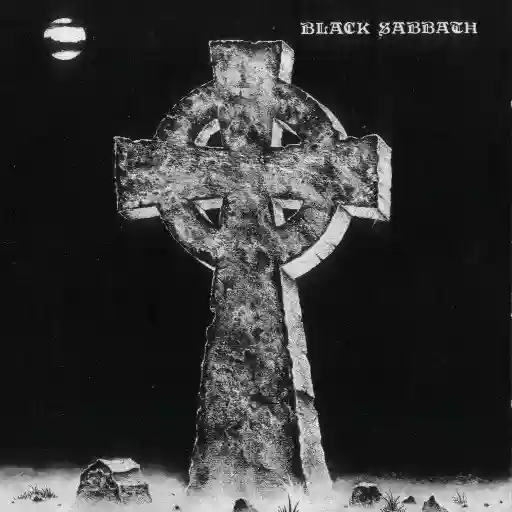
The new singer highlights the style of his predecessor R.J. Dio but brings the band a strong change in genre: let us forget about the doom of the early works or the hard rock in Rainbow style of the second period, now we can talk about true Epic Metal both for the music and the lyrics concerning devils, legions of knights, fear, and death (please do not confuse them with Satanism!). It is in these years that three masterpieces are churned out like 'The eternal idol', 'Headless Cross', and 'Tyr'. After such an introduction, we can proceed to present the 2nd work of this fantastic trident. The album opens with the keyboard intro (played by session-man Geoff Nichols) "Gates of Hell" that recalls in a particularly dark way the prelude of '2112' by Rush.
When imagination pushes towards desecrated churches and semi-dark crypts, we hear an explosion of drums as geometric as they are powerful, then enveloped by a guitar that presents a different sound from what we were used to hearing, now the reverb echoes it in the darkness, but we can still say that the riff remains purely Iommi's hallmark. It is time for the Title Track which indicates the direction the whole album will take: sharp and incisive vocals, precise and impactful rhythmic sections and an imperial guitar that doesn't invade others' spaces (unlike what was heard in Live Evil).
"Devil & daughter" is the quintessential '80s hard rock piece, truly in Dokken style, the voice begins to warm up and the strings increase their presence, moreover, there is no need to say how masterful the guitar solo is: it starts with a linear and moving succession of few notes on a very simple pentatonic and then bursts into full-force tapping. "When Death Calls" is the track that justifies the entire album, it opens with an intimate union between voice and keyboards, but when the chorus starts, some guitar lines vaguely remind us of the old times of 'Electric Funeral' or 'Iron Man'. Just as a tear of nostalgia falls, "Kill in the spirit world" lifts us with a melody that has little to do with BS, yet this impression is swept away when just after the 2nd minute we reach the classic rock-metal LA- SOL FA loop in 4/4 that accompanies the solo (a bit like "Beyond The Realms Of Death" by Judas Priest), but this does not deny the beauty of the piece.
"Call of the Wind" seems an appendix of the previous track, it doesn't say anything new: time is halved on the bridge but with a bitter note, namely the chorus in Duran Duran style in the refrain, unfortunately, it is the spirit of the time. "Black Moon" brings back a rock blues sound perhaps reminiscent of the previous decade to this, yet it slightly clashes with a now "metallic" solo, nevertheless these 3 chords in 12 bars can only make you think "Long Live R'n'R!". To conclude, we have "Nightwing", a ballad worthy of ending such a massive album, the structure is usual: an arpeggiated guitar followed by riffs that like "When Death Calls" ruminate on times now far away.
As I said at the beginning, this group has gone through a multitude of different phases, but it has managed to withstand every change. Certainly, 'Headless Cross' is not an album that marked history like "Paranoid" or "Master of Reality", by now it's a whole different music but still good music. Full credit goes to Cozy Powell and Tony Martin, perhaps too underestimated by critics. If you are Osbourne fans, I spare you the listening, for everyone else, enjoy this small milestone.
Loading comments slowly
Summary by Bot
Headless Cross captures Black Sabbath’s 80s transition into epic metal, featuring strong performances by Tony Martin and Cozy Powell. The album diverges from the band’s doom origins, delivering powerful riffs and memorable melodies. Though not a historical milestone like Paranoid, it remains a solid and underestimated record. Fans of classic metal and epic themes will find it rewarding.Tracklist Lyrics Videos
Black Sabbath
English heavy metal band formed in Birmingham in 1968, widely credited as pioneers of heavy metal and led musically by guitarist Tony Iommi.91 Reviews
