
 •
Rating:
•
Rating:
THE REVIEW
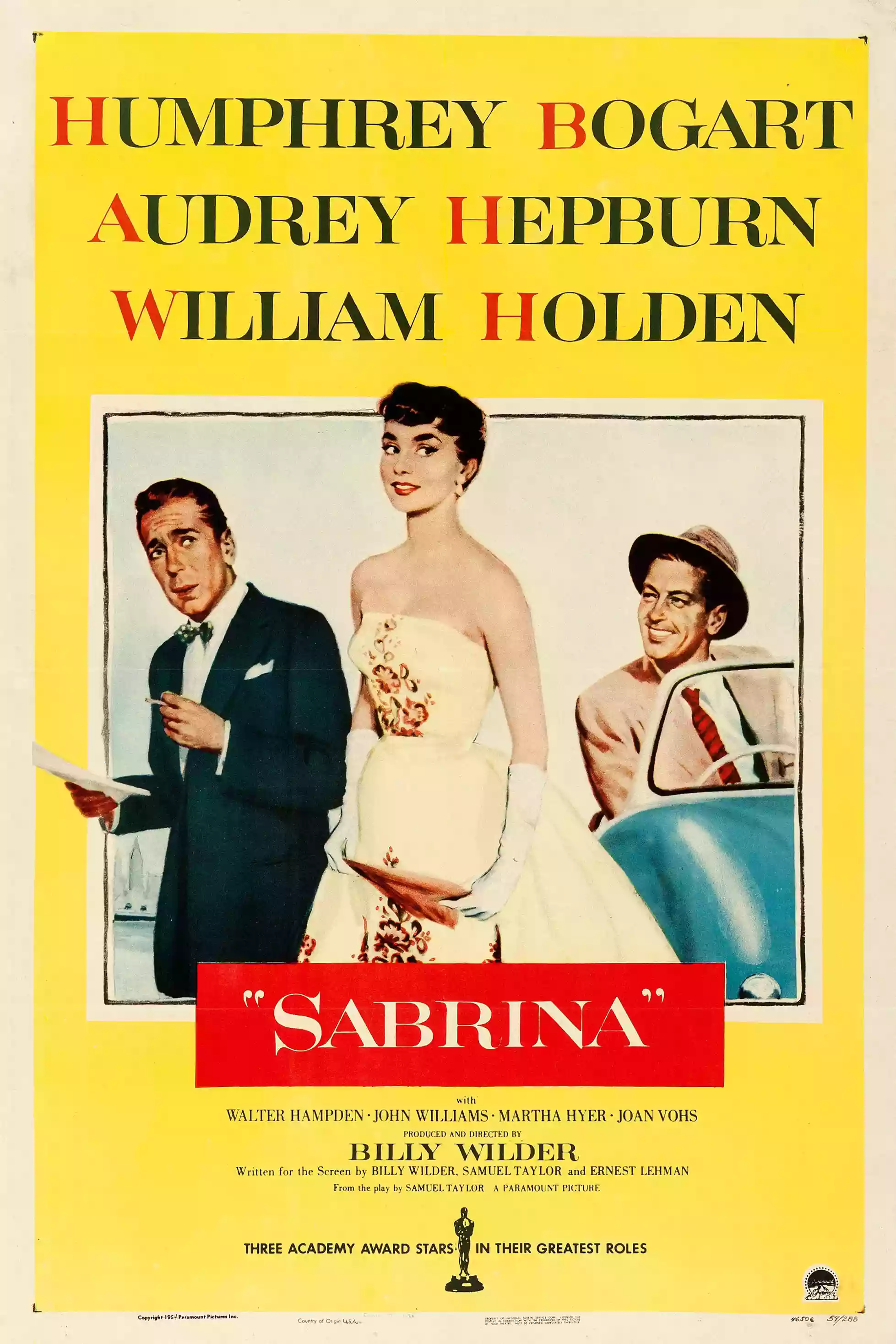
With Billy Wilder, as we know, nothing goes to waste. Especially the works he created between 1944 and 1966: 18 films, of which at least 15 are absolute masterpieces (among the many, I mention "Double Indemnity," "Sunset Boulevard," "Ace in the Hole," "Some Like It Hot," "The Apartment," "Irma la Douce"). In 1954, "Sabrina" was released, a film that had to work quite hard over the years to "make its way" among more famous and more successful box office hits before obtaining recognition as a true masterpiece.
Wilder, with his trusted I.A.L. Diamond at the script (probably, along with Age and Scarpelli, the best screenwriting duo ever, at least for their prolific output), writes a story set in the eternal Paris (as would later be the case in "Love in the Afternoon," 1957) and the modern Long Island: the Old Europe and the New World. Basically, it's the most classic love triangle, less dreamy than Truffaut's future "Jules et Jim"; witty, like certain Woody Allen works that often found their lifeblood in Wilder. Audrey Hepburn, the leading lady (who, at the studio's request, bought some of the dresses for the film herself) is the most wonderful Sabrina one could ever imagine, with those lovestruck doe eyes and that French touch no Belgian (she was born in Ixelles) ever had or will ever have. The two "big guys" are the suave William Holden and the old Humphrey Bogart who, like Gary Cooper in "Love in the Afternoon," is perhaps a bit too old for the part—but such myths always seem ageless, and Bogart was truly a legend (as Umberto Eco would later write in the '60s about "Casablanca").
Of course, just like in some soccer teams that win everything despite discord in the locker room, the set of "Sabrina" was a bit of a hornet’s nest. Bogart, who was chosen in place of Cary Grant (who declined due to commitments) and who wished he could have acted alongside Lauren Bacall, displayed behavior that was, to put it mildly, annoying and disrespectful towards Wilder—to the point where Bogart himself apologized publicly a few years later. But, miraculously, none of this shows up on screen; "Sabrina" doesn’t suffer at all from any clash between the cast and crew: Wilder’s genius knew how to "patch up" holes and heal open wounds. He was surely helped by the almost "heavenly" patience of Hepburn (who, it’s worth remembering, was only 24 at the time!). "Sabrina" takes its inspiration from a stage play by Samuel A. Taylor, "Sabrina Fair," but moves significantly away from it, above all in the highly successful comedic moments—sometimes so cynical that they make you smile halfway (an exemplary scene is the one where Hepburn wants to commit suicide in the garage but is prevented by the overwhelming number of parked cars).
Here’s a brief synopsis, without spoilerare: Sabrina, daughter of the chauffeur to a family of billionaires, comes back after two years spent in Paris and is a changed girl: sophisticated and chic. No one had ever really noticed her before, but now everyone wants her—including the younger son (William Holden) and the firstborn Linus (Humphrey Bogart). Linus, worried that his brother’s marriage of convenience might miserably fail, begins courting her himself.
An "amoral and razor-sharp treatise" on the vices and scant virtues of high society, which, under the veil of a romantic comedy, conceals a scathing critique of the capitalist system. A system that banishes the poor but is ready to welcome them with open arms if they, accidentally or intentionally, conform to the upper class itself. All of this is managed with such an incredible (and light) touch—because that is the secret to such films: lightness, something that nowadays has sadly been replaced by an inconceivable heaviness—that it never becomes boring, not even upon repeated viewings (in fact, each time you catch a detail you’d previously missed). Unforgettable sequences: cooking lessons in Paris (how do you make a good soufflé?); old Larrabee (Walter Hampden) with olives and cigars. Lines worth framing, the best one: "Life is like a limousine: some people sit in the back, some up front. And in between there's a window." Exactly.
Oscar for Edith Head’s marvelous costumes, though Charles Lang’s stunning black and white cinematography also would have deserved mention.
It "boasts" (so to speak) a mediocre remake by Sidney Pollack (who drags things out by 15 minutes compared to the original), starring Harrison Ford, Julia Ormond, and Greg Kinnear, 1995. An American critic described it best: "[...] seems like makeup smeared on a corpse..."
Loading comments slowly
Summary by Bot
The review highly praises Billy Wilder's 'Sabrina,' rating it a perfect score. It recognizes the film as a standout in the romantic comedy genre. The direction, performances, and lasting appeal are highlighted. A must-see for classic movie lovers. The review positions 'Sabrina' among the greats of Hollywood's Golden Age.
Billy Wilder
Billy Wilder (born Samuel Wilder) was an Austrian-born American filmmaker who emigrated from Europe in the 1930s and became one of Hollywood’s most influential writer-directors. Renowned for razor-sharp scripts and genre versatility, he moved from noir and drama to romantic and satirical comedies. He collaborated notably with Charles Brackett and I.A.L. Diamond and directed classics such as Sunset Boulevard, Some Like It Hot, The Apartment, and The Lost Weekend.18 Reviews
Other reviews
By London
"Democracy can be very unfair at times, Sabrina."
"If you want to enjoy a well-acted movie and especially if you have a great need to laugh in a pleasant and carefree way, this might be the film for you."
