
 •
Rating:
•
Rating: THE REVIEW
One of the masterpieces of the 80s.
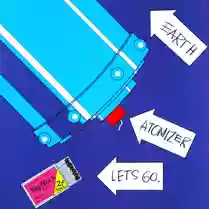
The work that consecrated Steve Albini as one of the leading figures of the American underground rock scene. After refining his aim with a series of EPs released in the previous years, the Chicago nerd hits the target in 1986, giving birth to this fundamental record, a godsend for various musical genres of the following years, from noise to industrial to math-rock (of which Albini himself, unsurprisingly, would become a superb exponent with the memorable "At Action Park" by Shellac, his third band). He dismissed his friend, bassist Jeff Pezzati, vocalist of fellow Chicagoans Naked Raygun, bringing in Dave Riley in his place, while retaining his trusty guitarist Santiago Durango. Albini presents his peculiar interpretation of hardcore: Albini's hardcore is cacophonous (hence the noise), mechanical (due to the use of one of the most vicious drum machines of the decade, and Ministry thanks...), geometric (hence the seeds of math...).
The overall effect is extremely dark, obsessive, unpleasant, inhuman, barbaric, extremist, frantic, chilling, shocking. The central triptych alone would be enough to send the record to glory: "Kerosene", "Bad Houses" and "Stinking Drunk" go straight for the gut. The former (probably the pinnacle of Albini's entire production) could serve as the soundtrack for 'Taxi Driver': you can almost see Travis Bickle loitering, bored, with his hands in his pockets and a menacing glare, through the city streets ("Never anything to do in this town..."), before the bloodbath. Albini literally tears apart the guitar riff and disjointedly reassembles it, so that the engine of the track is a sort of zombie riff, on the verge of derailing into the piercing screech of the chorus ("Set me on fire...") and ultimately culminates in the most deafening chaos. Albini's voice is passive, suffering, weak, yet occasionally capable of sudden outbreaks. "Bad Houses" is instead the more "relaxed" track on the album, a piece well-suited for certain grey, dreary, desolate days: here, the wall of sound surprisingly acquires melancholic shades that coalesce into a sublime, sorrowful, and disheartened poetry of the everyday.
After this touching exploration of youthful spleen, we return to the world of serial killers with one of the most distressing and terrifying tracks in the history of rock, "Stinking Drunk". The intro is textbook: the drum machine sets up a tense rhythm; then comes a dizzying bassline; followed by Albini's shrill and deformed guitar; finally, Durango's grim escalating chords (combined with a disarming vocal) imbue the track with spasmodic tension, before it dissolves into a puddle of liquefied chords. Then, midway, comes Steve's guitar showcase, recomposing the initial riff "in real-time" before reigniting the final assault ("Go! Get Drunk!"). The other tracks are certainly no less: "Jordan, Minnesota" is relentless with its cruel stop'n'go pattern; "Passing Complexion" leverages the most perverse guitar effect imaginable and structurally appears closer to the techno world than to rock; "Bazooka Joe" is a barrage of cannon shots, proceeding by inertia, with a dizzying central interlude.
These are all tracks that demonstrate how Albini's music is based on the genius and innovative exploitation of stylistic patterns borrowed from more traditional rock, only to be subjected to a sadistic genetic mutation process: Albini is the mad surgeon of rock music. To end on a high note, there's "Cables", a track much less oppressive than the previous ones, capable of somewhat anticipating what Steve would achieve a couple of years later with Rapeman.
Loading comments slowly
Summary by Bot
Big Black's 1986 album Atomizer is a landmark record in American underground rock, highlighting Steve Albini's unique style. Blending noise, hardcore, and industrial influences, it features dark and intense tracks like Kerosene and Stinking Drunk. The album's innovative sound helped shape several genres and solidified Albini's place as an influential musician and producer. Each track pushes boundaries, showcasing Albini's mad genius in reinventing rock music.Tracklist Lyrics Videos
Big Black
Big Black was an American noise-rock band formed in 1981 in the Chicago area by Steve Albini. Known for abrasive guitars, stark lyrics, and a rigid drum machine, they released two seminal albums—Atomizer (1986) and Songs About Fucking (1987)—before disbanding in 1987.10 Reviews
Other reviews
By Gioffa
"Atomizer is perhaps my favorite album of the '80s."
"Steve Albini is a genius, one of the best composers of the post-war period."
