
• Rating:
THE REVIEW
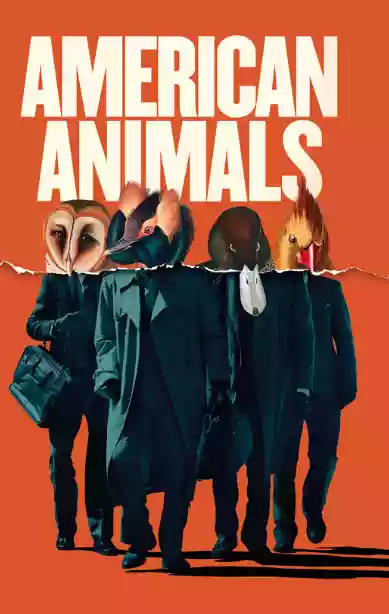
American Animals (2018) masquerades as a quirky heist film, but beneath its offbeat swagger lies something far more unsettling: an elegant meditation on youth, identity, and the terror of living ordinary, forgettable lives.
Set against the deceptively backdrop of (the actually existing in Kentucky) Transylvania University, the film immediately toys with expectation. For European viewers especially, the name may conjure Gothic absurdities rather than the theft of priceless rare books. Yet the treasures at the center of this bizarre true story are no less mythical in their own way: among them, Audubon’s monumental Birds of America and a first edition of On the Origin of Species. Artefacts of genius, beauty, and permanence, in stark contrast with the half-formed young men who attempt to steal them.
Unlike conventional criminals motivated mostly by greed, Spencer and Warren are propelled by something more psychologically complex and distinctly modern: existential panic. Spencer, an aspiring artist suffocated by mediocrity, aches not only for wealth but for significance. He romanticizes chaos, yearning for a life dramatic enough to rescue him from anonymity.
Warren, more reckless and ordinary, shares this hunger through a different lens, treating criminality as both rebellion and self-invention. Their heist becomes less a practical enterprise than a desperate, almost absurd performance against insignificance itself.
This existential core is what elevates American Animals beyond genre exercise, but Bart Layton’s other major achievement lies in the film’s formal construction. Blending documentary interviews with scripted dramatization, Layton fractures the narrative into conflicting memories, subjective distortions, and stylized visual experimentation. Real-life participants interrupt the action, often contradicting one another, creating an unstable narrative where truth becomes slippery.
The editing is equally unconventional: kinetic camera work, ironic visual flourishes and split perspectives transform what could have been a standard crime caper into something far stranger. The film hovers in a weird space between documentary, satire, psychological study, and thriller. This hybrid structure mirrors the protagonists themselves, young men suspended between fantasy and reality, authenticity and self-mythologizing.
This is not just a story about a failed robbery, but a portrait of a generation haunted by the fear that normalcy equals erasure. American Animals captures the dangerous seduction of exceptionalism, the fantasy that one reckless act might carve meaning into an otherwise unremarkable existence.
Stylish, intellectually playful, and quietly tragic, this is not a film crafted for passive consumption. It rewards viewers drawn to unconventional storytelling and psychological nuance rather than formula. Bart Layton created something rare: a heist film where the stolen objects are almost secondary to the characters’ frantic attempt to achieve significance.
For this reason, it is difficult not to feel a certain disappointment that his more recent Crime 101, while technically polished and more commercially digestible, fails to reach the same level of originality or thematic depth. Where American Animals was formally daring and philosophically charged, Crime 101 bends toward contemporary expectations of mainstream inclusivity and broader marketability, sacrificing some of the sharp, unpredictable authorial voice that made this film so unique.
-------------------------------------
Available on Prime.
Loading comments slowly
Summary by Bot
This review praises Bart Layton's American Animals for its genre-bending approach, interweaving documentary and dramatization. It delves into themes of youth, existential anxiety, and the pursuit of meaning beyond mediocrity. The film's stylistic risks and psychological depth elevate it above typical crime thrillers. The narrative's fractured, unreliable perspectives mirror the protagonists' inner turmoil. Layton's later work Crime 101 is noted as less original compared to this standout film.
Bart Layton
Bart Layton is a British film director and documentarian known for blending documentary and dramatization, notably in The Imposter (2012) and American Animals (2018). He later directed the heist thriller Crime 101 (2026).02 Reviews
