
 •
Rating:
•
Rating:
THE REVIEW
The Band of Horses know few things but know how to do them perfectly. They are four American guys from Seattle, but their geographic origin gives no useful clues for defining their musical genre.
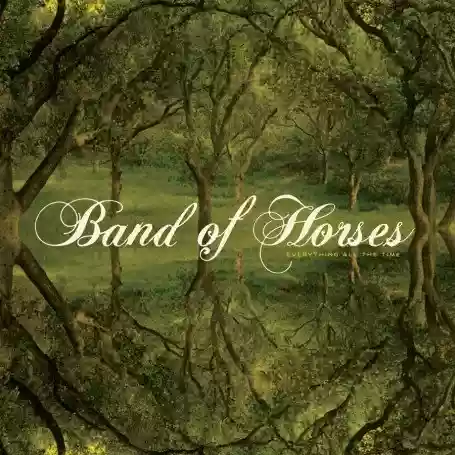
Their debut album, "Everything All The Time," is a Rock album that fits into that 80s New Wave vein of early U2 or Duran Duran, which has brought considerable fortune to some of the best indie-rock bands of recent years, such as The Killers or Arcade Fire.
The formula of the songs is the classic rock track setup, with a very catchy and melodic guitar arpeggio that accompanies Bridwell's beautiful dreamy voice, until the rhythm section, always very precise and incisive, kicks in with rhythms that are almost never fast but tend to focus attention on the melody of the tracks. The arrangements are therefore not very sophisticated, both in structure and in the choice of instruments; the melodies, supported by electric and acoustic guitars, create enchanted atmospheres that lead the listener not only to listen to the album but almost to see its images.
The album begins with an excellent introduction: "The First Song" indeed, from the title itself, seems to be built specifically to magnetically drag you into the dreamy and harmonious atmosphere of the album. By the second song, things get serious, as the rhythms and electricity intensify; "Wicked Gil" indeed gets very close to the brit-rock of Franz Ferdinand. The best track arrives at the fourth position, "The Funeral" is an excellent pop-rock song with Bridwell's enchanting voice soaring in the air, masterfully supported by the harmonics of the guitars. Absolutely noteworthy are the masterful acoustic ballad "Part One" and "The Great Salt Lake," which recalls the best compositions from Arcade Fire.
The only song where Bridwell and company depart from the previously described formula comes almost at the end of the album with "Monster," which starts as a country-folk ballad, with the voice accompanied by the banjo, then acquires an ever-greater array of colors as the acoustic guitar is introduced, followed by the electric guitar, bass, and drums, creating a precious and exciting harmonic tapestry. Spectacular!
The record concludes with a short and delightful acoustic piece, which recalls the Kings of Convenience in the structure of its choruses.
The most obvious negative notes of the album are, as mentioned, the lack of originality in the search for arrangements. Furthermore, the individual songs are almost always centered on a single motif that is repeated, in my opinion, redundantly throughout the track's duration, without any melodic or rhythmic change. These shortcomings lead, especially in the middle part of the album, to a repetitiveness of tones and rhythms.
In conclusion, "Everything All The Time," despite some rough edges to smooth out, which is almost physiological for a first work, shows tremendous potential for the Band of Horses, who know how to move those who listen to them; and for whom I predict an exponential improvement in their future works.
Loading comments slowly
Summary by Bot
Band of Horses' debut album 'Everything All The Time' delivers catchy, melodic indie rock with dreamy vocals and classic rock arrangements. While it lacks originality in arrangement and sometimes feels repetitive, tracks like 'The Funeral' and 'Monster' stand out. The album shows great promise for the band's future growth despite minor flaws.Tracklist Lyrics Videos
Band of Horses
Band of Horses is an American indie rock band formed in Seattle in 2004 by Ben Bridwell. Early releases on Sub Pop earned acclaim, especially the debut Everything All the Time. Notable songs include The Funeral, No One's Gonna Love You, and Is There a Ghost. Infinite Arms received a Grammy nomination.06 Reviews
Other reviews
By ziabice
This album has the cathartic power of taking away all the tensions accumulated during the day like a calm river.
Composed of 10 arrows all aimed at our hearts, all very solid, all endowed with a life of their own.
