
 •
Rating:
•
Rating:
THE REVIEW
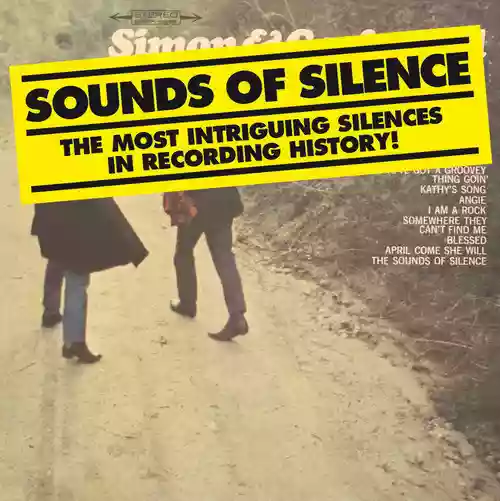
A compilation titled “Sounds of silence,” one of those ideas you mumble about between one vodka tonic and another while rummaging through the venue's vinyls with a demeanor halfway between Lester Bangs and Luzzato Fegiz.
“And yet no one has ever made a compilation of all the silent tracks created by musicians throughout the 20th century but where the hell did I put my phone? Let it ring.”
And no. Game over. Alga Marghen made it, The compilation of silences. Bizarre idea, isn't it?
And for this bizarre idea, I would evoke cultured citations, among which the one from Bembo: “A silence that can become music.”
Who knows if Bembo, while roaming around Cervinia to shoot the video for the final credits of Superflash, knew John Cage and his four minutes thirty-three.
Bembo advocated silence in its negative sense, capable of transforming into music, harmony, dingdongdang, thanks to the sacred fire of friendship. No. He never really knew Cage, I guess.
My friends know that the value I assign to friendship is so random that it’s better to use this word sparingly. I mean, I wouldn’t climb on a snowcat in the middle of a blizzard to shout about how many beautiful things a friend does, unless I’m totally high on Valium. I’d rather send a bottle of wine and that’s it.
My Music Theory professor used to say that without silence, music would be just noise.
I like the sound of a hairdryer, and it doesn’t have silent pauses.
With this drone noise story, I think I caused a couple of avalanches, but so be it. But what meaning have some artists given to this silence?
Unfortunately, few have grasped Cage’s thought.
Cage saw silence as the best possible background music, stripped of horizontal meaning and hence capable of not creating distractions or emotions of any kind stemming from an external discourse.
Much of the silence contained in this compilation, however, speaks.
It is a silence that, in a certain sense, wants to make you blush with shame or would like to impose “meditate people, meditate” on you. It is a social, political, argumentative silence.
For example, the silence of the Crass and that sense of clustering (it is not a typo) on nuclear war (The sound of free speech, it is called and in The Feeding of the 5000 follows “They've got a bomb”).
Then there's the silence of Lennon and Yoko Ono: “Two minutes silence” present in that pretentious “Unfinished Music No. 2: Life with the Lions,” where, even with the best intentions of contemporary stylistic propaganda looking east, the two badly missed their ambitions.
Indeed, they will not stray far from a result that may remind one of the parody of the contemporary music concert of the clumsy couple in “Le vacanze intelligenti,” while the cultured woman in fur reminds the two fruit sellers that “Many do not know that Tacet is in the score.”
There is also Maurice Lemaître, and his mannered silence, derived from a sort of letterist epic win.
Even the silence of Robert Wyatt included in Cuckooland, comes after “Lullaby for Hamza”: a painful and accordion lullaby acknowledging the return of the great post-September 11 nightmare: bombings, Iraq.
The Soulfly of Cavalera pay tribute to the September 11 attack with the most obvious “minute of silence”, like any Atalanta – Cesena.
This concept of remaining taciturn and giving meanings, signifiers, and logos to silence, stems from that rhetorical dictate of the art of speaking. And this is a limitation (one of the many) of much of Western thought (equal temperament included).
And why should silence ever say or communicate something and not simply be a moment to transcend one’s Self?
“You speak even when you’re silent,” this seems to be the truth. And we don't get out alive from this discourse story, which speaks even when, silent, it ends up obediently silent and dying silently.
The Tacet in score (of Cage), the “Be quiet!”, warlike imperative used not to give the enemy who listens the advantage (the words). The be quiet and reflect: meditate people, meditate! How many things can this blessed silence do.
In this compilation, there is no Cage’s 4'33", and beyond the reasons, I’m not surprised and I don’t mind. Cage didn’t care about creating an empty think tank from pseudo-liturgical speakers’ corners or various celentanate. In his silence, you hear something else, and that something else is a truth still too far from Western thought. That silence is closer to a sitar drone than to an introspective treatise on our contemporary actions.
That’s why, in recognizing the different intents of silence, this compilation might seem boring. Not so much because you won’t hear a single note but for the simple fact that almost all these silences, speak. And too much.
They speak, like a social media catchy phrase like “There are silences that are worth more than a thousand words. Share if you agree.” And I don’t care. I keep the “Tacet” in score, the non-dialogue as an opportunity to better listen to oneself, without using it as a “highlight moment”, without asking for anything.
At this point, “Hello darkness my old friend” by Simon & Garfunkel wins, but I also keep a phrase from Einsturzende Neubauten: “Silence is not sexy at all.”
In the end, who ever asked silence to be sexy, passionate, and full of meanings?
It is so beautiful, every now and then, to have nothing to say. Let alone if it isn’t wonderful to have nothing not to say.
Loading comments slowly
Summary by Bot
The review discusses the unusual concept behind the compilation 'Sounds Of Silence,' highlighting how silence in music often carries social, political, or artistic messages rather than pure absence of sound. It contrasts various approaches to silence, referencing John Cage's philosophy and notable silent tracks by artists such as Crass and Lennon/Ono. While praising the idea's cleverness, the reviewer finds that much of the silence actually speaks too much, sometimes limiting its transcendental potential. The compilation is seen as thought-provoking but possibly challenging or boring for some listeners.
Various Artists
"Various Artists" is a credit used for compilation albums featuring multiple contributing artists across genres; the DeBaser reviews cover punk, metal, doom, grindcore, tributes and soundtrack compilations.02 Reviews
