
 •
Rating:
•
Rating: THE REVIEW
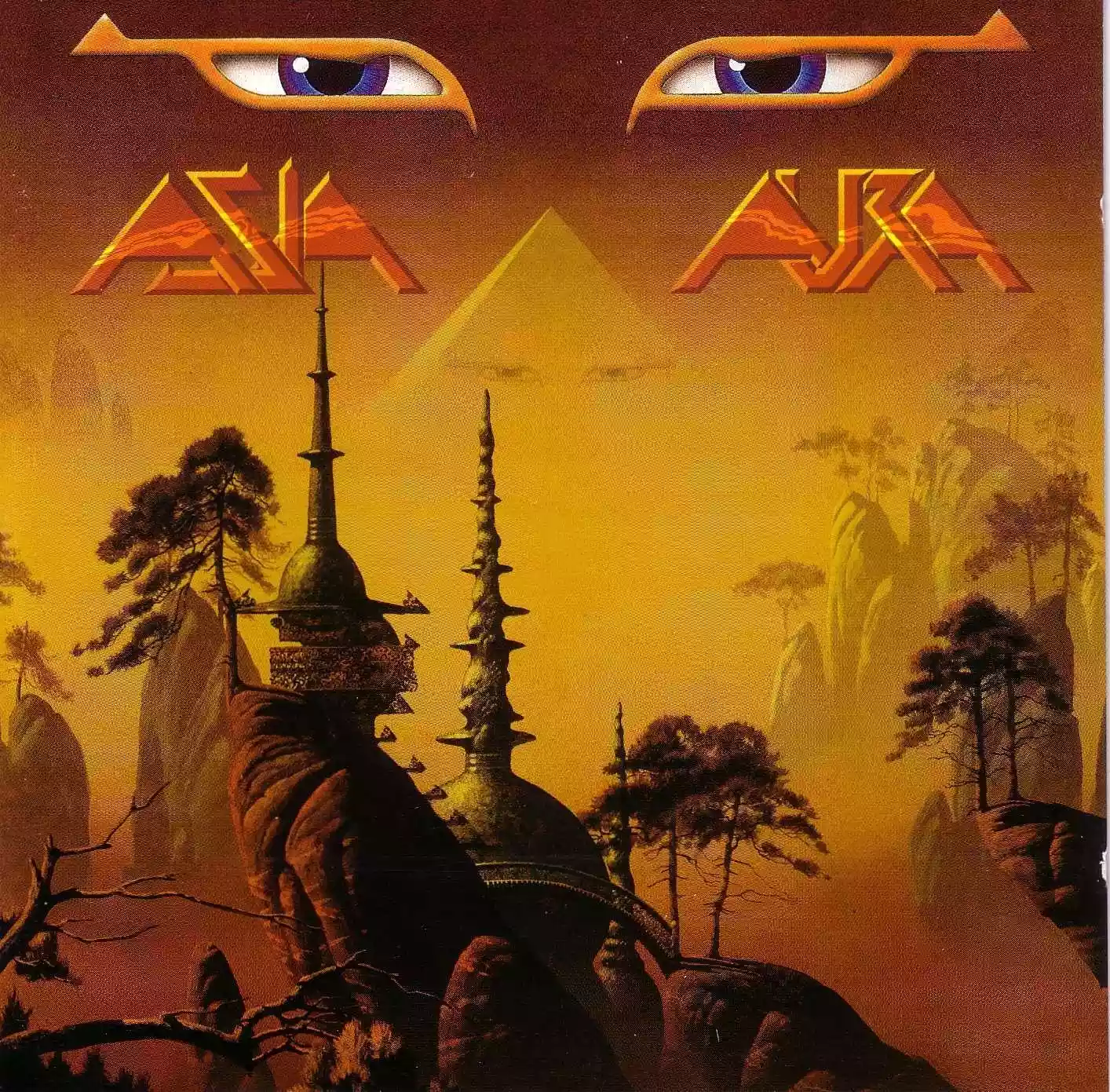
Almost five years after "Arena" and the "Archiva"s, Geoff Downes and John Payne reunite for another album; they recruit an army of session men, including former founders Carl Palmer and Steve Howe, and, without actually involving them in the creative process, give birth to "Aura", the most unique album in their discography.
Unique because it's almost entirely composed of ballads, almost completely devoid of AOR sounds and schemes, with very few Arena-flavored episodes, and with keyboards that, if not always sounding modern (and here we are in 2001), at least are not the noisy, plasticky, tons of keys as usual.
A spacey music, where Downes' keys serve to deepen the atmosphere and give more breath to the songs, while John Payne's super-gifted vocals tackle high notes and falsettos: you wouldn’t have expected it, such a delicate and refined Payne, but this gentleman can do it all.
It's a Star Wars pop, that you can listen to: well-crafted light pop-rock, made cosmic by Downes and the typical Asia-choirs. Only the opening track "Awake" is veiled with Arena, while "The Longest Night" is the only true AOR episode, and a power ballad at that. The only real heavy and pure pomp rock is the driving and well-executed (a rare thing for Asia) "Free", which through decelerations, accelerations, and the unmistakable contribution of Steve Howe, comes to touch the boundary with Yessong in more than one moment.
Given that the recreated atmospheres are practically similar to each other, and that Buggle Downes' keyboards are almost "astral" and "incorporeal", thus lacking blood and muscle, "Aura" risks appearing a bit soporific, especially if the listening is superficial-distracted. But upon a listening that feels more like a challenge or immersion, you soon realize you are dealing with a work of songs that range from decent to excellent. Without outrageously superior episodes, but also without (deadweight) lapses of style.
A consistent album, finally a demonstration of how well these craftsmen know how to do their job. It remains to be asked why (almost) only ballads... Did they finally realize that their AOR was out of time? That the gentlemen, now inevitably aged, no longer wanted to mess around with FM (and find me a radio station playing that kind of music!) or "battle" with pomp rock? Or, more simply, the inevitable creative drought (or the disastrous outcomes, both in quality and sales, of most of their albums) suggested they stick to the trusted paths of authorial pop rock? The fact is that "Aura", from 2001, is a very well-executed work. What it contains, in the end, is futile to argue about: everyone does what they know best. Or what is most convenient.
Loading comments slowly
Summary by Bot
Aura, released in 2001 by Asia, stands out in their discography for its almost exclusive focus on ballads and spacey pop rock. Featuring contributions from original members but led creatively by Downes and Payne, the album showcases delicate vocals and atmospheric keyboards. While it risks a soporific feel if listened to superficially, deeper immersion reveals a consistently well-executed work. Aura reflects a mature band exploring a refined and cosmic sound beyond their traditional AOR roots.Tracklist Lyrics Videos
Asia
Asia are a rock supergroup formed in 1982, widely associated with AOR/pomp rock and arena-oriented songwriting despite members’ progressive-rock backgrounds. The classic lineup is frequently cited as John Wetton, Geoff Downes, Steve Howe, and Carl Palmer, and later eras discussed in the reviews include John Payne on vocals/bass alongside Downes.14 Reviews
