
 •
Rating:
•
Rating:
THE REVIEW
The "Serpent Rouge" is a mysterious booklet written by Pierre Feugere, Louis Saint-Maxent, and Gaston De Koker, who died by hanging suicide a few days after its publication (March 6 and 7, 1967). These dark, cryptic pages, filled with magical symbols and elements of the zodiac, hark back to the mysteries of the sinister transalpine village of Rennes-Le-Château, still today a pilgrimage site for hordes of esotericism enthusiasts. It seems that the ultimate purpose of the writing was to spread clues that would relate the enigmatic French village to the Parisian churches of Saint Sulpice and Saint Germain des Prés (seven hundred kilometers apart but on the same meridian), while at the same time leading to dead ends, like in an intricate labyrinth.
Some words seem to unveil what is hidden from human eyes, but fatally lead to the unknown.
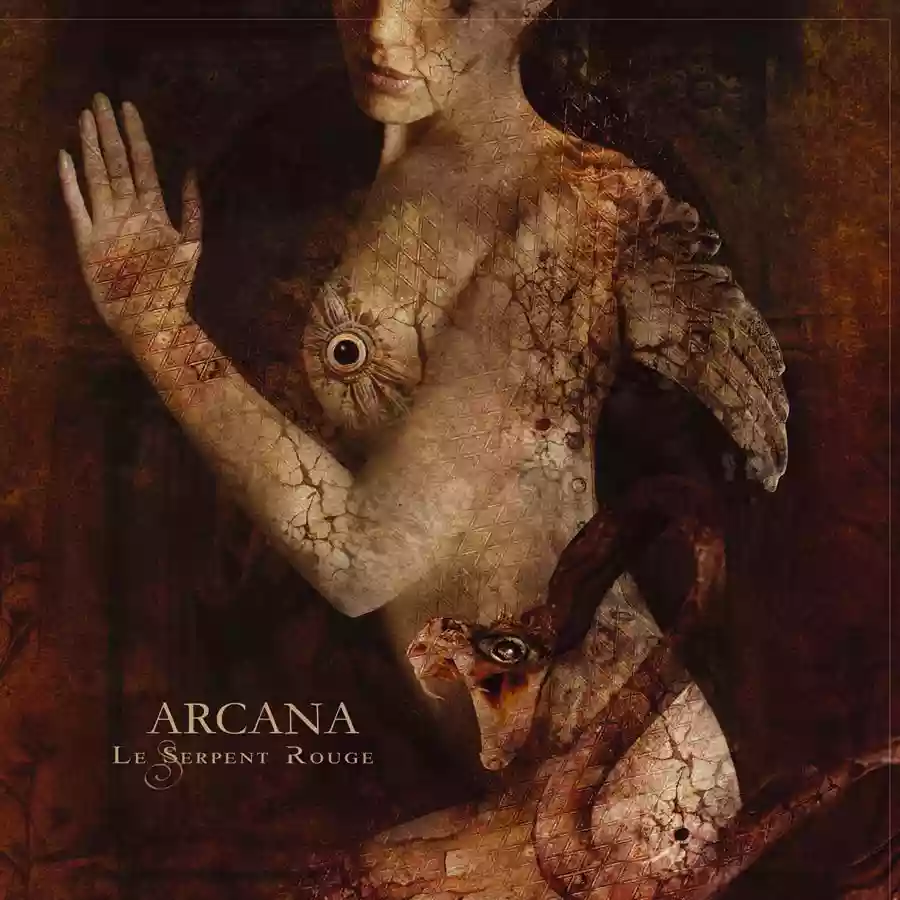
The titular concept of Arcana retraces this idea, wandering through the sibylline paths of time and space, embedded in the coils of ancient civilizations. The long crimson serpent slides sinuously through nine time-honored symphonies linked by a common fil rouge: the spiritual presence of Brendan Perry and Gerrard, a diaphanous yet persistent backdrop, crystallized and shimmering in the title track. The Swedish ensemble sets a point of fracture with the past, projected towards the eastern regions. The dualism between the beauty and the decay of nature that transfigures in autumn has always stimulated Peter Bjargo's creative side, and here we find confirmation. The new sound visions are professed in the contaminations of "Cathar", in the tribal dance between Egyptian cymbals, timpani, and drums in "Under The Sun", "Serpent Dance", and "The Nemesis", in the echoes of an impenetrable sonic underbrush in "The Passage" and "Seductive Flame".
The alluring dark ambient of the first albums, with their rarefied atmospheres, is a faint memory of the past, but the charm remains unchanged. Arcana have never lost their way, have never compromised with the recording market, pioneers, always a step ahead in experimentation, maintaining their solid, renowned identity.
Loading comments slowly
Summary by Bot
Arcana’s album Le Serpent Rouge draws inspiration from a mysterious, esoteric booklet tied to Rennes-Le-Château. The music blends dark ambient roots with tribal percussion and spiritual influences, featuring echoes of Brendan Perry’s presence. Though the sound has evolved, the band maintains its experimental edge and solid identity. The album explores themes of mysticism, ancient symbols, and timeless spiritual journeys.Tracklist Videos
Arcana
Arcana is a Swedish neoclassical darkwave/dark ambient ensemble founded in 1994 by Peter Bjärgö (formerly Peter Pettersson). Closely associated with Cold Meat Industry and influenced by Dead Can Dance, the group blends ritual percussion, choral arrangements, and medieval-tinged atmospheres across albums such as Dark Age of Reason, Cantar de Procella, Inner Pale Sun, Le Serpent Rouge, Raspail, and As Bright as a Thousand Suns.04 Reviews
