
 •
Rating:
•
Rating:
THE REVIEW
It is often said that Amon Düül and Amon Düül II are two distinct groups. In reality, Amon Düül was a commune, a sort of social experiment. Certainly, it was an open commune and anyone could join, and surely there were adherences from political extremists close to the radical protest area that eventually led to the sad saga of the Baader Meinhof group. But the Amon Düül commune never had a radical address and never shared the extremist ideals represented by the figure of Andreas Baader. The big misconception is that Amon Düül I as a musical group never existed. As John Weinzierl, the historic guitarist of Amon Düül II, stated:
“The commune split after an argument, just when an offer to record an album came in. Only the non-musician members participated in the recording and they were soon kicked out of the studio because their material was unusable. That's what the producer said. The tapes from those recordings were discarded. Later, when the same producer saw the success of Phallus Dei, he decided to dig up those tapes, sure he could make money off them. Every time we released an album, he would take a part of those tapes and publish it, exploiting our success. We were too inexperienced at the time to stop him, and so a pile of scrap material was released under the name Amon Düül. The sad thing is that many people like this junk. All I can say is: only the albums by Amon Düül II are authentic. That's why we considered ourselves the artistic side of the Amon Düül commune.”
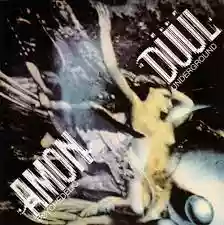
Obviously, Weinzierl is referring to the famous nighttime session from which as many as 3 albums were published under the name Amon Düül, namely Psychedelic Underground, Collapsing Singvögel Rückwärts, and Disaster (not to mention the bootleg “Experiment”). Now I am a fan of Paradieswärts Düül, which Weinzierl does not talk about, a truly great album of cosmic freak folk by Amon Düül (the music is similar to “Sandoz In The Rain” from Yeti). Who knows what John Weinzierl would think of Steven Stapleton from Nurse With Wound, who declared that he began composing music after listening to Psychedelic Underground! I am, however, on Weinzierl's side: Psychedelic Underground is, in my opinion, an unlistenable album, probably recorded under the influence of LSD (the term “Sandoz” often mentioned in the album evokes the Sandoz laboratories where Albert Hoffmann synthesized LSD). The group in that crazy session consisted of Rainer Bauer, Ulrich Leopold, Uschi Obermaier, Helga Filanda, Angelika Filanda, Eleonora Romana Bauer, and Wolfgang Krischke. The latter appears on the cover of Yeti by Amon Düül II depicted as the Grim Reaper with a scythe in hand. Unfortunately, he was found dead, frozen in the woods, with his body ravaged by wild animals (it was said because of acid use). The music of Psychedelic Underground is a crazy and delirious jumble played by tripped-out ogres (to quote Julian Cope) beyond musical rules. In reality, it is not music but something else, something that could lead the listener to reach the underworld regions. That's why my non-vote for the album relates to its musical quality. But if you want to undertake a visionary and shamanic experience that transports you to another dimension of reality, it might work, maybe listening to the album at high volume (I don't recommend taking drugs in any case).
Loading comments slowly
Summary by Bot
This review examines Amon Düül's Psychedelic Underground as a product of a chaotic commune rather than a traditional band. The album is described as largely unlistenable but potentially valuable as a visionary, shamanic experience. The review clarifies misconceptions about Amon Düül and its connection to Amon Düül II, emphasizing the chaotic and unfinished nature of the recordings.Tracklist Videos
Amon Düül
Amon Düül formed in Munich in 1967 as an open artistic commune and became an early force in krautrock through raw, communal improvisations and later pastoral, psychedelic folk. Key releases include Psychedelic Underground (1969), Collapsing Singvögel Rückwärts & Co. (1969), and Paradieswärts Düül (1970). The original group disbanded in the early 1970s and is distinct from the separate offshoot Amon Düül II.08 Reviews
Other reviews
By jdv666
This absolute freedom is the main strength of the album, it is also its biggest flaw.
The work itself arouses more interest for its historical value than its artistic one.
