
 •
Rating:
•
Rating:
THE REVIEW
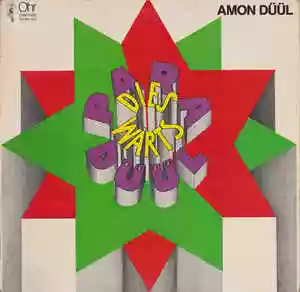
Germany Year Zero. In Munich, the politicized commune of Amon Düül is born. We are in a period of great protest in Europe, and the protest takes root in Germany as well. Part of it will culminate in the terrorism of the Baader-Meinhof gang (and the commune will be taken as an example even by the more anarchic and extremist wings). But the most enlightened German minds will channel their energies into that musical phenomenon known as Krautrock. As it is known, Amon Düül II will rise to glory and musical chronicles thanks to masterpieces like “Phallus Dei” and “Yeti”, characterized by a diabolical, psychedelic, and avant-garde blend of great originality. Amon Düül, on the other hand, will build an underground reputation thanks to the album “Psychedelic Underground” (the result of a long session that will also generate “Disaster” and “Collapsing”). Some, specifically citing Nurse With Wound by Steven Stapleton, consider this work a masterpiece and a primary source of inspiration. I'll say straight away that I consider this album today to be on the verge of listenable (despite it being magnified even by the good Julian Cope in “Krautrocksampler”). It sounds like a cacophony without sense, the sound of something mad born in the Black Forest, but, aesthetically speaking, we are on truly primitive levels. It's a different story for “Paradieswärts Düül”. And here I agree with Saint Julian's judgment on this album. Cope writes verbatim “if you like the mournful darkness of the epic ‘Sandoz In The Rain’ by Amon Düül II from ‘Yeti’, I’m sure you will also like this album”. And indeed, I have always adored that track at the end of “Yeti”, an expanded cosmic folk, a clear homage to the artificial paradises of drugs. Here it seems like listening to that music in an even more dilated form, if possible. On Side A, the long 'Love Is Peace' is a mantric hymn that celebrates the psychedelic hippy ideals unfortunately shattered on the dark side represented by the Family of Charles Manson. Great music that makes you fly 'Eight Miles High' as the Byrds used to sing, but without the need to necessarily take illicit substances. On Side B, “Snow Your Thirst And Sun Your Open Mouth” is hypnotic and acidic just right while “Paramechanische Welt” always travels the path of a psychedelic folk trip gone mad. No doubt only the Germans could reach such intense levels. “Paradieswärts Düül” is an immense album that, in my opinion, is on the same level as the best things by Amon Düül II.
Loading comments slowly
Summary by Bot
The review situates Amon Düül within the politicized 1970s German counterculture and highlights their distinction from the more famous Amon Düül II. While the debut album is considered chaotic and primitive, Paradieswärts Düül is lauded as a cosmic, psychedelic folk masterpiece comparable to the best works of Amon Düül II. The album is praised for its hypnotic, expansive compositions that channel hippy ideals and experimental spirit.Tracklist
Amon Düül
Amon Düül formed in Munich in 1967 as an open artistic commune and became an early force in krautrock through raw, communal improvisations and later pastoral, psychedelic folk. Key releases include Psychedelic Underground (1969), Collapsing Singvögel Rückwärts & Co. (1969), and Paradieswärts Düül (1970). The original group disbanded in the early 1970s and is distinct from the separate offshoot Amon Düül II.08 Reviews
Other reviews
By R13569194
"Paradieswärts Düül puts aside the black mass-like rituals to focus on a purely acoustic rock, psychedelic in intent, pastoral in result."
"The Amon Düül Commune existed indeed, even if it miserably failed in its socio-communal intents."
