
 •
Rating:
•
Rating:
THE REVIEW
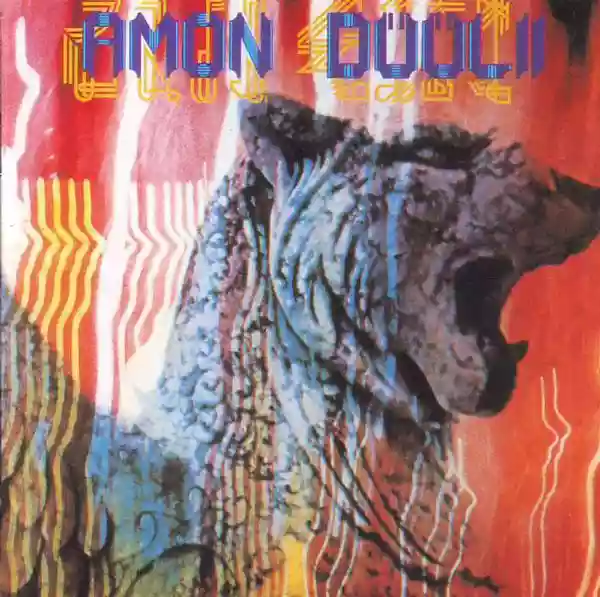
The cover is powerful and the music it contains is equally so, enough for me to consider this fifth album by the glorious German formation as their best. To my ears, it represents the clearest and most successful snapshot of their music’s progressive evolution, which started from an anarchic Californian/Austrian melting pot and ended, alas, in a banal pop/progressive hybrid.
Here, we are instead in the optimal middle period: the songs can already be called such in every respect, no longer being those chaotic yet brilliant jam sessions of the beginnings, undoubtedly intriguing yet confusing and poorly recorded; nonetheless, there is an abundance of experimentation, creativity, and healthy psychedelic vision.
The seven tracks of the Wolf City are here and there still indebted to the most hippy West Coast, full of acidic guitars and loud anthems, but now there is something powerful, a hardening toward the almost bluesy British rock that begins to structure and give completion to the avant-garde tinkering with synthesizers, the impactful noise, the ethnic percussion; all of it overseen by that rigorous Teutonic force that seems to almost flow from the grim cover sculpture into the individual compositions, especially when sung with the manner of a Gestapo officer by the powerful throat of Renate Knaupp, a Wagnerian Grace Slick with a sort of sadomasochistic sensuality in her voice, irresistible.
Her voice of fallen gods remarkably pierces through the stereo speakers in the extended (almost eight minutes) opening track “Surrounded By The Stars,” an excellent interstellar blow that could make the best Hawkwind envious, opened by the interplay between acoustic and electric guitars (a beautiful riff by John Weinzerl, as simple as it is ancestral) in the style of Jefferson Airplane but then strained to swell more and more with Northern European pathos, especially in the wrenching electric violin breaks by Kris Karrer.
And what can be said of “Green Bubble Raincoated Man,” a highly psychedelic affair that begins with a Scandinavian lullaby à la Bjork (decades before she was born, of course), then changes rhythm and goes into a jam session led by the mighty bassist Lothar Meid, whom I consider one of the greatest expressions of melodic approach to this instrument.
A lugubrious electronic howl transitions the listening seamlessly to the third track “Jail House Frog,” simply a masterpiece of a mini suite that opens with an angry riff by Weinzerl, with Karrer’s sax drones filled with echo; his half-rap voice is then introduced and later a thunderous electric funeral choir, which gives way to a sublime Bachian piano progression. The instrument, in the hands of Falk Rogner, quietly climbs among liquid gurgles, croaks, and trills of exotic wildlife, mellotron dissolves set to choirs, until Daniel Fichelscher’s drums take the time and lead the music to the terrifying explosion of Karrer’s sax, capable of dismantling any restraint and making one shout of grandeur.
The track that titles the album is the simplest of Düül up to this point in their career... a good Weinzerl riff embellished by Meid’s usual creative bass. Much more bewildering is the following “Wie Der Wind Am Ende Einer Strasse,” a mini instrumental suite that starts with a circular psychedelic guitar work that genuinely seems like listening to the first solo album of David Crosby, but it continues its journey in a most creative crescendo with tabla, sharangi, and violin blows, in addition to an oriental-sounding organ quite reminiscent of Richard Wright.
“Deutsch Nepal” is a minor episode, a sort of triumphant march with the fat notes of the mellotron and Hammond briefly making way only to give space to a German rant; all in any case wrapped up in just three minutes. The finale is outstanding with the umpteenth excellence “Sleepwalker’s Timeless Bridge,” which starts quietly as if introducing a pop ballad but instead is invaded by the highly progressive drumming that allows tabla and electric guitar outbursts. There is then a break with a brief sung part by Karrer, after which, without interruption, comes the ever more admirable Mellotron of Rogner, able on this occasion to circumnavigate the teachings of the early King Crimson and go beyond to open up the minds of listeners, perhaps for the last authentic time before these Teutonic geniuses regulate their lives and, unfortunately, also their music.
Krautrock at the best of the best, a magnificent album.
Loading comments slowly
Summary by Bot
Wolf City, the fifth album by Amon Düül II, is praised as their finest work, capturing the perfect balance between psychedelic experimentation and structured progressive rock. The review highlights standout tracks characterized by creative instrumentation, expressive vocals, and a powerful fusion of West Coast and British influences. The album is celebrated as a peak in Krautrock history, showcasing the band's artistic evolution and technical mastery.Tracklist Lyrics Videos
Amon Düül II
Amon Düül II are a German rock band associated with the krautrock scene, formed after a split from the Munich political/music commune Amon Düül. Reviews emphasize their early, dark, pagan-psychedelic and improvisational peak on Phallus Dei, Yeti, and Tanz der Lemminge, followed by more structured, song-oriented albums like Carnival In Babylon, Wolf City, and Vive La Trance.20 Reviews
Other reviews
By jdv666
The wolf may have lost some of its hair but certainly not its habit!
'Wolf City' represents the most 'mature' album of Düül, balancing melodic lines with psychedelic harshness.
