
 •
Rating:
•
Rating:
THE REVIEW
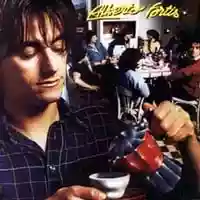
During the boom years, people from the South moved, for obvious work-related reasons, to the large cities of Northern Italy (Milan, Turin), but, quite naturally, they couldn't find affection for the immense metropolises (at least according to them) and, every year, they had to make a trip back to their native village. This concerns the Italian North-South migration flow, but, and few know this, there was, around the mid-1970s, a kind of flow within the flow. Singers from the provinces (and by provinces, it means any Italian province), eager to break into the Italian music star system, took their instruments and courage and moved to the big Italian cities (Milan, Rome, Turin, Bologna, Naples) hoping to snatch a contract or something similar from some impresario. Thus, it may happen to find oneself in the midst of the Eternal City and have a certain Vincenzo Micocci as one's producer. This is what happened, in 1978, to 24-year-old Alberto Fortis, originally from Domodossola. Micocci, a tricky producer, promised Fortis, after making him sign a hefty contract, that he would soon release a sure-hit album. In reality, that album never came to be: Micocci disappeared from the scene, and Fortis found himself empty-handed. Hence, he left Rome and headed to Milan. Fortis was immediately captivated by the cold and detached beauty of the Milanese city, and found in the Polygram production house, his lifeline. In 1979, Fortis was in the recording studio to record his first album: "Alberto Fortis." It was a predominantly pop album, with some intriguing rock nuances, quite close to Ivan Graziani's style, but with a more complex and global musical structure (Fortis, who can play the piano very well, rarely uses solos or virtuosic interludes). However, it's genuine music, one of the most beautiful and harmonious singer-songwriter debuts in the last thirty years of Italian music.
At least three tracks made history: "Il Duomo di notte," a very sweet song dedicated to Milan, to the lights and shadows of a city to which Fortis owes a lot; "La sedia di lillà," perhaps the most beautiful track of the entire career of the Piedmontese artist; "Milano e Vincenzo," a sarcastic and caustic piece dedicated to that rascal Micocci who, just a year earlier, had deluded and then abandoned him. This last track, very famous and now a classic, is a venomous diatribe that, at times, almost borders on the most serious insult: "Vincenzo io ti ammazzerò, sei troppo stupido per vivere, Vincenzo io ti ammazzerò perchè, perchè non sai decidere", and then it climbs into a long glorification of the city of Milan "Mi piacciono i tuoi quadri grigi, le luci gialle i tuoi cortei, Milano sono contento che ci sei", and Vincenzo plays the role of the usual fool "Vincenzo dice che sei fredda, frenetica e senza pietà, ma è cretino e poi vive a Roma e che ne sa". "Alberto Fortis" is a cruel album, but ultimately sweet and tender, capable of remarkable emotional outbursts and some somewhat paradoxical silliness. Not surprisingly, it sold a lot when it was released, but unfortunately, Fortis played too much with the theme of Romanity (the album also includes "Voi romani," a provocative song in which he claimed to be a defender of Italian northern culture and dismissed the Romans as slackers, liars, hypocrites), and, aside from a few prestigious highlights (the beautiful "Settembre"), Fortis would get lost in the very dense undergrowth of Italian discography and would be forced, to return at least a bit to the limelight, to participate in "Music Farm."
It's a long way from the days when he sang "Milano e Vincenzo," and it gives chills to think about how this curious Piedmontese, who in 1979 brought, within the narrow Italian music scene, a significant breath of fresh air. Not to mention that, on the music, even a historic Italian group collaborated: Premiata Forneria Marconi.
Loading comments slowly
Summary by Bot
Alberto Fortis' 1979 debut album stands out as a genuine and harmonious blend of pop and rock, infused with emotional depth and Milanese atmosphere. The album reflects Fortis' struggles in the Italian music industry and showcases his ability to create memorable, often sarcastic and tender lyrics. Tracks like "Il Duomo di notte," "La sedia di lillà," and "Milano e Vincenzo" made a lasting impact and remain classics. His collaboration with Premiata Forneria Marconi enhances the album's musical richness. Despite later challenges, this album marked a fresh breath in Italian music.
Alberto Fortis
Italian singer-songwriter and pianist from Domodossola, active since the late 1970s. Debuted with the self-titled album in 1979, followed by acclaimed works including Tra demonio e santità, La grande grotta, Fragole infinite and El niño.09 Reviews
Other reviews
By vonhesse
A delicate but also irreverent singer-songwriter who vehemently railed against Rome, understood as a 'way of life' between the charlatan and the unreliable in favor of a more serious and professional Milan.
Listen to believe.
By withor
And I hate you Romans, I hate you all, a nasty gang of sycophants and intriguers...
This piece has the gift of never leaving me indifferent every time I listen to it, even if it’s the thousandth time.
