 •
Rating:
•
Rating:
THE REVIEW
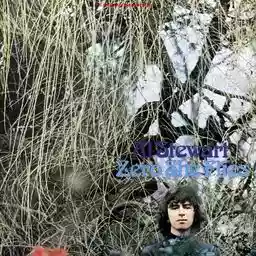
AL STEWART: "ZERO SHE FLIES" 1970
A hot June afternoon ten years ago, a friend and I were wandering through the hills of Prato in his white Deux Chevaux. At a certain point, the notes of a song began playing on the radio, a song I had heard somewhere but didn't know the artist. It didn’t fully align with my musical tastes, which at the time were much more rock than now, but I was struck by the extraordinary beauty of the arrangement. I asked Alessio if he knew the song, and he immediately said, "Of course! It's "Year Of The Cat" by Al Stewart!"
This afternoon I was reminiscing with some nostalgia about that carefree moment, and it brings a smile to my face to think that today, Al Stewart's CDs are among my favorites in my entire discography. To be clear, perhaps none of his works could be considered among the great masterpieces of all time, yet Al Stewart remains, in my opinion, a tremendously underrated artist as all his songs throughout his production have always proven to be very enjoyable and relaxing. Probably, it didn’t benefit him that he never sold out nor submitted to the will of the major record labels. A case in point: in 2000, he even went so far as to record an album, "Down in the Cellar", entirely dedicated to one of his great loves: wine. I think very few would have the courage to publish a work on such an unoriginal theme, and even fewer artists would know how to do it with such mastery as he did.
Al Stewart was born in Glasgow, Scotland, in 1945 and began to gain some recognition in the local folk circles from a very young age, so much so that at 22, he released his first album "Bedsitter Images", followed two years later in 1969 by "Love Chronicles". The following year came this beautiful "Zero She Flies" with a more robust tone than its predecessors, which proved a perfect mix between acoustic and rock. Even after forty years, the album still feels fresh and played with that masterful blend of technical skill combined with some slight roughness or imperfection that I so love in records from that era. A work that is at times delicate, at times a bit harsh but always very strong and unmistakable in style, particularly in Al's nasal timbre. The rhythm is impeccable throughout, demonstrating how he has always been able to surround himself with excellent and professional musicians throughout his career.
The album opens with a poem by Peter Morgan "My Enemies Have Sweet Voices" that is distinguished by the skillful use of the double bass. There are also instrumental tracks with a marked folk key like "Burbling" and "Room of Roots", and references to another of his great passions, history, in "Manuscript" and "Gethsemane Again". However, the three most compelling tracks are the wonderful "Electric Los Angeles Sunset," where the sharp sound of the guitar blends perfectly with an intentionally raw but incredibly incisive bass and drums, the titular "Zero She Flies", and "Stormy Night", a small masterpiece unfortunately only available as a bonus track on the 2007 reissue, featuring an intensely distorted guitar solo enhanced by a pounding bass line.
I admit that I don't have much more information on this "obscure" work or on Al Stewart, but from the little I know, he seems to be a very modest and spontaneous person, the ultimate anti-star, and just for this, he deserves even more admiration in my opinion. An album not for everyone; probably more suited to those who in the '70s were great admirers of the likes of Bob Dylan, Donovan, or Simon And Garfunkel. These artists were undoubtedly among his inspirations, but from whom he always managed to distance himself with class and originality.
Loading comments slowly
Summary by Bot
The review reflects on Al Stewart's 1970 album Zero She Flies as a beautifully crafted blend of folk and rock. The album’s fresh sound endures even after decades, characterized by strong arrangements and a distinctive vocal style. With historical themes and exceptional musicianship, it's praised as a hidden gem suited for fans of 70s folk-rock legends. Stewart's modesty and originality make the album especially admirable.Tracklist Lyrics
Al Stewart
Al Stewart (born 1945) is a Scottish singer-songwriter known for folk-rock and literate, history-infused storytelling. He broke through commercially in the mid-1970s, notably with the album and title track “Year of the Cat.”20 Reviews
Other reviews
By Danny The Kid
Zero She Flies has on its side the charm of simplicity, a natural refinement, and a distinctive feature.
The eclecticism, energy, and more contemporary sound that Stewart would develop in later years rests on these traditional and solid foundations.
