
 •
Rating:
•
Rating:
THE REVIEW
MINACELENTANO (1998) s.v.
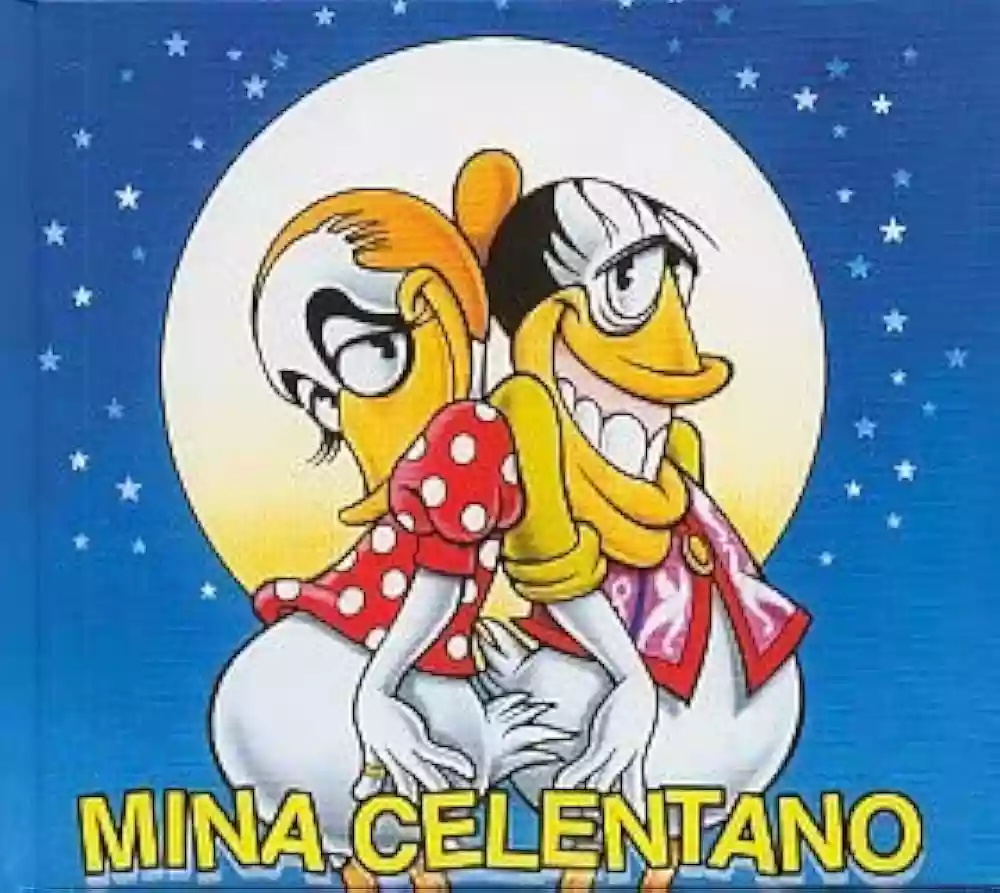
Late December 1998. In a cinema that no longer exists today, in an overcrowded screening room (back when people still went to the movies), my friend and I are waiting for "The Truman Show" to start. Beautiful, absolutely beautiful. Before that, the usual trailers. "Life is Beautiful"; "Three Men and a Leg"; "Mulan" (wow, we were happy and didn’t even know it). After the trailers end, the movie starts. No, wait, there’s a cartoon. Two ducks that look like someone, wait, who is it? Ah yes, Celentano and Mina. We were 14: Celentano we’d seen more or less on TV, Mina had been introduced to us by our mothers. And, in a sort of Disney-like Pinocchio village, the two of them start singing a song in Apulian dialect that keeps obsessively repeating "Che t'aggia dì, che t'aggia fà", and that’s how I discovered the term, completely unknown to me at the time, "paliatone". My friend and I look at each other like, what the hell is going on? After 5 interminable minutes, the ducks finally get lost and the film starts. Years later I realized it was a parody of "Yesterday, Today and Tomorrow" with Duck-Celentano playing Marcello Mastroianni and Duck-Mina as Sophia Loren.
And I also learned that the song was taken from what was widely defined as the "event-album" of the year: "MinaCelentano". It sold almost 2 million copies (it’s the second best-selling album ever in Italy) and, in fact, the promotional battage bordered on stalking: TV, radio, billboards, McDonald’s (even there!), cinemas, theatres. Wherever you turned, it was shoved in your face: in the end you either bought it or hated it. Thankfully, the only consolation, social networks didn’t exist yet. 2 million copies, I mean 2: and it’s a work that’s, for the most part, negligible and broadly a failure. Impossible to classify, to give it a score: 1 star according to Debaser’s standards? Too much. Half a star? Not possible. Let’s just say, no rating, famo prima.
The lead single was "Acqua e sale", which is also the only decent thing on the album. Decent, not beautiful. At least, over the years, the song hasn’t gone out of style (especially in karaoke it’s still a big hit, but then again, even Jalisse do great at karaoke!), but as for the other 9 songs, I don’t think anyone remembers anything. Maybe, and that’s a big maybe, "Brivido felino". The rest is a misery. And that’s a real shame given the names of the two artists "playing" and the two giants producing it: Mina’s PDU and, above all, Mediaset, which was probably happy with the sales but not so much from an artistic point of view (and yes, I know Mediaset cared about the money, not art, but still...). Several tracks are written by Audio 2 who, because they’d nailed a successful tune a few years before ("Alle venti"), get called in to save the day, as if they were the Pink Floyd or something. Even "Acqua e sale" has some pretty cringeworthy lyrics (the bit about the souped-up motorbike is pure horror cinema), and pretty much all the arrangements sound the same, so what else is there to say at that point?
Audio 2 are also behind the disgraceful "Specchi riflessi" (with 2 Celentanoesque spoken interludes that are supposed to be funny, but nope); the gloomy and ancient "Io ho te" (only Mina sings), while the rest is entrusted to Paolo Audino, Giulia Fasolino, and there’s even a cover of "Sempre, sempre, sempre" by Gianni Farè, 1976. Comic interludes aside, Celentano throws in 2 of his own songs as well. "Io non volevo" and "Dolly". The first is a shoddy mess beyond any limit, even in bad taste: listening to two sixty-year-olds flirting and talking about hands going to forbidden places is also a bit gross; the second is a typically “celentanesque” rant against men (he even manages to squeeze in a mini-preachy bit against criminal governments and the death penalty) where he exalts the nature of the animal—in this case, a dog—over human nature. He sings by changing his voice: first as the man, then as the dog, and dirty jokes are off limits. The last touch to this picture is a whine, fortunately very short (less than 3 minutes), signed (what a surprise) Massimiliano Pani.
A 45-minute ordeal that, sales aside, I doubt satisfied either Celentano’s or Mina’s fans (even if, in 2017, the two would try again—successfully this time—with "Le migliori": a bit better). There’s also, God deliver us, a Christmas edition.
Loading comments slowly
Summary by Bot
This review examines the collaborative album 'Mina Celentano' by Mina and Adriano Celentano. It evaluates the chemistry between these legendary Italian pop artists, highlights notable tracks, and offers a balanced critique. The overall tone is thoughtful, providing both praise and constructive feedback. Readers gain insight into the album’s strengths and areas for improvement.Tracklist
Mina
Mina (Mina Anna Mazzini) is an Italian singer known as “La Tigre di Cremona,” celebrated for her powerful voice, wide range and versatility across pop, jazz and other styles. A major TV and chart presence in the 1960s–70s, she retired from live performance in 1978 but continued releasing acclaimed recordings.14 Reviews
Other reviews
By nick81
The songs are all very catchy and well-crafted, but they lack that spark of genius that one would rightfully expect from two artists of this caliber.
Celentano brilliantly interprets with two different voice tones in 'Dolly', a dialogue between a man and a dog.
