
 •
Rating:
•
Rating:
THE REVIEW
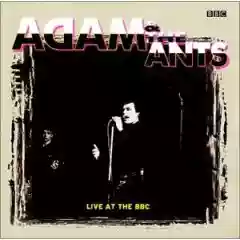
This album is the account and collection of four sessions that Adam Ant, with and without his band the Ants, held for the BBC. Three of these - the first two in '78 and the third in '79 - were performed under the auspices of the renowned John Peel, while the remaining one dates back to 1995, the year of the release of "Wonderful," his last work of unreleased material, featuring acoustic and vocal versions of two fresh singles and a past hit.
The Ants were a punk band in the '70s; practically it was only Marco Pirroni on guitars for a short period (after the release of the first album, between the '70s and '80s); they were therefore a brigade of big-wigs, today pirates and tomorrow swordsmen... In the biennium '78-'79, like all seventies, the Ants were a pure and wild punk band at the service of an absolute stage animal, a combo that, along with its leader, would tour Europe setting its youth on fire, and that would never release anything until the end of the decade... The line-up, therefore, would leave Adam all alone, biting into the promises of glory by the punk's father-master, Mr. McLaren, joining him to create Bow Wow Wow.
This collection aims precisely to shed more light on that "dark" period of performances without records, in which Adam and (un)faithful companions would perform on the same stage as the Sex Pistols and associates, and in which, above all, they were in hopeful anticipation of that kind of media exposure and success (which, however, under McLaren's will, would never come).
The Adam Ant that emerges from the songs of that period is the most light-hearted punkster of his generation, he's funnier, less political, and more (a lot more) erotic. After all, the guy is quite good-looking, not at all vulgar, quite a bit androgynous, moreover, very interested in the imagery (suspectedly not only the imagery) of sadomasochism.
"Hard," but certainly not vulgar, Adam devoted himself to themes that projected him into a context with very little political anarchy or anarchic politics: Adam Ant's anarchy is internal, it’s in his lower abdomen, it’s in his deviant mind, it’s in that good and handsome working-class man without manifest pretensions who at 18 marries a "knockout blonde" but then, slowly, secretly, begins to deviate towards a depraved world, idolizing perversion, leading him to reject the home-wife-working class reality, and thus to anorexia, suicide attempts, until reaching the final metamorphosis, the explosion of that cocoon, from which emerged... not a butterfly, but an ant!
In the early years of his career, regarding musical choices, he relied on the taste of the time, a perfect box to contain all forms of youthful rebellion, merely adding some original ideas. Thus, the beautiful tango-punk of "Deutscher Girls" was born, and similarly, very delightful (and purer) punk songs such as "Puerto-Rican" and "It Doesn't Matter" developed, while Adam allowed the famous punk-icon Jordan - his friend/manager/union representative in front of Commander McLaren - to ravage the wild "Lou."
Given that the tracklist is arranged according to the chronological order of the sessions, it's easy to notice the changes in his compositional style: from recording to recording, there is a transition from pure punk to the "future garage glam" of "You're So Physical" and "Cleopatra", as well as to the "future power glam" of "Zerox." I say "future" because, from the way they were performed, it seemed that Adam and company, while certainly recognizing the structural difference from pure punk, had not yet figured out what direction to take with their music, how much to accelerate "Zerox," how much to exaggerate "You're So Physical"...
In the third batch, the following year, another step was ascended: the tracks sound very similar to the pop-beat-punk-glam hodgepodge unstressed and remounted at random, present in the brilliant debut "Dirk Wears White Sox." Thus, the way of playing changes, but also the way of composing. This will be the first landing for Ant, as well as the waiting room for his Antmusic. From there, it’s known (and also written) about the directions (or drifts) he undertook (or arrived at), the successes and failures that came. But undoubtedly, the punk and post-punk periods arouse the most curiosity, the years when London burned, the years of which, regarding his performances, there is almost no memory left here with us.
The years when Ant wrote tons of songs, some of which saw the light thanks to collections like this or regal triple boxes et similia. And who knows how much stuff is still unpublished, buried for decades.
Loading comments slowly
Summary by Bot
This review covers Adam & The Ants' BBC live sessions spanning 1978 to 1995, spotlighting the band's raw punk origins and Adam Ant's charismatic stage presence. It traces the evolution from pure punk towards glam influences, highlighting unique tracks and the band's dynamic lineup changes. The collection offers valuable insight into the little-documented early years before Adam Ant's commercial breakthrough. The review appreciates the blend of fun, eroticism, and rebellious spirit in Adam's performance and songwriting.Tracklist Lyrics
Adam and The Ants
Adam and The Ants were a British band formed in London in 1977, fronted by Adam Ant (born Stuart Leslie Goddard). With guitarist/songwriting partner Marco Pirroni, they evolved from punk to a flamboyant new wave sound marked by tribal double-drum rhythms and theatrical imagery. They scored major UK hits, including the No.1 singles "Stand and Deliver" and "Prince Charming," and the UK No.1 album Kings of the Wild Frontier, before disbanding in 1982 as Adam Ant went solo.04 Reviews
