
 •
Rating:
•
Rating:
THE REVIEW
DeBaser community, although I have been visiting the site for several months now, I never found the time, or rather the desire, to write a review; having finally decided to contribute, I have to start with an AC/DC album, those who most embody the purest ideal of rock.
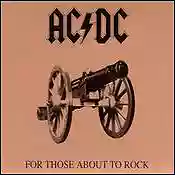
Released in 1981, FTATR is, in some respects, a transitional album: the second album with Brian Johnson, it follows an immortal masterpiece like 'Back in Black' and serves as a bridge in their discography between the masterpieces of the Scott era and the moments of uncertainty that began with the following album, 'Flick of The Switch'. The production, as always an important factor, is entrusted to Robert "Mutt" Lange, who defines a completely different sound compared to previous LPs: compact, powerful, with the vocals and lead guitar slightly underemphasized compared to the band's choral wall of sound. Nothing like the '70s releases, characterized by rougher, harsher, scratching sounds, with Angus's Gibson SG seeming to clash with Bon's warm, genuine, alcohol-fueled vocals. It is perhaps this very "distortion" of AC/DC's sound that led to the lukewarm reception of this album in hindsight.
Many indeed indicate this album as the beginning of the decline, fortunately interrupted after only 3 disappointing albums. Solos decidedly less "showy" than on other occasions? Certainly. Exaggerated high notes? Maybe, de gustibus. But the collection of songs presented is undoubtedly first-class, perhaps not too original, but certainly noteworthy. The opening is entrusted to the historic title track, a great and perhaps the only masterpiece of the album. The choirs, the passionate and rockish chorus, and the cannons have made history, unlike the other excellent songs; this might be the album's only flaw, the lack of memorable tracks. But beware, the tracks are all thrilling, enjoyable, exciting in their anarchy from any intellectual pretension.
Perhaps this is what makes me love AC/DC so unreservedly more than anything else, their total dedication to the most classic and heartfelt rock, at the expense of any innovation or anything else recognized by know-it-all critics as "art." The album contains a succession of great tracks, genuinely hard rock, meaning solid, rapidly gripping blues-based riffs, "goofy" lyrics in grand style, squared-off rhythms, and an excellent vocal performance.
Indeed, old Brian defends himself really well here. Never have his high pitches reached such heights on the scale. Some are accustomed to throwing muck at the former Geordie singer by making an unfeasible comparison with the much-missed Bon; besides the different voices, their roles are precisely opposite. Unlike Bon, Brian is an interpreter, an extraordinary interpreter. He does not contribute to the writing phase as his predecessor did, and he cannot be entirely authentic in singing, as Bon did, a great drinker and womanizer, about spectacular drinking sessions and casual sexual encounters. Brian merely interprets songs, like an excellent session musician, and his vocal performance is indisputable. It is worth mentioning that FTATR is actually the first album of the Johnson era for AC/DC. Upon Scott's death, the tracks of 'Back in Black' were already written; by the time it came to compose this album, Bon's songwriting ability had long been buried. But the result from the Young brothers is equally excellent.
"Put the finger on you", "let's get it up" (extraordinary in available live videos from the era) "snowballed", "C.O.D." are tracks with exceptional energy, which have little to envy from songs composed years earlier. Unfortunately, in FTATR, Angus gives less free rein to his ability in favor of hard and powerful songs like never before, which drag the listener into the idealized world of Australian kangaroos, made of fights, women, alcohol, and rough and loyal friendships.
In the end, an album too often underrated, with a comprehensive delightful and enveloping sound, with the usual charge and skill of the "Aussie" rockers, if you only remember the bangs of the title track, pull it out from the dark recesses of your record collection and let it rock your stereo system. You'll return to a time when rock was art, and for this, it was true.
My score for FTATR is not the highest solely to duly honor previous albums, overflowing with (musical) pieces of history. But if I had to vote thinking about the 5 stars assigned to "new and promising" bands, well, 5 stars would never be enough. Much less than the posers, the posers, and the poor guys that we're sold today as "the next big thing." By now, it's no longer "the next," but for 30 years in the southern hemisphere, a "Big Thing," a historical band, has been shaking rows of Marshalls with real Music.
P.S. Apologies for the duplication, indeed the "triplet" with the review of this album, but I wanted to talk about it, and I didn't find any writings on the site so illuminating as to dissuade me from doing so.
Loading comments slowly
Summary by Bot
The review highlights AC/DC's 1981 album 'For Those About To Rock (We Salute You)' as an underrated yet powerful hard rock work. It recognizes the transitional nature of the album with Brian Johnson solidifying his role as a vocalist, while Robert 'Mutt' Lange's production created a distinct sound contrasting the band's earlier raw energy. Despite being seen by some as a start of decline, the album features strong riffs, energetic tracks, and the iconic title song. The reviewer praises its authentic rock spirit and dedication, rating it highly despite modest flaws.Tracklist Lyrics Videos
AC/DC
AC/DC are an Australian hard rock band formed by Angus and Malcolm Young, known for raw riff-driven songs and large-scale live shows.74 Reviews
Other reviews
By hmgp
"For Those About To Rock (We Salute You) is a sterile, repetitive album... that borders on the banal."
The title track is a CANNONBALL full of energy and became a concert closer.
By tonycool
We are talking about the band that rivals Daft Punk for the most repetitive music.
The album reached number one on the charts as soon as it was released and it was the only one from AC/DC to do so, but its success is due to the momentum of previous hits, certainly not for its actual quality.
