
 •
Versione 1
Rating:
•
Versione 1
Rating:
THE REVIEW
Personal premise: I consider 10cc one of the top bands in a hypothetical list of the most underrated bands of the '70s, at least in relation to what they contributed, even though they did achieve a modicum of success. Formed in Manchester in 1972, they immediately released a series of works we can define as Meta-pop/rock or art-pop, which quickly caught the attention of critics, though less so the public.
Their period of brilliance extends from their first self-titled album in 1973 up to (in my opinion) “Deceptive Bends” in 1977. A long streak of five consecutive LPs in which the band skillfully mixed Frank Zappa's freakishness with the melodic genius of the Beatles, a touch of avant-garde eclecticism, and the sonic schizophrenia of Gentle Giant, giving their sound a distinctive surrealist trademark. Another one of their characteristics (shared by few groups) is that all four of their original members were songwriters. A first step towards decline was therefore the departure of Godley and Creme in 1976 after “How Dare You,” leaving the two remaining geniuses and main voices of the group, Eric Stewart and Graham Gouldman. They chose other companions and managed to release the aforementioned excellent “Deceptive Bends” and the less dazzling yet still solid “Bloody Tourists” in 1978. However, it became clear and definitive that their creative vein was waning with the subsequent “Look Here?-Are you normal” in 1980, the subject of this review.
Released in March 1980, Look Here finds the band in a moment of creative impasse and stylistic doubts. Punk, but above all post-punk and new wave, have burst onto the scene for at least two or three years, and the landscape has changed radically. The typical quirks of their early sixties phase no longer gain traction in the market. But it’s not just that. It’s really the writing itself that’s missing in this album. We hear flat and weakened pieces like the naive reggae of “How’m I Ever Gonna Say Goodbye” along with “It Doesn’t Matter At All” and “Lovers Anonymous.” Or the unsuccessful Latin-flavored attempt of “Don’t Send We Back.” The production is consistently excellent with clear and chiseled sounds, but the rest doesn't work. Moreover, the ironic humor in the lyrics, which made 10CC so enjoyable in the past, is almost absent.
The gems of the album, in my opinion, remain Stewart's ballad “I Took You Home”, which, although slightly under par compared to his golden standards, delivers good moments and is not at all disdainful. I also particularly enjoyed “Dressed To Kill”, which, with its urban funky rhythm and disco vibe, seems to have come straight from the “Bloody Tourists” sessions. These two tracks wouldn't have been out of place on one of their more successful previous albums. Even “I Hate To Eat Alone” deserves a small chance; another Stewart ballad but more concise and sparse, as well as a bit less sappy than usual. With a not unfavorably Beatlesque melody, the track flows well and is more than appreciable.
A notch lower, the self-referential opener “One-Two-Five” and the subsequent “Welcome To The World” with its electronic opening and dry, synthetized bass keeping with the times, manage to scrape by. Also passable is the dark and energetic “Strange Lover”, while “L.A. Inflatable” is a standard rock tune with no big surprises; definitely enjoyable but nothing more.
“Only Child” instead closes the album in a very poor way, just to keep the average low. It aims to be as successful and quirky as before but ends up being clunky and weak, even in terms of vocal performance and production.
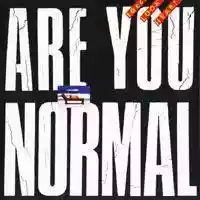
In short, almost nothing seems to work on this album; “magically” even the Hipgnosis cover art turns out to be one of their least successful. The only element still at the level of the past is the vocal harmonies, which remain strong, but embedded in a compositional context that neutralizes and renders them ineffective.
Fortunately, the band will manage to bounce back with the more convincing “Ten Out Of Ten” in 1981, an LP that, while not heralding a great comeback or masterpiece, presents a band in good form. The next and last album of the '80s “Windows In The Jungle” in 1983, though returning to lower levels, is still better than “Look Here,” just to put it into perspective.
In conclusion: to be avoided. A classic album for completists or die-hard fans only…like yours truly.
Loading comments slowly
Summary by Bot
The review discusses 10cc's 1980 album 'Look Hear?' as a low point in their discography, marked by uninspired songwriting and stylistic uncertainty during a changing music scene. While production and vocal harmonies remain strong, most tracks fail to deliver memorable moments. Only a few songs like 'I Took You Home' and 'Dressed To Kill' offer some appeal. Overall, the album is recommended mainly for devoted fans and collectors.Tracklist Lyrics Videos
10cc
10cc are an English art-pop/rock group formed in 1972 by Graham Gouldman, Eric Stewart, Kevin Godley and Lol Creme. All four members wrote, sang and played multiple instruments, blending Beatles/Beach Boys melodicism with Zappa-esque wit and studio experimentation. Their mid‑70s run produced hits like I’m Not in Love and Dreadlock Holiday; Godley & Creme left in 1976, while Stewart & Gouldman continued under the 10cc name.09 Reviews
