
 •
Rating:
•
Rating: THE REVIEW
Many consider "Tejas" (1977) as the best album by the Texans ZZ Top. I think that, even if it isn’t, it’s pretty close.
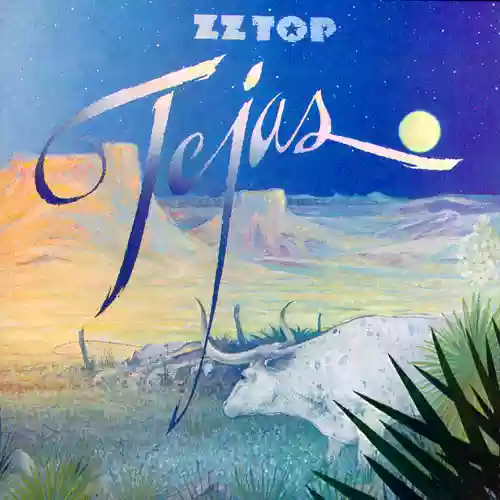
Gibbons, Hill, and Beard, during these recordings, must have been particularly inspired and very, very prepared. An album so well thought out and full of ideas, for those entering the studio for the fifth time, must have been the result of meetings, conversations, rehearsals, discussions, and a certain atmosphere. Also the weather, which was reportedly making life impossible for the people in those latitudes at that time. They must have taken the bull on the cover by the horns, calmed it down, and involved it in the preparatory debate on how to find new inspiration to tell about their land, this time their entire land, always through anecdotes about characters and stories of what was the old west, but this time with a slightly more research-oriented musical proposal. "Tejas" thus becomes an album that crosses the boundaries of ranches, motels, and bars, expanding the view to canyons and a cunning wildlife that is only apparently drowsy. A return to the nature of Rio Grande Mud that goes beyond the desire of Fandango.
On these premises, we witness a slight but intense change in style that adds more depth to the tracks offered by the beards. Blues, boogie, and southern rock are always present, but the tone of voice becomes more sophisticated, experimental and less disruptive, showing a fierce desire to explore and open new paths. But let's go back to the artwork for a moment. A watercolor illustration that seems to capture the moment the day is born, as a bull chews among the bushes and the moon starts to lose its dominion over the sky. All in a valley with mountains eroded over the centuries. Bucolics in spicy sauce, one might think. But certainly the best context and the perfect time to listen to this album. Even though some episodes are not missing, this is no longer daytime indoor music. This is nighttime outdoor music that can accompany cowboys around the fire during a cattle drive.
The calm and irresistibly assured riff that opens "It’s Only Love" seems to inaugurate the season of desert rock and consolidates Gibbons's position among the greatest (by inspiration) guitarists of the stars and stripes. The solos throughout the album are worth buying the original record. Hill & Beard are the awarded company that, even after a gargantuan feast, would be capable of creating rhythm for hours and hours. After the guitar-driven blues with a title that makes me laugh heartily, "Arrested For Driving While Blind", there's "El Diablo". The track is a phenomenal tale about the boogeyman, let's say, for cowboys in a circle who fend off the nocturnal temperature dips by warming their bodies in front of a bonfire and their souls with a story to pass down to their children. The storytelling atmosphere that opens the track becomes more and more rarefied, mysterious, and dreamlike, with a fine job of smoothed and slightly distorted guitar, while Beard finds a way to provide counterpoint by ominously pounding on the drums. One of the best songs in ZZ Top's career.
The trio also seeks points of contact with other rock styles of the time by blending blues and country sounds with hard bases evolved for the era and very technical, achieving great results with "Snappy Kakkie" and "Enjoy And Get It On". Especially the latter alternates Hendrix-like phases with typical double Z tunes. "Ten Dollar Man" is a fiery and at times hypnotic rock, battered by the drums. Upon reaching the sixth track, it will be easy to reflect on the six different types of voices with which Gibbons has stimulated his vocal cords. Vocals like these are hard to find in this type of band. With "Pan Am Highway Blues" the blues puts a wedding ring on hard rock, accompanied by Hawaiian strumming. The closing trio is very particular. "Avalon Hideaway" and "She’s A Heartbreaker" continue to mark the happy union of blues and country with hard rock. But it is with "Asleep In The Desert", the instrumental close of this album, that ZZ Top pays homage to the Hispanic sounds already abundantly penetrated into the social fabric of the southern states. It is an intimate and desert-like country tango, continuing in the vein of El Diablo.
I like this "Tejas", perhaps the most personal album of a band to which I am strongly attached.
Loading comments slowly
Summary by Bot
Tejas by ZZ Top is regarded as one of their best works, showcasing inspired experimentation and sophisticated blues-rock blending. The album deepens their musical narrative, exploring western themes and diverse vocal styles. Its atmospheric and well-crafted instrumentation highlights Gibbons’ guitar mastery alongside solid rhythm support. Tracks like "El Diablo" stand out for their storytelling and musical innovation. The album offers a rich, nuanced listening experience that connects southern rock roots with new creative directions.Tracklist Lyrics Videos
ZZ Top
ZZ Top are a Texas-based American rock band formed in 1969, widely associated with blues-rock, boogie, and Southern rock. The classic trio lineup is Billy Gibbons (guitar, vocals), Dusty Hill (bass, vocals), and Frank Beard (drums).14 Reviews
